Global football is witnessing an unprecedented institutional collapse. Just 24 hours after UEFA’s 55 member nations unanimously voted to boycott all FIFA competitions over a multi-billion-dollar privatisation scheme, the administrative mutiny has officially crossed the Atlantic. On Friday morning, the Confederation of North, Central America and Caribbean Association Football (CONCACAF) and the Argentine Football Association (AFA) formally joined the escalating backlash against FIFA President Gianni Infantino and his deeply controversial FIFA Forward Enterprise (FFE) proposal.
With at least 90 national federations now publicly rejecting the private-capital project, Infantino is facing the sharpest and most perilous political crisis of his decade-long presidency. As calls for his immediate resignation intensify and his 2027 re-election bid comes under severe threat, the governing body of world football finds itself entirely isolated, desperately attempting to defend a commercial venture that threatens to fracture the sport beyond repair.
The Americas Rebel: CONCACAF and AFA Draw the Line
Infantino’s grand design hinges on raising up to $4.2 billion by selling a minority, non-controlling stake in FFE, a newly proposed commercial subsidiary valuing FIFA’s commercial rights at a staggering $20 billion, to private equity investors. The subsidiary would be tasked with managing broadcasting, sponsorships, licensing, and ticketing for the men’s and women’s World Cups. While European opposition was widely anticipated given the historically strained relationship between UEFA and FIFA, the ferocious pushback from the Americas represents a fatal blow to the president’s consensus-building efforts.
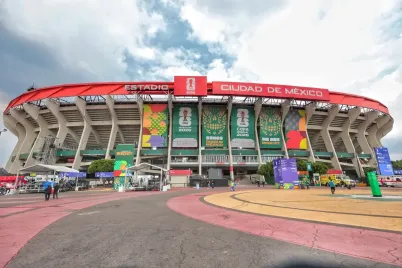
CONCACAF, fresh off co-hosting the 2026 World Cup across the United States, Canada, and Mexico, released a scathing public statement condemning the absolute lack of transparency surrounding the FFE initiative. The North American governing body confirmed it only learned of the monumental privatisation plans through external media reports, rather than through official FIFA consultation channels.
“We are deeply concerned by the lack of due process,” the CONCACAF statement read, echoing the sentiments of a continent blindsided by the boardroom manoeuvring. “A proposal of this magnitude, which permanently reshapes the commercial landscape of global football, was developed and announced publicly without any prior consultation with continental confederations or member associations. We share the profound disappointment echoed by our colleagues globally and demand immediate institutional accountability”.
The situation escalated further on Friday when the AFA officially aligned itself with the opposition. Holding immense political capital as the reigning 2026 World Cup runners-up and acting as a heavy influencer within the South American confederation (CONMEBOL), Argentina’s rejection is catastrophic for FIFA’s ambitions.
AFA executives expressed extreme discomfort with the prospect of surrendering portions of the sport’s most historic tournament to private equity funds. For South American nations, where football is heavily intertwined with national identity and cultural heritage, the concept of the World Cup becoming a tradable asset for international investors is deeply unpalatable. By joining UEFA and CONCACAF, the AFA has effectively ensured that the vast majority of the world’s most lucrative, influential, and successful footballing nations are now actively boycotting FIFA’s commercial expansion.
The Defiant Defence: FIFA Holds Firm
Despite the walls closing in rapidly, FIFA has opted for steadfast defiance rather than diplomatic retreat. Responding to the wave of global condemnation, the Zurich-based organisation released a detailed defence of the FFE project on Friday, attempting to reassure hostile federations that the soul of the sport remains protected.
According to FIFA’s official legal briefings, FFE would possess its own commercial mandate and operational governance structure, but FIFA would strictly retain absolute majority control. Crucially, the governing body insists it will maintain exclusive authority over sporting rules, calendar scheduling, and competition formats. The private investors, FIFA claims, would hold strictly non-controlling minority stakes, stripping them of any power to dictate where or how the World Cup is played.
Furthermore, Infantino’s administration continues to frame the $20 billion valuation as a historic opportunity for global grassroots development. The financial blueprint promises to return the net benefits directly to the sport. Under the FFE structure, each of the 211 national associations would receive a one-off payment of up to $20 million for dedicated infrastructure projects. Additionally, the regular FIFA Forward programme funding for the 2027–2030 cycle would jump significantly from a planned $8 million to $20 million per association, with projections rising to $24 million by the 2035–2038 cycle.
Infantino has previously characterised the FFE project as a “natural step” to strengthen the foundations of the sport, arguing that private investment is absolutely necessary to fund stadiums, youth development, and women’s football in developing nations that cannot independently finance such infrastructure.
However, this immense financial incentive has completely failed to appease the critics. Opponents argue that allowing private equity firms to gain an economic interest in the World Cup’s operational delivery inevitably grants them backdoor influence over future decisions. The fundamental fear remains that the relentless pursuit of profit margins will eventually supersede sporting integrity and tradition.
The Pressure Mounts: Is Infantino’s Reign Over?
The FFE rebellion is merely the latest, albeit most severe, crisis to engulf Gianni Infantino’s presidency. The 56-year-old was already navigating intensely turbulent waters following a 2026 World Cup plagued by unprecedented diplomatic, logistical, and disciplinary scandals.
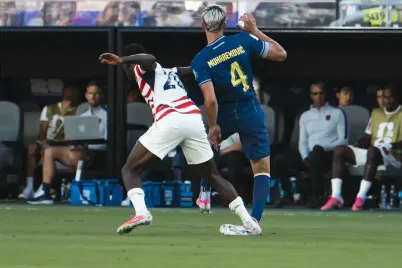
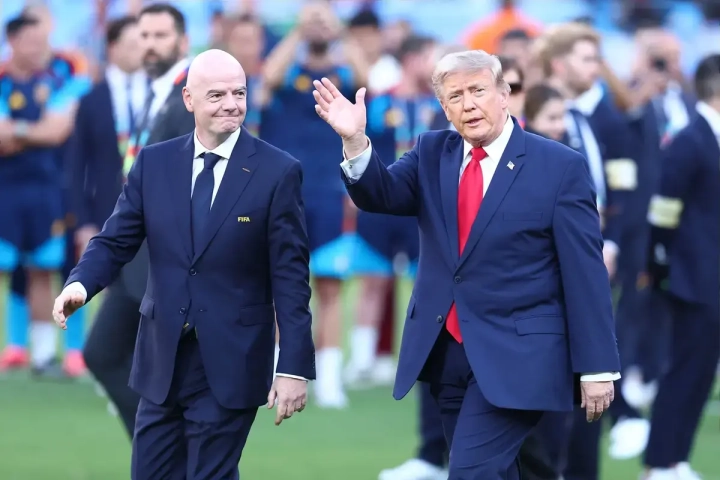
Infantino was subjected to fierce resignation demands earlier this month after staggering allegations surfaced of improper intervention in a disciplinary case involving the United States national team. Following a direct phone call from US President Donald Trump, FIFA controversially suspended a red card issued to American striker Folarin Balogun, allowing him to compete in a crucial knockout fixture against Belgium. The decision bypassed standard judicial protocols, sparking outrage across Europe and prompting widespread accusations of blatant political appeasement.
Coupled with systemic logistical failures, severe visa delays for competing nations like Iran, and the outright denial of entry for a Somalian referee holding a diplomatic passport, Infantino’s post-tournament declaration that the World Cup was “the greatest human, social, and cultural event ever witnessed” was viewed by many federations as dangerously out of touch with reality.
Now, with the private equity scandal merging seamlessly with the lingering resentment from the North American World Cup, Infantino’s grip on power has never been weaker. He currently lacks the necessary majority support to pass the FFE initiative at a FIFA Congress. More pressingly, the 2027 FIFA presidential election is rapidly approaching, and what was once expected to be a seamless coronation has transformed into a critical referendum on his leadership and his vision for the sport.
With UEFA threatening a total tournament boycott, CONCACAF demanding systemic transparency, and the AFA pulling vital South American support, Infantino is rapidly running out of political allies. The historical strategy of leveraging smaller, developing federations with promises of increased central funding to outvote traditional footballing powerhouses appears to have finally reached its breaking point.
Conclusion
As Friday afternoon unfolds in Switzerland, global football finds itself entirely paralysed by administrative warfare. The unified front presented by Europe and the Americas indicates that the game’s traditional stakeholders are no longer willing to tolerate opaque commercial governance or the unchecked centralisation of power.
Gianni Infantino took office in 2016 promising to meticulously restore FIFA’s shattered credibility in the wake of the devastating Sepp Blatter corruption scandals. A decade later, he stands accused of attempting to permanently corporatise the very essence of the sport. Whether he can survive this unprecedented multi-continental uprising remains to be seen, but one reality is absolute: the battle for the future and the soul of the World Cup has officially begun, and the current FIFA administration is losing its grip.