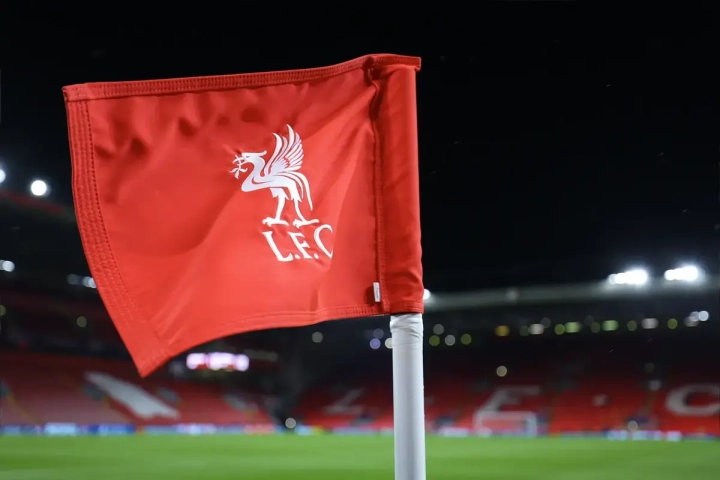
The landscape of modern football ownership is on the precipice of a seismic shift. According to breaking reports circulating on Monday morning, a formidable investment consortium featuring Amazon founder Jeff Bezos and Facebook co-founder Eduardo Saverin is rapidly closing in on an agreement to purchase a roughly one-third minority stake in Liverpool Football Club.
The syndicate, which is being spearheaded by former Queens Park Rangers co-owner Amit Bhatia, represents one of the most financially muscular investment groups ever assembled in the sporting sphere. Should the deal be finalised, with an official announcement potentially arriving as early as this week, it would inject unprecedented wealth into the boardroom at Anfield and solidify the Premier League’s status as the ultimate playground for the world’s elite billionaires.
The Architecture of a Mega-Deal
Discussions regarding a minority investment in the Merseyside club have been simmering throughout the summer, but the sudden acceleration of talks has sent shockwaves through the global sports business community. A spokesperson for Fenway Sports Group (FSG), Liverpool’s current majority owners, recently confirmed the ongoing dialogue, stating: “An investment consortium led, managed, and represented by Bhatia has expressed interest in making a strategic minority investment in Liverpool Football Club.”
The proposed agreement would reportedly see the Bhatia-led consortium acquire an approximate 30 per cent stake in the club for a figure in the region of £1.35 billion. Such a transaction would place Liverpool’s overarching commercial valuation at just over £4 billion (approximately $6 billion). This represents a staggering return on investment for FSG, headed by John W. Henry, who originally purchased the financially stricken club in 2010 for a mere £300 million following the highly turbulent tenure of Tom Hicks and George Gillett.
The Billionaire Syndicate: Who is Involved?
While Amit Bhatia acts as the principal architect and public face of the consortium, the financial firepower backing the bid is nothing short of astronomical. Bhatia, a 46-year-old British-Indian businessman, brings extensive footballing governance experience to the negotiating table. He spent 18 years on the board at Queens Park Rangers, helping to oversee the west London club’s promotion to the Premier League during the 2010–11 season. To circumvent any conflicts of interest and seamlessly clear the path for the Anfield takeover, Bhatia officially resigned from his role at Loftus Road and transferred his QPR shares to Ruben Gnanalingam on 21 July.
Bhatia is intrinsically linked to immense wealth through his marriage to Vanisha Mittal, the daughter of Indian steel magnate Lakshmi Mittal, whose personal fortune exceeds £22 billion. However, it is the inclusion of two American technological titans that elevates this consortium into a completely different financial stratosphere.
Jeff Bezos, the visionary founder of Amazon, boasts a staggering net worth estimated by Forbes at over $280 billion. For Bezos, this potential investment represents a monumental first step into the realm of major professional sports ownership. The 62-year-old had previously explored the possibility of acquiring high-profile American franchises, notably taking a keen interest in the NFL’s Seattle Seahawks and the Washington Commanders, but ultimately chose to pass on both opportunities. His pivot toward English football highlights the unique, undeniable global appeal of the Premier League.
Joining Bezos in the syndicate is Eduardo Saverin, the Brazilian billionaire and co-founder of Meta (formerly Facebook). With a personal fortune reported to be in excess of $32 billion, Saverin’s involvement provides further silicon-valley heavyweight status to the bid. Together, this collective pools a level of capital that comfortably eclipses any existing ownership model currently operating within European football.
| Consortium Member | Background / Affiliation | Estimated Net Worth |
| Amit Bhatia | Former QPR Co-owner, Lead Negotiator | Linked to Mittal family wealth |
| Lakshmi Mittal | Indian Steel Magnate, ArcelorMittal | £22 Billion ($29.4 Billion) |
| Jeff Bezos | Founder of Amazon | $280 Billion |
| Eduardo Saverin | Co-founder of Meta (Facebook) | $32 Billion |
FSG’s Strategic Vision and the Dynasty Blueprint
For the Anfield faithful, the immediate instinct upon hearing names like Bezos and Saverin might be to envision a bottomless transfer war chest. However, financial analysts and club insiders have been quick to temper expectations regarding immediate, unchecked on-pitch spending.
The structure of this proposed 30 per cent acquisition heavily mirrors the strategic blueprint FSG employed in 2023 when they sold a smaller minority stake to the US-based private equity firm Dynasty Equity for an estimated £164 million. Those funds were explicitly earmarked for debt reduction, managing the financial fallout from the global pandemic, and covering capital expenditures related to the development of the AXA Training Centre, the repurchase of Melwood, and the expansion of the Anfield Road Stand.
Similarly, the capital generated by the Bhatia consortium is expected to be channelled towards broader strategic and infrastructural enhancements rather than exclusively inflating the managerial recruitment budget. FSG remains fiercely committed to a self-sustaining financial model, and retaining 70 per cent majority control ensures that this core philosophy will endure.
Nevertheless, the strategic synergies presented by a partnership with Bezos are profound. The potential to leverage Amazon’s global logistical networks, digital streaming platforms (such as Prime Video), and unparalleled data analytics capabilities could fundamentally revolutionise Liverpool’s commercial operations and global merchandising footprint.
American Influence and the Globalisation of the Premier League
The influx of American and international capital into the Premier League has structurally reshaped the competitive landscape of European football. Currently, a significant portion of English top-flight clubs boast substantial US investment. From Stan Kroenke’s overarching control at Arsenal to the Clearlake Capital and Todd Boehly consortium at Chelsea, the presence of American billionaires is no longer a novelty; it is the established, undeniable norm.
However, the sheer scale of wealth associated with Jeff Bezos, a man whose personal fortune eclipses the GDP of several small nations, introduces an entirely new dynamic to the competition. While FSG’s ownership has been characterised by cautious, data-driven sustainability, the addition of Bezos and Saverin could theoretically shift the Overton window of what is commercially possible for a football club. The synergies between sports entertainment, digital broadcasting, and global e-commerce are vast. Amazon has already made significant inroads into live sports broadcasting, holding rights to select Premier League fixtures and producing the highly successful ‘All or Nothing’ documentary series.
An intimate alignment with one of the most storied franchises in world sport would offer Bezos a tangible anchor within the world’s most-watched domestic league. For Eduardo Saverin, it represents a high-profile diversification of a portfolio rooted in social media and tech venture capital. For Amit Bhatia, it is the culmination of nearly two decades of dedication to the English game, stepping up from the Championship to the absolute pinnacle of the sporting pyramid.
Entering a New Commercial Era
This influx of staggering external wealth arrives at a critical juncture for Liverpool. On the pitch, the club is navigating a period of profound transition. Having concluded their pre-season preparations with a narrow 3-2 defeat to AS Monaco at Anfield on Sunday, 9 August, the squad is now entirely focused on the commencement of the 2026/27 Premier League campaign. The Reds are scheduled to open their season away at St. James’ Park against Newcastle United on Sunday, 23 August.
The Premier League landscape they compete in is increasingly defined by the relentless financial arms race transpiring in the boardrooms. State-backed juggernauts like Manchester City and Newcastle United, alongside heavily financed operations in North and West London, mean that standing still financially is akin to moving backwards.
By aligning with the Bhatia-Bezos-Saverin consortium, FSG are effectively future-proofing the institution. The £1.35 billion injection not only solidifies the club’s financial foundation but also sends a resounding message to their European rivals regarding Liverpool’s enduring commercial allure.
The Final Hurdles
While sources close to the negotiations have indicated that a formal announcement is expected in the coming days, caution remains the operative word. Complex, multi-billion-pound acquisitions are inherently fragile until the final signatures are firmly applied to the contracts. As one source noted to the media, while the deal is heavily advanced, timelines can often slip, and an official confirmation could potentially extend into the following week.
Furthermore, any completed transaction will naturally be subject to the Premier League’s stringent Owners’ and Directors’ Test. Though given the immaculate corporate standing and overwhelming financial transparency of the individuals involved, this is largely viewed as a procedural formality rather than a legitimate obstacle.
For over a century, Liverpool Football Club has built its profound identity upon the fierce passion of its local community and the historical weight of its triumphs on the pitch. Now, as the club edges closer to cementing a partnership with some of the most influential figures in modern global commerce, it prepares to step into a bold, unprecedented new era. Whether this translates into immediate domestic silverware remains to be seen, but the boardroom at Anfield has undoubtedly become one of the most powerful rooms in world football.