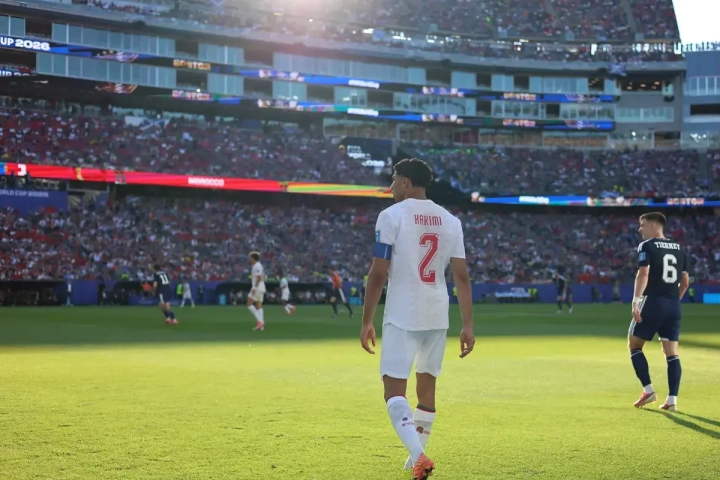
Morocco strengthened their grip on a place in the knockout stages of the 2026 FIFA World Cup with a disciplined and impressive victory over Scotland in a fiercely contested Group C encounter in Massachusetts. An early goal from Ismael Saibari ultimately proved decisive as the North Africans showcased the quality, organisation and technical excellence that have made them one of the most respected international sides in world football. Scotland battled bravely throughout the evening and enjoyed periods of pressure, particularly later in the match, but they were unable to find the breakthrough required to recover after conceding within the opening moments.
The result represented a significant step forward for Morocco after their opening draw with Brazil, while Scotland were left reflecting on an opportunity missed following their victory over Haiti in the first round of fixtures. The outcome also ensured that qualification from Group C remained firmly in Morocco’s hands heading into the final round of matches.
Few inside the stadium had even settled into their seats when the contest was dramatically transformed. Morocco started with the confidence and authority of a team that believes it belongs among the elite nations in the competition. Their aggressive pressing immediately unsettled Scotland and the breakthrough arrived after just 71 seconds. Ismael Saibari found space inside the Scottish defensive structure and calmly finished to give Morocco a dream start. The strike not only handed his side an early advantage but also entered the tournament record books as the fastest goal of the 2026 World Cup to that point.
For Steve Clarke’s side, it was the worst possible beginning. Scotland had altered their shape from the opening match, introducing a five-man defensive line in an effort to contain Morocco’s dangerous attacking players. Nathan Patterson and Kieran Tierney returned to the side as Clarke sought greater stability against opponents widely viewed as one of the strongest teams outside the traditional favourites. Instead, the tactical plan suffered an immediate setback as Morocco exposed vulnerabilities before Scotland could settle into the game.
The early goal energised Morocco and allowed them to dictate the rhythm of the contest. Their midfield combination repeatedly demonstrated why the team has earned admiration across the football world. Azzedine Ounahi, Ayyoub Bouaddi and Neil El Aynaoui controlled possession with intelligence and composure, moving the ball quickly and forcing Scotland to spend long periods chasing shadows. Every time Scotland appeared to build momentum, Morocco found a way to slow the game down and regain control.
Brahim Diaz was a constant threat between the lines. The creative playmaker drifted into pockets of space and linked effectively with Saibari and Achraf Hakimi. Scotland struggled to contain the movement on their right-hand side, where Hakimi’s pace and attacking intent repeatedly stretched the defensive structure. Several dangerous moments followed the opening goal as Morocco threatened to increase their advantage and effectively end the contest before half-time.
Angus Gunn was called into action on multiple occasions and his interventions helped keep Scotland within touching distance. The goalkeeper produced important saves and commanded his penalty area effectively during a spell when Morocco appeared capable of scoring a second. Without his contribution, the margin could have been considerably greater by the interval.
Scotland’s difficulties were not limited to defending. In possession they struggled to establish any meaningful rhythm. Scott McTominay and John McGinn found themselves crowded out by Morocco’s energetic midfield, while Che Adams frequently battled in isolation against a well-organised defensive unit. The passing lacked precision and attacks often broke down before they reached dangerous areas. Morocco’s pressing forced hurried decisions and prevented Scotland from building through the thirds with consistency.
As the first half progressed, however, Scotland slowly began to regain a foothold. Andy Robertson pushed higher up the pitch and Tierney’s forward runs provided a greater attacking outlet. Ryan Christie and Lewis Ferguson worked tirelessly to close down Morocco’s passing lanes and the game became more competitive. While clear chances remained limited, Scotland at least started to spend more time in advanced positions and gave their supporters hope that a comeback might still be possible.
The interval arrived with Morocco leading by a single goal, but the scoreline only partially reflected their superiority. They had controlled possession, created the clearer opportunities and looked the more composed side throughout much of the opening period. Scotland’s task was obvious. They needed greater urgency, more creativity and a willingness to take risks.
The second half developed into a fascinating tactical battle. Scotland emerged with renewed determination and attempted to push their defensive line higher. The urgency increased and the tempo of their play improved noticeably. McGinn became more influential, driving forward whenever opportunities emerged, while Robertson continued to provide energy down the left flank.
Morocco, meanwhile, demonstrated another side of their game. Having impressed with their attacking quality before the break, they now showed patience, discipline and maturity. Rather than chasing additional goals recklessly, they remained compact and difficult to break down. Every Scottish attack was met by organised defending and intelligent positioning.
Hakimi continued to be one of the standout performers on the field. His ability to transition from defence to attack created recurring problems. On several occasions he carried the ball significant distances up the pitch, relieving pressure and allowing Morocco to reorganise. His experience at the highest level of club football was evident throughout the contest.
Saibari, understandably, attracted much of the attention because of his decisive goal, but Morocco’s success was built upon collective excellence. The defensive partnership remained composed under pressure, the midfield retained control during critical moments and the forwards consistently offered an outlet whenever Scotland threatened to build momentum.
As the clock ticked down, Scotland increased their attacking commitment. Additional bodies were committed forward and the match became more open. Yet with every passing minute Morocco’s belief grew stronger. Their players appeared comfortable managing the game and rarely looked panicked despite Scotland’s determination.
Several promising situations emerged for the Scots. Set-pieces, long throws and crosses into the penalty area generated moments of anticipation among the travelling support. However, the final touch repeatedly eluded them. Whether through defensive blocks, strong goalkeeping or rushed finishing, the equaliser never arrived.
The contrast in styles made for compelling viewing. Scotland relied increasingly on direct play and physicality, while Morocco continued to trust their technical quality. Neither approach is inherently superior, but on this occasion Morocco executed their game plan with greater precision. Their passing sequences frequently relieved pressure and frustrated opponents desperate to force mistakes.
The atmosphere inside the stadium reflected the significance of the occasion. Both sets of supporters contributed colour, noise and passion throughout the evening. Morocco’s growing confidence was matched by the energy of their fans, many of whom arrived believing their team could make another deep run in a major tournament. Scotland’s supporters, meanwhile, never stopped encouraging their players despite the difficult circumstances.
As the final stages approached, the sense grew that one goal might be enough. Morocco managed the contest intelligently, slowing the tempo when required and forcing Scotland to chase. Their game management reflected a team comfortable competing under pressure on football’s biggest stage.
When the final whistle arrived, there was a mixture of celebration and disappointment. Morocco’s players embraced, aware that they had secured a hugely valuable victory against a determined opponent. Scotland’s squad sank to the turf, recognising that their hopes of progressing would now depend heavily on events in the final group match.
After the game, Morocco’s camp understandably focused on the professionalism of the performance. The emphasis was placed on the importance of the early goal, the collective discipline shown throughout the match and the growing belief within a squad that continues to evolve. There was recognition that defeating Scotland represented another statement of intent from a nation that has steadily transformed itself into one of the strongest footballing forces outside the traditional powerhouses. The coaching staff highlighted the concentration levels, tactical execution and maturity demonstrated by the players across ninety demanding minutes.
From the Scottish perspective, Steve Clarke was left to reflect on both the positives and negatives. The manager acknowledged the quality of the opposition and reiterated his belief that Morocco are among the strongest teams in the tournament. He pointed to the response after the disastrous opening minutes as evidence of his players’ character but admitted that conceding so early made the challenge significantly more difficult. There was frustration that Scotland failed to capitalise on the periods during which they managed to build pressure, yet there was also a determination not to allow one defeat to define their campaign.
Clarke had warned before the match that Morocco possessed power, pace and technical quality throughout the side. Those warnings proved accurate. Scotland competed courageously but found themselves facing a team capable of controlling matches through intelligence as well as athleticism.
Looking ahead, Morocco will view this result as further evidence that they belong among the contenders capable of challenging the biggest nations. Their draw with Brazil had already attracted attention. Backing that performance up with victory against Scotland reinforced the notion that the Atlas Lions are not merely participants but genuine competitors capable of influencing the latter stages of the competition.
For Scotland, the defeat was painful but not necessarily fatal. The campaign remains alive and there is still an opportunity to secure progression depending on future results. What will concern Clarke most is not the defeat itself but the manner of the opening minutes. Against elite opposition, mistakes are punished ruthlessly and the concession after just over a minute forced Scotland into an uphill battle they never quite managed to overcome.
The evening ultimately belonged to Morocco and, in particular, to Ismael Saibari. His record-breaking strike settled a contest that showcased many of the qualities making Morocco such an admired side. The midfield controlled proceedings, the defence remained organised, the full-backs offered attacking threat and the entire team displayed the composure expected of a group with significant ambitions.
Scotland fought until the end and never allowed the game to drift completely beyond their reach. Their effort could not be questioned. Yet football at World Cup level is often decided by fine margins, and on this occasion the finest margin of all arrived after only 71 seconds. Saibari seized his moment, Morocco never relinquished control, and a crucial Group C victory moved the Atlas Lions one step closer to the knockout rounds while leaving Scotland facing a tense conclusion to their group-stage journey.