The margin for error has evaporated at the 2026 FIFA World Cup. As the group stages conclude and the reality of knockout football takes hold, the tournament delivers a compelling European heavyweight clash in the Round of 32. On Tuesday, 30 June 2026, France will face Sweden in an encounter brimming with tactical intrigue and immense pressure. Scheduled for a 22:00 BST kick-off at the towering New York New Jersey Stadium, this fixture offers a straightforward, brutal equation: victory secures a coveted place in the last sixteen, while defeat guarantees an agonising journey home.
For France, the objective is to secure a third global crown and provide a fitting farewell to their legendary manager. For Sweden, merely reaching the knockout phase marks a triumphant return to the world stage, yet their ambitions under a new, transformative head coach extend far beyond making up the numbers.
Les Bleus’ Flawless Momentum and Emotional Resolve
France arrive in New Jersey carrying the formidable momentum of a flawless group stage campaign. Placed in Group I, the 2018 champions and 2022 runners-up systematically dismantled their opposition, collecting maximum points while scoring ten goals and conceding a mere two. Their tournament opened with a professional 3-1 victory over Senegal, which was swiftly followed by a commanding 3-0 dispatching of Iraq in Philadelphia.
However, it was their final group fixture against Norway in Boston that truly underlined their frightening attacking capabilities. Despite the absence of head coach Didier Deschamps, who returned to France following a family bereavement, leaving his trusted assistant Guy Stéphan to brilliantly manage the touchline, Les Bleus produced a devastating display. Paris Saint-Germain winger Ousmane Dembélé delivered a spectacular first-half performance, netting a breathtaking hat-trick within the opening 32 minutes. Although Norway found a solitary response through Thelo Aasgaard, substitute Désiré Doué added a fourth in stoppage time to seal a comprehensive 4-1 triumph.
The emotional backdrop of this campaign cannot be overstated. Deschamps, who has been at the helm since 2012, has already announced his intention to step down at the conclusion of this tournament. His squad appears intensely galvanised, determined to navigate the knockout rounds and present their long-serving manager with the ultimate parting gift.
Sweden’s Rollercoaster Return Under Potter
Contrasting France’s serene progression, Sweden’s journey to the Round of 32 has been a chaotic, exhilarating rollercoaster. Having failed to qualify for the 2022 edition in Qatar, the Scandinavian nation turned to English manager Graham Potter in October 2025. The former Chelsea and Brighton boss immediately rejuvenated the setup, navigating tricky European play-off ties against Ukraine and Poland to secure their ticket to North America.
Drawn into a highly volatile Group F, Potter’s men experienced every extreme of tournament football within the space of a fortnight. They commenced their campaign with a scintillating 5-1 thrashing of Tunisia in Monterrey, showcasing a lethal edge. However, a harsh reality check followed in Houston, where they were dismantled 5-1 by an exceptional Netherlands side.
Entering their final group match against Japan in Dallas, the stakes were palpable. Trailing to a 56th-minute strike from Daizen Maeda, Sweden demonstrated remarkable psychological resilience. Just six minutes later, Anthony Elanga found the vital equaliser, securing a 1-1 draw that proved sufficient to guarantee progression. That gritty performance highlighted a newfound mental fortitude instilled by Potter, proving they can dig deep when their backs are firmly against the wall.
The Tactical Chess Match
The tactical battlelines for this knockout clash present a fascinating contrast in styles. France operate within a dynamic 4-2-3-1 framework, built upon a foundation of suffocating defensive stability and blistering wide transitions. The defensive unit, featuring the likes of Jules Koundé, Dayot Upamecano, and Theo Hernández, provides a secure base ahead of goalkeeper Mike Maignan. In midfield, Aurélien Tchouaméni serves as the crucial anchor, dictating the tempo and disrupting opposition counter-attacks.
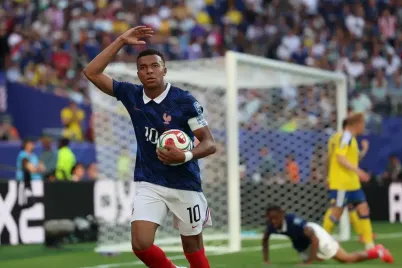
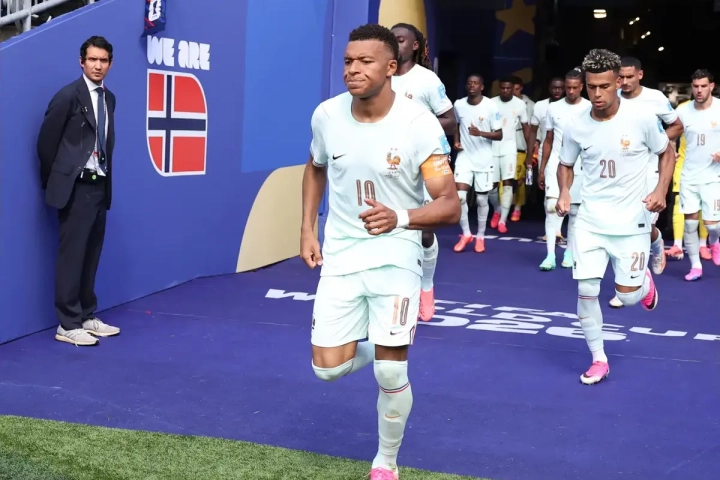
Offensively, the French remain arguably the most potent side in international football. The pace and trickery of Dembélé, coupled with the relentless threat of captain Kylian Mbappé and the creative ingenuity of Michael Olise, make them a nightmare to defend against. They are equally comfortable dominating possession or completely devastating teams on the counter-attack.
Sweden, conversely, have adopted a fluid 3-4-1-2 system under Potter’s meticulous guidance. Goalkeeper Jacob Widell Zetterström is protected by a robust back three, marshalled by the experienced captain Victor Lindelöf alongside Isak Hien. This structure allows their wing-backs to push high up the pitch, overloading the wide areas and providing service into the penalty box.
The Scandinavian side’s true danger lies in their attacking trident. The partnership of Alexander Isak and Viktor Gyökeres—who struck four times during the qualification play-offs—offers a perfect blend of technical finesse and raw, physical power. Supported by the pace of Elanga operating in a slightly withdrawn or wider role, Sweden possess the firepower to trouble any defence in the world. Potter’s tactical flexibility means they can shift seamlessly from a low block into a rapid attacking shape, a strategy that will be heavily relied upon against a dominant French outfit.
Team News and Squad Availability
At this gruelling juncture of a major international tournament, physical conditioning and squad depth become paramount. Both medical departments have worked relentlessly to ensure their rosters are adequately prepared for the unique intensity of knockout football. Remarkably, neither camp has reported any verified major injury concerns stemming from their final group stage encounters.
Furthermore, both nations appear to have navigated the perilous disciplinary tightrope of the group stage without suffering any catastrophic suspensions. While a handful of players collected yellow cards in their respective third matches, including Tchouaméni for France and both Hien and Gyökeres for Sweden, no key personnel are confirmed as suspended for this specific clash. Consequently, both managers possess the luxury of selecting from fully stocked arsenals. This guarantees the tactical battle can be executed precisely as envisioned on the training ground, setting the stage for a remarkably high-quality footballing contest.
Historical Context and the Weight of Expectation
While the immediate focus remains firmly fixed on the pitch in New Jersey, the historical context surrounding this fixture adds an extra layer of intrigue. Sweden and France are entirely familiar adversaries on the European stage. Their most recent high-profile competitive encounters occurred during the 2020-21 UEFA Nations League. On that occasion, France secured a narrow 1-0 victory in Solna before prevailing 4-2 in a highly entertaining clash at the Stade de France, a match that ironically featured a brace from veteran Olivier Giroud and a late strike from Kingsley Coman.
However, historical records count for little when the whistle blows in a World Cup knockout tie. Sweden’s folklore is still dominated by their legendary run to the final in 1958. The current generation, inspired by Potter’s modern methods, is desperate to carve out its own legacy and step beyond the shadows of past icons.
Conversely, the weight of expectation rests entirely upon French shoulders. Anything less than an appearance in the final is often viewed as a disappointment for a nation possessing such an extraordinary depth of talent. A victory in East Rutherford would propel Les Bleus into the elite bracket of the final sixteen, keeping their dream of a third star alive.
The Stage is Set
As the 22:00 BST kick-off rapidly approaches, the atmosphere surrounding the New York New Jersey Stadium is building to a crescendo. The architectural marvel provides a fittingly grandiose backdrop for a match of this magnitude. Pacing the game, managing energy reserves in the North American summer, and utilising substitutes effectively will be just as critical as the tactical setups deployed from the first whistle.
Every tackle will carry immense weight, every defensive lapse will be magnified, and every goal will be celebrated with unbridled passion. This is the uncompromising, ruthless nature of World Cup knockout football. For France, it is an opportunity to assert their dominance and take another step towards ultimate glory. For Sweden, it is a chance to execute the ultimate upset and prove that their revival under Potter is genuine. One nation will march onwards into the Round of 16, while the other will face the crushing despair of immediate elimination. The world is watching.