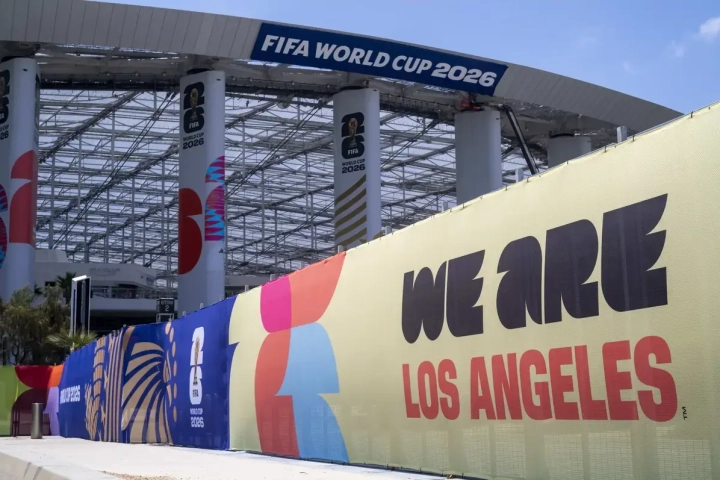
Spain reach the first knockout hurdle of their World Cup campaign with the look of a team in control, yet the question following Luis de la Fuente’s side into Los Angeles is whether control will be enough when the margins narrow and the tournament becomes unforgiving. The FIFA World Cup 2026 round-of-32 tie between Spain and Austria takes place at Los Angeles Stadium, the tournament name for SoFi Stadium in Inglewood, on Thursday, 2 July 2026, with kick-off at 12pm local time, 8pm BST in the United Kingdom and 9pm in Spain and Austria. The winner will advance to the last 16 to face either Portugal or Croatia, ensuring that this meeting carries both immediate pressure and a clear view of the difficult path ahead.
For Spain, the fixture is an opportunity to reinforce their status as one of the competition’s most technically secure sides. They topped Group H with seven points from three matches, winning twice, drawing once and completing the section without conceding a goal. That defensive record has brought calm, but not complete satisfaction. Spain’s possession game remains one of the most sophisticated in international football, yet their opening 0-0 draw with Cape Verde revived a familiar question about whether dominance of the ball can become dominance of the scoreboard when opponents sit deep, close central spaces and ask them to solve the final third.
The group campaign became stronger after that frustrating start. A 4-0 win over Saudi Arabia showed Spain’s capacity to turn pressure into punishment, and their most recent competitive fixture, a bruising 1-0 victory over Uruguay, confirmed top spot in the group. That result carried value beyond the table because it came against a physical, aggressive opponent who made Spain fight for every yard. It was not a flowing exhibition, but it was the kind of result that can matter in tournament football: resilient, disciplined and earned under stress. The clean sheet also extended the sense that Unai Simón and the defence in front of him have settled into an impressive rhythm.
De la Fuente remains the central figure in Spain’s modern reset. Having led the country to European Championship success, he has built a side that blends traditional Spanish passing principles with more vertical movement, sharper pressing and greater flexibility in midfield. Rodri provides control and authority at the base, Pedri gives the team imagination between the lines, while Fabián Ruiz and Mikel Merino offer different routes through pressure. Dani Carvajal brings experience from full-back, Aymeric Laporte gives composure in possession, and Álvaro Morata remains a senior attacking reference even when Spain’s most eye-catching work starts deeper on the pitch.
The main concern surrounds width. Lamine Yamal and Nico Williams arrived at the tournament after hamstring issues earlier in the year, and Spain have also had to manage fresh concerns from the Uruguay match. Williams felt discomfort in his right leg, while Yeremy Pino suffered a shoulder injury. Neither situation should be treated lightly, and Spain’s attacking shape may be influenced by how much risk De la Fuente is willing to take in a knockout tie. If the natural wingers are limited or unavailable from the start, Ferran Torres, Dani Olmo, Gavi or other midfield-forward options could be asked to provide movement from wider starting positions.
That adjustment is more than a selection issue; it changes the geometry of Spain’s attacks. With full-speed wingers, the pitch stretches naturally and opposing full-backs are forced backwards. Without that same width, Spain can become narrower, easier to crowd and more reliant on intricate combinations through the middle. Austria will know this. Rangnick’s team are unlikely to allow Spain repeated central entries without pressure, and they will be prepared to defend in compact lines before breaking quickly into the spaces left by advanced full-backs.
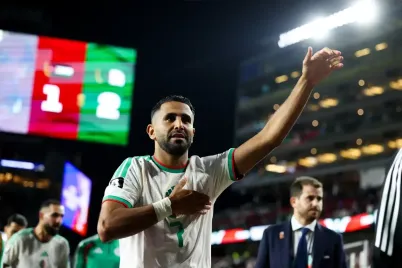
Austria arrive with their own momentum, even if it came from chaos rather than serenity. Ralf Rangnick’s side finished second in Group J and reached the World Cup knockout stage for the first time in 44 years after a dramatic 3-3 draw with Algeria in Kansas City. Their most recent competitive fixture was one of the wildest games of the tournament: Austria led twice, were pulled back, then appeared to be heading for heartbreak when Riyad Mahrez put Algeria ahead in stoppage time, only for Sasa Kalajdzic to equalise almost immediately. The point sent Austria through as runners-up and transformed a tense evening into a landmark moment.
That finale also said something about the personality of Rangnick’s team. Austria are organised, demanding and tactically clear, but they are not merely a defensive side. Marko Arnautovic and Marcel Sabitzer both scored against Algeria, Kalajdzic delivered the late intervention, and the team’s willingness to attack even under extreme pressure helped silence suggestions that a mutually convenient draw might dull the contest. Rangnick rejected those suggestions strongly, and the match itself provided the answer: Austria played with urgency, risk and emotional commitment until the final whistle.
Rangnick’s influence is easy to see. Austria press aggressively when the trigger is right, close space quickly in midfield and look to move forward before opponents have reset. Sabitzer is central to that approach, combining pressing intelligence with timing in the final third. Konrad Laimer brings energy and defensive aggression, Christoph Baumgartner can arrive between the lines, and Michael Gregoritsch gives the attack a physical reference point. David Alaba, if involved, adds leadership and technical assurance, although Austria have had to manage questions around the fitness of senior figures including Alaba and Arnautovic. Where availability is not fully clear, the safer assumption is that Rangnick will shape his plan around the players he trusts most to carry out the collective press.
There are no confirmed suspension concerns that fundamentally alter Austria’s outlook, but fatigue and defensive concentration will matter after the emotional drain of the Algeria game. Spain will test patience in a different way. Algeria created a match of transitions and momentum swings; Spain are more likely to test Austria through repetition, circulating the ball until one defender steps late or one midfielder loses the angle. For Austria, the challenge will be to keep their distances intact for long spells, resist the temptation to chase every pass and recognise the moments when the press can genuinely unsettle Spain’s build-up.
The tactical contrast is compelling. Spain want the ball, the rhythm and the territory. Austria want compactness, duels and the chance to attack quickly when possession changes. If Spain score early, the match could open in ways that suit their midfielders and allow their forwards to find space. If Austria hold out, the pressure will begin to shift towards De la Fuente’s side, particularly given Spain’s recent history of knockout frustration when they fail to turn possession into goals. The memory of their 2022 exit after a goalless draw with Morocco still lingers as a warning, even if this is a different team with a different mood.
Set-pieces may become a route into the game for both sides. Spain are not usually defined by aerial power, but they have enough delivery and movement to create problems. Austria, with height and physical presence through players such as Gregoritsch, Kalajdzic and their defensive unit, may see dead-ball situations as one of their best opportunities to unsettle Spain. Discipline around the box will therefore be essential. A needless foul in a wide area, a mistimed challenge after a turnover or a poorly defended second ball could carry enormous weight in a tie where open-play chances may be carefully rationed.
The historical layer adds interest without overwhelming the present. Austria have a proud World Cup past, including a third-place finish in 1954, but their recent tournament history has been far quieter. Reaching this stage already represents progress, and beating the reigning European champions would be a result to stand alongside their best modern achievements. Spain, world champions in 2010 and European champions again in the current era, carry a different burden. They are expected to go deep, expected to control matches and expected to find solutions. Knockout football, however, has a habit of exposing the distance between expectation and execution.
Los Angeles provides a fitting stage for that tension. Spain will bring the aura of a side accustomed to shaping games with the ball. Austria will bring the defiance of a team that has already survived one of the tournament’s most dramatic endings. The winner will move closer to the later rounds, but the performance may matter almost as much as the result. Spain need to show that their possession has sharpness, not just elegance. Austria need to prove that their energy can remain organised against one of the most patient teams in the competition.
By kick-off, the storylines will be clear. De la Fuente’s Spain are unbeaten, unbreached and still chasing a more ruthless edge in attack. Rangnick’s Austria are revived, resilient and dangerous precisely because they have little reason to fear the occasion. One side will try to pass its way through pressure; the other will try to make pressure the match’s defining force. In a round of 32 already shaped by shocks, penalties and narrow margins, Spain against Austria has the feel of a test not only of talent, but of nerve, timing and belief.