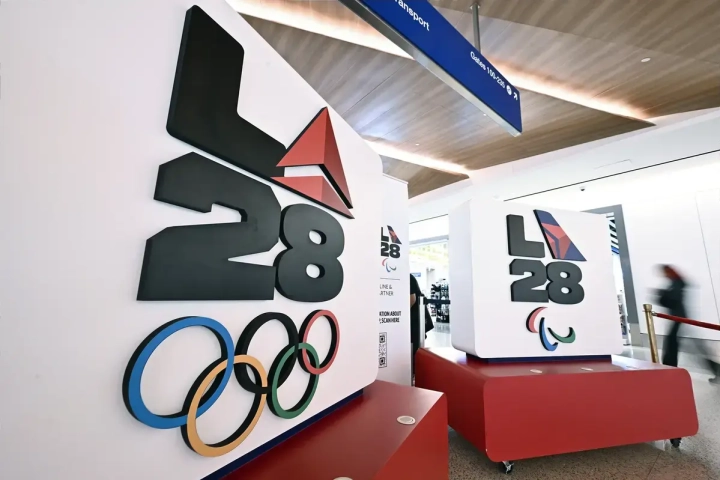
In a monumental and highly anticipated geopolitical sporting development, the International Olympic Committee (IOC) has provisionally lifted the suspension of the Russian Olympic Committee (ROC). This landmark decision, announced on Tuesday, 7 July 2026, formally paves the way for Russian athletes to return to the global sporting fold ahead of the 2028 Los Angeles Summer Olympics.
The ruling marks the end of an unprecedented era of sporting exile for Russia, fundamentally altering the landscape of international athletic competition. However, while the suspension of the national committee has been revoked, the IOC maintains strict stipulations regarding anti-doping regulations and has deferred a final verdict on the use of Russian national symbols, such as the flag and anthem.
As global federations digest the news and athletes begin their preparations, here is a comprehensive look at the breaking announcement, the historical context of Russia’s Olympic sanctions, and what this paradigm shift means for the future of the Olympic Games.
The Breaking Decision: Reversing the October 2023 Suspension
The immediate catalyst for this week’s announcement traces back to the specific circumstances of the ROC’s most recent suspension. Following the Russian invasion of Ukraine in February 2022, the sporting world imposed severe restrictions on Russian and Belarusian athletes. However, the formal suspension of the ROC itself was enacted on 12 October 2023.
The IOC imposed this suspension because the Russian Olympic body had unilaterally incorporated regional sports councils from Russian-occupied territories of Ukraine, specifically Luhansk, Donetsk, Kherson, and Zaporizhzhia. This move was deemed a blatant violation of the Olympic Charter, as it infringed upon the territorial integrity of the National Olympic Committee (NOC) of Ukraine.
The provisional lifting of this ban comes after a thorough analysis by the IOC’s Legal Affairs Commission. The commission concluded that the ROC has amended its structure and “no longer includes as its members any regional sports organisations in territories falling under the jurisdiction of the National Olympic Committee (NOC) of Ukraine”. Consequently, the terms that necessitated the 2023 suspension no longer apply, prompting the IOC Executive Board to formally lift the sanctions.
The End of the Neutral Athlete Vetting Programme
Perhaps the most significant immediate consequence of this decision is the termination of the IOC’s strict vetting programme for Russian and Belarusian athletes. For the past three years, athletes from these nations were forced to undergo rigorous background checks to secure “Individual Neutral Athlete” status. An IOC vetting panel meticulously reviewed each applicant to ensure they had not offered any public support for the war in Ukraine or maintained ties to the military.
This exhaustive process drastically reduced Russian participation. At the 2024 Paris Olympics, a mere 32 athletes from Russia and Belarus competed as approved neutrals, combining to win just five medals. A similarly restricted number competed at the 2026 Milano Cortina Winter Games under the same neutral framework.
By advising international sports bodies to end this vetting programme ahead of the qualifying events for the 2028 Los Angeles Olympics, the IOC has essentially dissolved the primary barrier to entry for hundreds of athletes. To put the sheer scale of this return into perspective, the Russian team boasted more than 300 athletes at the Tokyo Olympics in 2021, securing an impressive 71 medals. A contingent of a similar magnitude is now highly likely to be present in California.
Russian officials have greeted the news with immediate optimism. Russian Sports Minister Mikhail Degtyarev stated that the decision should clear the path for a complete return to the international sporting stage. “Our country’s return to the Olympic family is a green light for international federations to reinstate all our athletes,” Degtyarev declared.
Anti-Doping Measures and the Symbolism Dilemma
While the geopolitical suspension has been lifted, the shadow of Russia’s anti-doping history continues to dictate strict conditions. To address the severe lack of confidence within the global sporting community, the IOC confirmed that all Russian athletes returning to international competition must meet stringent anti-doping requirements.
Due to ongoing concerns regarding the governance of the Russian Anti-Doping Agency (RUSADA), athletes will be required to undergo multiple doping controls administered by the International Testing Agency (ITA) based on a sports risk assessment prior to their return.
Furthermore, the aesthetic presentation of the Russian team in Los Angeles remains entirely unresolved. The IOC has explicitly stated that it has not yet approved allowing Russian athletes and teams to compete with their national flag, colours, or anthem. That highly sensitive decision will be made “at an appropriate time”.
The IOC also maintained its hardline stance against the Russian state apparatus. The committee reiterated that it will not organise any IOC events within Russia, nor will it invite Russian government or state officials to its competitions. The discretion to host events in Russia or invite state officials remains solely with the individual international sports federations and event organisers.
A Decade of Controversy: The History of Russia’s Olympic Sanctions
To fully grasp the magnitude of this week’s ruling, one must understand the unprecedentedly turbulent relationship between Russia and the Olympic movement over the past decade.
The Sochi 2014 Scandal: The modern saga began following the 2014 Winter Olympics in Sochi. Subsequent investigations, most notably the independent McLaren Report commissioned by the World Anti-Doping Agency (WADA), uncovered a vast, state-sponsored doping programme that involved the systematic manipulation of urine samples by Russian intelligence services.
Rio 2016 and Pyeongchang 2018: The fallout resulted in a partial ban for Russian athletes at the 2016 Rio Games. By the 2018 Winter Olympics in Pyeongchang, the ROC was formally suspended for the doping violations, forcing cleared Russian athletes to compete under the neutral designation of “Olympic Athlete from Russia” (OAR).
Tokyo 2020 and Beijing 2022: Due to continued non-compliance and data manipulation at the Moscow anti-doping laboratory, WADA handed Russia a four-year ban from all major sporting events (later reduced to two years by the Court of Arbitration for Sport). Consequently, at the Tokyo 2020 Games (held in 2021) and the Beijing 2022 Winter Games, athletes competed under the acronym “ROC” without their national anthem or flag.
The Ukraine Invasion (2022 – Present): Just days after the conclusion of the Beijing Winter Games in February 2022, Russia launched its full-scale invasion of Ukraine. The IOC responded by urging all international federations to ban Russian and Belarusian athletes outright. This blanket ban eventually transitioned into the strict, heavily vetted “Individual Neutral Athlete” pathway for Paris 2024 and Milano Cortina 2026, leading up to the specific territorial dispute that caused the October 2023 ROC suspension.
The IOC used Tuesday’s announcement to reaffirm its stance on the conflict. The committee noted that its position regarding the invasion remains unchanged and that it strongly condemns the war. “The IOC stands in solidarity with the Olympic community of Ukraine, which the Olympic movement has supported since the beginning of the war, and will continue to do so,” the executive board confirmed, highlighting the ongoing financial and logistical support provided through the IOC Solidarity Fund to Ukrainian athletes.
What This Means for LA 2028 and Beyond
The immediate focus for the reinstated Russian Olympic Committee will be preparing athletes for the rigorous qualification cycles that precede the Los Angeles Games. However, the international community will get its first glimpse of this new era much sooner. The next major Olympic competition is the 2026 Youth Summer Games, scheduled to open in Dakar, Senegal, on 31 October. This event will serve as a crucial logistical and diplomatic testing ground for the return of Russian contingents.
The lifting of the suspension forces international sports federations, ranging from World Athletics to FIFA and World Aquatics, to re-evaluate their own specific bans and integration policies. While the IOC has given the “green light,” the actual implementation of Russia’s return will be a complex, highly politicised process negotiated sport by sport.
As the countdown to Los Angeles 2028 begins in earnest, the narrative has shifted. The question is no longer if Russian athletes will be present in California, but rather how they will be presented, and how the global sporting community will react to their return after years of exile.