
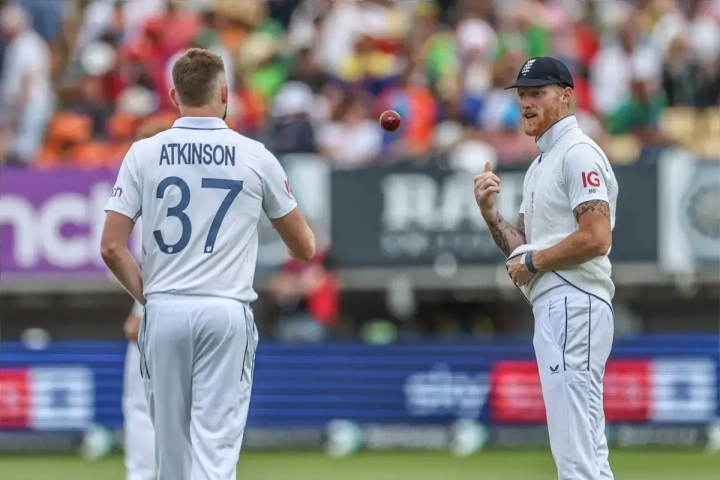
As the dust settles on a sobering 253-run defeat at The Kia Oval, the reality of England’s current predicament is unavoidable. The comprehensive dismantling at the hands of a rejuvenated New Zealand side has squared the three-match series at 1-1, turning this week’s impending clash at Trent Bridge into a high-stakes, winner-takes-all decider.
While the post-match discourse has rightly lauded the sheer brilliance of New Zealand’s Matt Henry, who walked away with Player of the Match honours following a staggering 11-wicket haul, the glaring subtext of the second Test was the gaping void left by the absentees in the English dressing room.
Without the talismanic leadership of captain Ben Stokes and the cutting-edge hostility of fast bowler Gus Atkinson, England looked structurally imbalanced and tactically blunt. As the squad regroups ahead of the final Test on 25 June, the inevitable question must be asked: Did these two absences cost England the series lead, and can their anticipated return swing the pendulum back in the hosts’ favour?
The Oval Autopsy: Outgunned and Out-Experienced
To understand the profound impact of the missing duo, one must first dissect exactly where England lost their grip on the second Test. Having secured a commanding 115-run victory at Lord’s in the series opener, the momentum was firmly with the hosts. However, forced into a heavy rotation due to injuries and personal circumstances, England fielded a drastically altered XI in South London.
Stand-in captain Joe Root, stepping up for a record-extending 65th time in Tests, was tasked with marshalling an attack that featured a debutant in Sonny Baker, a recalled Matthew Fisher playing only his second Test, and the spin of Jacob Bethell. While Jofra Archer provided flashes of terrifying express pace and Fisher worked tirelessly to claim five wickets across the match, the attack lacked the sustained, suffocating pressure required to dismantle a resolute Kiwi batting lineup.
New Zealand capitalised ruthlessly. Glenn Phillips’ magnificent 100 anchored their first-innings total of 391. Then, in the second innings, Henry Nicholls (121), Daryl Mitchell (68), and Rachin Ravindra (76) ground the English bowlers into the dirt to post 362. Chasing an improbable target, England succumbed for just 209, despite valiant half-centuries from Root (77) and Harry Brook (58).
The Void: Why Stokes and Atkinson Were Sorely Missed
The Stokes Factor: Leadership and Structural Balance
The absence of Ben Stokes is never merely about losing a middle-order batter or a fourth seamer; it is about losing the very heartbeat of this modern England side. Stokes possesses a unique ability to read the rhythm of a Test match. His aggressive field placements, unconventional bowling changes, and sheer force of will were sorely missed when Phillips and Nicholls were building their massive partnerships.
Furthermore, Stokes’ absence completely alters the structural balance of the XI. When fit to bowl, he provides a priceless seam option that allows the frontline quicks to rest and rotate. At The Oval, New Zealand batted for a combined 183 overs across the match. Without Stokes to shoulder 15 to 20 of those overs, Root had to push his primary quicks to their physical limits. Josh Tongue and Matthew Fisher bowled over 40 overs each in the match, while Archer and Baker were heavily taxed. The consequence of this fatigue was a loss of control, evidenced by the staggering 44 extras conceded on the opening day alone.
Missing the Enforcer: Gus Atkinson
If Stokes is the heartbeat, Gus Atkinson has rapidly become the executioner. The Surrey fast bowler was instrumental in England’s victory at Lord’s, claiming a devastating five-wicket haul that ripped through the New Zealand middle order.
Atkinson provides a relentless, hit-the-deck velocity that perfectly complements Archer’s smooth, skiddy pace. Without Atkinson, and with first Test Player of the Match Ollie Robinson also sidelined by injury, England lacked a reliable enforcer when the pitch flattened out on Days 2 and 3. Sonny Baker showed immense promise on debut, famously dismissing Rachin Ravindra early on Day 1, but expecting a rookie to immediately replicate Atkinson’s seasoned hostility was a bridge too far.
The Trent Bridge Decider: A Timely Boost
The anticipated return of Stokes and Atkinson for the third Test at Trent Bridge could not be more timely. The Nottingham venue is traditionally a ground that rewards both aggressive batting and disciplined swing bowling, a combination that perfectly suits the returning duo.
Atkinson’s reintroduction instantly elevates the potency of the pace attack. Reuniting him with Archer gives England a fearsome, multi-dimensional seam attack capable of taking 20 wickets in any conditions. It completely changes the dynamic for the New Zealand batters, who will no longer be able to simply see off Archer and capitalise on the inexperienced change bowlers.
Stokes’ return restores the much-needed middle-order steel. With the bat, he provides the tactical counter-punching required to disrupt the rhythm of the Kiwi quicks. As captain, his presence will undoubtedly lift a dressing room that looked mentally and physically fatigued during the closing stages in London.
The Blueprint for a Series Victory
However, simply parachuting Stokes and Atkinson back into the starting XI will not guarantee a series victory. If England are to lift the trophy, several glaring issues from The Oval must be addressed immediately.
- Neutralising Matt Henry
Matt Henry is currently the standout bowler of the series, and Trent Bridge will heavily favour his bowling style. His astonishing match figures of 11 for 109 (5-80 and 6-29) at The Oval were a masterclass in relentless, probing seam bowling. He brutally exposed technical flaws in the English top order, consistently threatening the outside edge. England’s openers, Ben Duckett and Emilio Gay, must formulate a clear, disciplined plan to see off Henry’s opening spells. They need to play late, leave well outside the off-stump, and force the New Zealand spearhead to alter his immaculate lengths.
- Eradicating Sloppiness
Test matches are won on the margins, and England’s margins at The Kia Oval were astonishingly wide. Dropped catches by debutants Jordan Cox and James Rew let New Zealand off the hook at crucial moments, while the bowling unit’s lack of discipline handed the tourists free runs via wides and no-balls. With the series on the line, England must return to the ruthless fielding standards that defined their victory at Lord’s.
- Converting Starts into Centuries
The scorecard from The Oval highlights a frustrating trend for the hosts. Emilio Gay (53), Joe Root (46 and 77), and Harry Brook (58) all navigated the perilous new ball, only to throw their wickets away when a monumental score beckoned. In stark contrast, New Zealand’s batters made their starts count, with Phillips and Nicholls cashing in with match-defining hundreds. At Trent Bridge, England’s premier batters must display the necessary ruthlessness to bat long and dictate the terms of the game.
The Verdict
The stage is perfectly set for a classic series finale. New Zealand have proven they possess the grit, skill, and firepower to expose any weaknesses in the English armour. Yet, the imminent return of Ben Stokes and Gus Atkinson provides the hosts with exactly the tactical and psychological ammunition they lacked in London. If they can tighten their discipline, neutralise the immense threat of Matt Henry, and unleash their returning stars, England possess all the tools necessary to close out the summer with a resounding victory.