A Familiar Narrative Unfolds
On a momentous Sunday afternoon at the spiritual home of cricket, a familiar narrative unfolded as the most dominant force in women’s sport secured yet another global triumph. Concluding the 2026 ICC Women’s T20 World Cup, Australia delivered a masterclass in composed run-chasing to defeat the host nation by a convincing margin of seven wickets. Commencing at 15:30 BST on 5 July 2026 at Lord’s Cricket Ground, this highly anticipated T20 International final promised a magnificent clash of titans. Ultimately, it was the touring side who silenced the partisan London crowd, flawlessly overhauling a competitive target with 17 deliveries to spare and etching their names into the history books once more.
The Toss and Early Tactical Battles
The psychological battle began before a single ball was bowled in anger. The visiting captain won the crucial coin toss and unhesitatingly elected to field first, banking on her experienced bowling cartel to restrict the hosts on a fresh, hard Lord’s surface. This tactical decision placed immediate pressure on an English top order that had been incredibly consistent throughout the group stages and semi-finals. Tasked with setting a formidable, tournament-winning total in a high-stakes environment, the home side faced a steep uphill battle against a disciplined and relentless opening burst from the Australian fielding unit.
A Stuttering Start for the Hosts
Navigating the early exchanges proved highly problematic for the home side. The opening partnership completely failed to ignite, immediately placing the middle order under severe scoreboard pressure. Wicketkeeper-batter Amy Jones departed for a brief 6 from 6 deliveries, while the usually explosive Danni Wyatt-Hodge was restricted to an unusually subdued 8 off 9 balls. The visiting pace attack, spearheaded by the exceptionally economical Kim Garth and the impressive Lucy Hamilton, offered absolutely no width or obvious scoring opportunities. By the time the fielding restrictions were lifted at the conclusion of the six-over powerplay, the batting side was desperately searching for fluency, relying entirely on their veterans to salvage the innings and post a defendable score.
Sciver-Brunt Anchors the Innings
Stepping into the breach was the talismanic Nat Sciver-Brunt, fresh off her heroic, match-winning semi-final performance against South Africa just days prior. Recognising the sheer gravity of the situation, she adopted a highly measured and deeply pragmatic approach, anchoring the innings with a blend of aggressive intent and necessary caution. While wickets tumbled around her, including the departure of captain Heather Knight for a painful 2 from 6 balls, Sciver-Brunt remained a pillar of absolute defiance. She methodically constructed a vital 58 from 53 deliveries, an innings gloriously decorated with five pristine boundaries. Operating at a steady strike rate of 109.43, her crucial knock ensured the hosts maintained a solid foothold in the contest during the incredibly restrictive middle overs.
Capsey and Kemp Provide Late Fireworks
To transform a mediocre, floundering total into a highly competitive one, the home side required a substantial injection of late momentum. Youthful prodigy Alice Capsey provided the initial spark, contributing a rapid 23 from 20 balls, featuring two fiercely struck fours and a towering six into the grandstands. However, it was the explosive Freya Kemp who dramatically altered the entire complexion of the first innings. Displaying remarkable fearlessness on the biggest stage imaginable, Kemp launched a blistering assault during the critical death overs. She blasted a magnificent 44 from just 28 deliveries, striking four boundaries and a maximum at a highly impressive strike rate of 157.14. Her late fireworks propelled the final score to a very respectable 150 for 4 from the allotted 20 overs, giving the capacity crowd genuine hope of a magical home victory.
Australian Bowling Discipline
The total could have been significantly higher had it not been for the immaculate, suffocating discipline exhibited by the visiting bowling unit. Hamilton was undeniably the standout performer with the white ball, showcasing remarkable control to finish with superb figures of 1 for 19 from her three overs. Garth was equally parsimonious, conceding a mere 20 runs from her full four-over quota while claiming a crucial early breakthrough. Spinners Sophie Molineux (1 for 32) and Annabel Sutherland (1 for 34) consistently varied their pace and flight, ensuring the English batters could never fully dictate the tempo of the match until Kemp’s late, desperate counter-attack.
First Innings: Top Batting Performances
| Batter | Runs | Balls | Strike Rate | Fours | Sixes |
| Nat Sciver-Brunt | 58 | 53 | 109.43 | 5 | 0 |
| Freya Kemp | 44 | 28 | 157.14 | 4 | 1 |
| Alice Capsey | 23 | 20 | 115.00 | 2 | 1 |
First Innings: Key Bowling Figures
| Bowler | Overs | Runs Conceded | Wickets | Economy |
| Lucy Hamilton | 3.0 | 19 | 1 | 6.33 |
| Kim Garth | 4.0 | 20 | 1 | 5.00 |
| Sophie Molineux | 4.0 | 32 | 1 | 8.00 |
The Run Chase Commences
Confronting a demanding required run rate of exactly 7.50 runs per over, the chasing side embarked on their pursuit with characteristic ruthlessness and utter professionalism. Any hopes the home supporters harboured of a nervous, tentative Australian start were swiftly extinguished by a clinical opening exhibition. Beth Mooney immediately seized complete control of the narrative, manipulating the field with absolute precision and severely punishing any marginal errors in length from the English seamers. The prolific left-hander quickly established a commanding rhythm, heavily neutralising the initial threat of the swinging new ball.
A Monumental Partnership
The defining, match-winning phase of the final unequivocally belonged to the magnificent, momentum-shifting alliance between Mooney and the dynamic Phoebe Litchfield. Together, they systematically dismantled the host nation’s primary bowling strategies. Litchfield was particularly severe on anything remotely short, executing powerful pull shots and expansive drives to completely demoralise the fielding unit. She raced to a deeply impressive 48 from just 35 deliveries, a knock encompassing six boundaries and two enormous sixes at a strike rate of 137.14. Her unbridled, youthful aggression perfectly complemented Mooney’s calculated, veteran accumulation, effectively taking the match completely away from the hosts before the halfway mark of the innings.
Mooney’s Masterclass Secures the Crown
Mooney’s performance was an absolute masterclass in high-pressure, tournament-final run-chasing. Serving as the immovable, reassuring anchor, she effortlessly pierced the infield gaps, finding the boundary ropes on ten separate occasions. Her unbeaten 64 from 49 balls, scored at a strike rate of 130.61, demonstrated unparalleled composure and flawless tactical brilliance. When Litchfield eventually departed, and a brief, entertaining cameo from Georgia Voll (9 from 6) concluded, the foundation had been unequivocally laid in stone. Iconic all-rounder Ellyse Perry arrived at the crease to provide the finishing touches, adding a swift 13 from 12 deliveries to casually guide her side over the precipice. The winning runs were emphatically struck early in the 18th over, with the visitors finishing on 153 for 3 in exactly 17.1 overs, sealing the seven-wicket triumph.
English Bowlers Toil in Vain
Defending a total of 150 required early, destructive breakthroughs and sustained, suffocating pressure, neither of which materialised for the hosts. The world’s premier white-ball spinner, Sophie Ecclestone, fought valiantly to restrict the scoring rate, eventually claiming 1 for 24 from her 3.1 overs. Off-spinner Charlie Dean also provided fleeting moments of control, securing 1 for 28 from her full four-over allocation. However, the rest of the attack suffered heavily under the sustained, brutal assault. Lauren Bell leaked a highly damaging 38 runs from her three overs (1 for 38), while Linsey Smith (0 for 30) and Freya Kemp (0 for 22) were utterly unable to replicate their usual restrictive lengths. The collective inability to break the critical Mooney-Litchfield partnership ultimately sealed their tragic fate.
Second Innings: Top Batting Performances
| Batter | Runs | Balls | Strike Rate | Fours | Sixes |
| Beth Mooney | 64 | 49 | 130.61 | 10 | 0 |
| Phoebe Litchfield | 48 | 35 | 137.14 | 6 | 2 |
| Ellyse Perry | 13 | 12 | 108.33 | 2 | 0 |
Second Innings: Key Bowling Figures
| Bowler | Overs | Runs Conceded | Wickets | Economy |
| Sophie Ecclestone | 3.1 | 24 | 1 | 7.58 |
| Charlie Dean | 4.0 | 28 | 1 | 7.00 |
| Lauren Bell | 3.0 | 38 | 1 | 12.67 |
The Ultimate Prize and Tournament Legacy
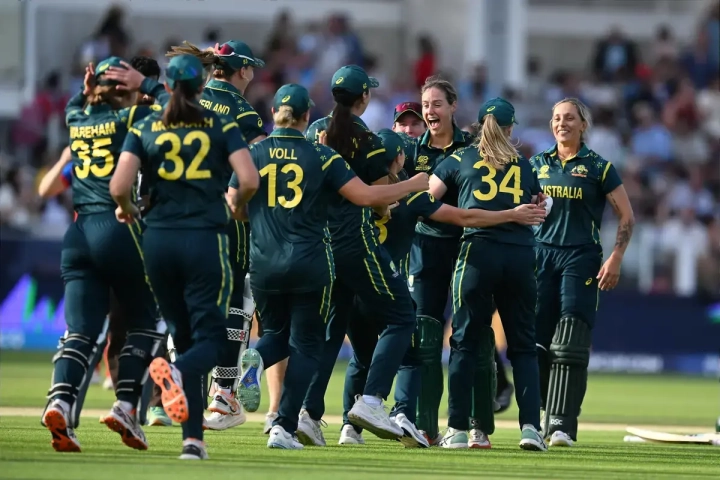
As the players warmly embraced on the hallowed Lord’s turf, the broader historical implications of the result resonated loudly throughout the cricketing world. For her flawless execution and unshakeable mentality under immense final-day pressure, Beth Mooney was officially awarded the Player of the Match accolade. The emphatic victory officially secures an unprecedented seventh Women’s T20 World Cup title for the Australian squad, permanently cementing their status as a peerless, unstoppable dynasty in the modern sporting landscape.
A Bitter Pill for the Hosts
Conversely, the heavy defeat represents a bitterly disappointing conclusion for an English side that had captivated the entire nation with an unblemished, inspiring run through the group stages and semi-finals. Reaching the final on home soil was a monumental achievement in itself, highlighting their immense squad depth and tactical evolution over the past calendar year. Nevertheless, they were ultimately outclassed by a vastly superior, highly experienced opponent when the global silverware was finally on the line. As the golden confetti rained down in London, the tournament concluded precisely as it has so many times before, with Australia reigning absolutely supreme over the cricketing globe.