
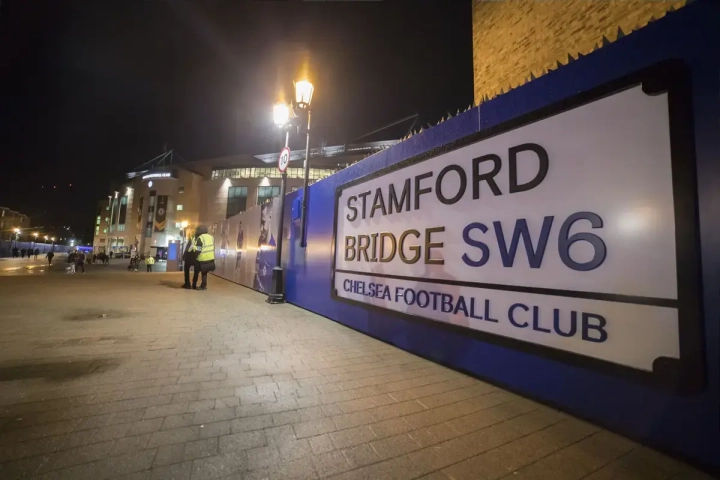
Chelsea Football Club has formally brought one of the most protracted, legally precarious, and controversial chapters of its recent history to a close. On Friday afternoon, the English Football Association (FA) confirmed that the West London club has been fined £10 million and handed a suspended two-window transfer ban following an exhaustive investigation into historical breaches of agent and intermediary regulations.
The sweeping sanctions stem from 74 separate rule breaches that occurred between 2009 and 2022, entirely during the ownership tenure of Russian oligarch Roman Abramovich. While the headline figures of an international transfer ban and an eight-figure fine initially appear devastating, the mood inside the Stamford Bridge boardroom is reportedly one of profound relief. In a dramatic, behind-the-scenes legal victory, Chelsea successfully appealed an initial ruling by an independent regulatory commission that would have seen the club hit with a suspended six-point deduction in the Premier League.
As the dust settles on this extensive regulatory probe, it brings to light the murky financial practices of a bygone era, the strategic transparency of the club’s current American ownership, and the immense pressure modern football clubs face under the watchful eye of financial regulators.
The Anatomy of the Breaches: Inside the Abramovich Era
The FA’s formal charges, which were officially levied against Chelsea in September 2025, focused heavily on the club’s conduct in the transfer market under its previous regime. Specifically, the governing body found Chelsea guilty of 74 breaches of FA Rule E1.2. These widespread infractions spanned across three distinct regulatory frameworks: the Football Agents Regulations, the Working with Intermediaries Regulations, and the Third Party Investment in Players Regulations.
At the heart of the FA’s investigation were secret, off-the-books payments made to agents and third-party entities to facilitate high-profile transfers to the English capital. While the FA’s published decision did not exhaustively list every single transaction involved in the 74 breaches, the timeline of the offences, spanning from 2009 until the club’s forced sale in 2022, encompassed some of the most pivotal and heavily contested signings in modern Chelsea history.
Investigations have heavily linked the financial irregularities to the deals that brought Brazilian winger Willian, Belgian maestro Eden Hazard, and Cameroonian striker Samuel Eto’o to Stamford Bridge. The acquisition of these players occurred during a “Wild West” era of European transfer dealings, characterised by fierce bidding wars and complex third-party ownership structures. Willian, for instance, was notoriously hijacked from London rivals Tottenham Hotspur at the eleventh hour in the summer of 2013. Hazard was arguably the most sought-after talent in Europe when he signed from Lille in 2012, requiring intense negotiation with numerous representatives.
To bypass strict financial scrutiny and standard intermediary reporting protocols, the club’s former hierarchy utilised covert transactions. By funnelling payments through offshore accounts or unofficial third parties, the Abramovich administration effectively circumvented the transparent financial reporting required by both the FA and UEFA.
The Clearlake Clean-Up: Proactive Self-Reporting
Crucially, the FA did not uncover these breaches through its own routine auditing. The illicit payments only came to light during the exhaustive legal and financial due diligence process undertaken by the Todd Boehly and Clearlake Capital consortium when they purchased the club in May 2022.
Upon discovering the irregular financial footprint left behind by the Russian billionaire, the new American ownership group made a defining, strategic decision: they voluntarily and proactively self-reported the findings to the FA, the Premier League, and UEFA.
This strategy of radical transparency proved to be the club’s greatest shield against devastating, immediate sporting sanctions. In the FA’s ruling, the governing body explicitly noted that Chelsea’s cooperation and proactive disclosure acted as massive mitigating factors. The club voluntarily handed over tens of thousands of internal documents to aid the regulators, ensuring that the current regime was viewed as a cooperative partner attempting to clean house, rather than a combative adversary attempting a cover-up.
The Secret Appeal and the Ghost of a Points Deduction
The most compelling aspect of Friday’s announcement was the revelation of a secret appeals process that saved Chelsea from the looming threat of a Premier League points deduction.
Before this week’s final verdict, Chelsea had fully admitted to all 74 breaches. In response to this admission, an independent regulatory commission convened and initially imposed a £10 million fine alongside a six-point deduction in the Premier League, which was to be suspended until June 2027.
In the current era of English football, where Profitability and Sustainability Rules (PSR) possess genuine teeth, and clubs such as Everton and Nottingham Forest have recently suffered immediate, highly damaging sporting penalties, any mention of a points deduction is a terrifying prospect. Even a suspended points penalty leaves a club vulnerable to catastrophic consequences should any future, minor administrative error trigger the deduction.
Recognising this existential threat, Chelsea’s legal team immediately lodged an appeal against the suspended points penalty. An independent appeal board subsequently allowed Chelsea’s appeal, setting aside the six-point sanction entirely. In its place, the board imposed a registration ban for two complete and consecutive transfer windows, which is suspended until 30 June 2027.
By successfully substituting a points deduction for a suspended transfer ban, Chelsea has completely insulated its current sporting ambitions. Provided the club adheres to all standard transfer regulations over the next twelve months, the transfer ban will never be activated, allowing the club’s recruitment team to continue reshaping the squad without restriction.
A Positive Legacy: Investing in the Grassroots
While the £10 million fine represents a significant financial penalty, it is accompanied by a silver lining for the wider English game. The FA confirmed on Friday that the fine was not subject to appeal, and that the entire eight-figure sum will be ring-fenced and invested directly into grassroots football.
For years, lower-league, amateur, and youth football structures across the United Kingdom have suffered from severe funding cuts, crumbling infrastructure, and a lack of basic resources. The injection of £10 million into the foundation of the sport ensures that the financial misconduct of elite billionaires will ironically result in a tangible, long-term benefit for local communities and the next generation of footballing talent.
A Cumulative Financial Toll
While Friday’s FA verdict formally closes the domestic investigation into these specific agent breaches, it represents just one piece of a broader, highly expensive regulatory puzzle that the Boehly-Clearlake ownership has been forced to solve over the past two years.
Earlier this year, in March 2026, the Premier League concluded its own parallel investigation into the exact same historical irregularities. In that instance, the Premier League assessed the club’s financial reporting and third-party investment structures.
Summary of Chelsea’s Historical Breach Sanctions (2022–2026)
| Governing Body | Date of Sanction | Infraction Focus | Sanction Imposed |
| UEFA | July 2023 | Incomplete financial reporting (2012–2019) | €10m (£8.6m) fine |
| Premier League | March 2026 | Financial reporting & Third-Party investment | £10.75m fine, 9-month Academy transfer ban, Suspended 1-year first-team ban |
| The FA | July 2026 | 74 Breaches of Agent Rules (FA Rule E1.2) | £10m fine, Suspended two-window transfer ban |
Combined, Chelsea’s new owners have accepted over £29 million in regulatory fines to purge the club of its historical infractions.
The Final Chapter?
“Chelsea Football Club is pleased to confirm that a final decision has been reached by The FA’s judicial bodies in relation to historical regulatory matters that were self-reported by the club,” a club spokesperson said in an official statement on Friday afternoon. “This brings all regulatory proceedings against the club to a close.”
However, while the club as a corporate entity is now in the clear, the saga is not entirely over for the individuals who orchestrated the rule-breaking. The FA confirmed that it will continue to investigate “individual misconduct arising out of this case.” This strongly suggests that the agents, executives, and intermediaries who facilitated the shadow payments during the Abramovich era may still face severe personal sanctions, fines, or permanent bans from the sport.
For Chelsea, the £10 million fine serves as the final, expensive toll required to escape the sins of their past. As the 2026/27 Premier League season looms on the horizon, the club can finally look forward with a clean regulatory slate, unburdened by the financial ghosts of the Stamford Bridge boardroom and ready to focus entirely on the football pitch.