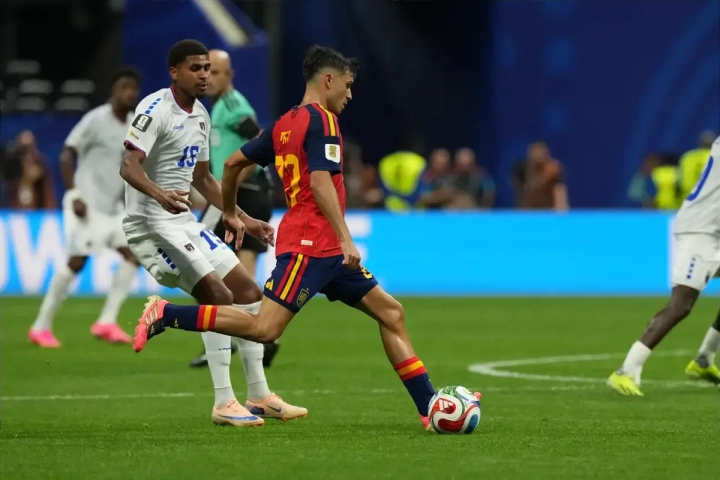
The 2026 FIFA World Cup produced its first truly monumental shock on Monday evening, as reigning European champions Spain were incredibly held to a 0-0 draw by tournament debutants Cape Verde. Staged beneath the spectacular architecture of the Atlanta Stadium in Georgia, this highly anticipated Group H encounter commenced at exactly 17:00 BST. While the pre-match narratives heavily favoured a routine, commanding victory for the European heavyweights, the reality on the pitch unfolded as a masterclass in defensive resilience from the African underdogs. For a nation boasting a population of just over half a million people, securing a point against the 2010 world champions represents a historic sporting triumph that will echo through the generations. Conversely, the result serves as a harsh, unforgiving wake-up call for a Spanish side harbouring genuine ambitions of global supremacy.
Entering the cavernous American venue, head coach Luis de la Fuente deployed his signature possession-based 4-3-3 system, heavily reliant on the intricate midfield metronome of Rodri and the creative flair of Pedri. The widely discussed omission of teenage sensation Lamine Yamal from the starting lineup, a precautionary measure following a recent hamstring injury, placed the attacking burden squarely onto the shoulders of Ferran Torres and Mikel Oyarzabal. Facing them was a meticulously organised Cape Verde outfit under the astute guidance of Pedro ‘Bubista’ Brito. Arranged in a disciplined 4-2-3-1 formation, the Blue Sharks prioritised a deep, impenetrable low block, effectively challenging their illustrious opponents to find a way through the congested central channels.
The vast tactical disparity became abundantly clear from the very first blast of the referee’s whistle. Spain immediately monopolised possession, casually stroking the ball around the perimeter of the Cape Verde penalty area. However, the African debutants remained entirely unphased by the overwhelming territorial dominance. Anchored by the formidable central defensive partnership of Roberto Lopes and Diney, they absorbed the relentless pressure with remarkable composure. The sheer intensity of the occasion briefly threatened to boil over when full-back Sidny Lopes Cabral received a cynical yellow card in the 15th minute, but the Islanders quickly regained their structural discipline.
As the first half progressed, Spain’s inability to penetrate the defensive lines grew increasingly conspicuous. Their intricate, short-passing sequences frequently broke down on the edge of the eighteen-yard box, leading to a profound sense of isolation for their attacking focal points. Nothing illustrated this schematic failure more vividly than the astonishing statistical anomaly surrounding Mikel Oyarzabal. The Real Sociedad forward endured an incredibly frustrating afternoon, failing to register a single touch of the ball throughout the opening thirty minutes of the contest. It marked the first time a player had experienced such absolute isolation in the opening half-hour of a World Cup match since official records began in 1966.
Despite their structural difficulties, the sheer volume of Spanish attacks eventually began to yield tangible opportunities. The most glaring chance of the opening period fell to Ferran Torres in the 40th minute. Following a remarkably slick, one-touch passing sequence that finally pierced the defensive wall, the Barcelona winger found himself completely unmarked inside the penalty area. Attempting to lift the ball over the advancing goalkeeper, his delicate effort agonisingly crashed against the crossbar. Just five minutes later, on the stroke of half-time, Torres was thwarted once again, this time by a magnificent, sprawling save from veteran goalkeeper Vozinha.
Emerging from the interval, the overriding expectation was that physical fatigue would eventually dismantle the valiant Cape Verdean resistance. Yet, the Blue Sharks emerged with renewed vigour, maintaining their compact shape while tentatively exploring rapid counter-attacking avenues through the dynamic Ryan Mendes. Recognising the monumental physical toll the match was extracting, Bubista acted decisively on the hour mark. He executed a bold triple substitution, introducing Willy Semedo, Nuno da Costa, and Deroy Duarte to inject much-needed energy into a tiring midfield and forward line.
Reacting to the evolving tactical landscape and the growing anxiety spreading across the Spanish bench, De la Fuente finally turned to his talismanic teenager. In the 70th minute, Lamine Yamal was introduced in place of Gavi, while Mikel Merino simultaneously replaced Fabián Ruiz. The arrival of the Barcelona prodigy instantly transformed the entire complexion of the match. Exhibiting breathtaking close control and blistering acceleration, Yamal immediately began tormenting the exhausted Cape Verdean full-backs. In a brief but explosive twenty-minute cameo, the teenage winger completed an astonishing five successful dribbles, single-handedly breathing life into a previously stagnant attacking unit.
The closing stages of the fixture descended into a frantic, one-sided siege. To fully commit to the relentless bombardment, De la Fuente threw caution to the wind, introducing Dani Olmo in the 80th minute and sacrificing defensive midfield linchpin Rodri for the explosive pace of Nico Williams in the 86th minute. Wave after wave of red shirts crashed against the resolute blue defensive wall. Cape Verde, meanwhile, retreated entirely into their own penalty area, defending with a heroic, desperate intensity that captivated the neutral spectators inside the stadium.
By the final whistle, Spain had accumulated a staggering 27 attempts on goal. Remarkably, this massive offensive output perfectly equalled their highest-ever recorded total for a World Cup match that ultimately finished goalless, a deeply frustrating milestone they last achieved against Paraguay in 1998. The mounting frustration within the Spanish ranks inevitably boiled over deep into stoppage time, resulting in a completely unnecessary yellow card for Pedri in the 92nd minute following a petulant challenge. There was still time for one final, heart-stopping moment in the 95th minute. Escaping his marker on the right flank, Yamal delivered a beautifully weighted cross directly onto the head of Oyarzabal. However, the isolated forward could only steer his header agonisingly wide of the left post from the edge of the six-yard box, prompting the referee to immediately blow the final whistle.
The reverberations of this entirely unexpected result will be felt profoundly across the entire landscape of Group H. For Spain, the disappointing stalemate immediately resurrects the haunting ghosts of their recent major tournament failures. Their well-documented struggles to convert overwhelming possession into clinical finishing ultimately proved fatal during their campaigns in both 2018 and 2022. If they are to genuinely challenge for the ultimate prize in North America, De la Fuente must urgently address this glaring lack of cutting edge before they face a notoriously resilient Uruguay side in their crucial second fixture. Dropping further points would instantly plunge the European champions into a terrifying battle for survival.
Conversely, Cape Verde will celebrate this monumental point long into the Atlanta night. The island nation has definitively proven that their presence at this expanded 48-team tournament is based entirely on merit, tactical intelligence, and unwavering spirit. Bubista’s men now enter their subsequent clash against Saudi Arabia brimming with unshakeable confidence, knowing that a single victory could propel them into the uncharted territory of the knockout stages. On a day where technical superiority met unyielding determination, the beautiful game once again demonstrated its unparalleled capacity to deliver the most extraordinary, unpredictable narratives.