The European footballing community has been plunged into a state of profound shock following the sudden death of Dutch referee Rob Dieperink. On Monday, 13 July 2026, it was confirmed that the 38-year-old match official was found dead at his home in Borculo, Netherlands. The tragic news arrives at the culmination of a deeply turbulent and highly publicised few months for Dieperink, whose career was abruptly derailed following an arrest in London earlier this year, a case that was subsequently closed with all charges dropped.
Despite being entirely cleared by the Metropolitan Police of any criminal wrongdoing, the allegations cast a long, inescapable shadow over his professional life. The situation reached a devastating climax when FIFA recently took the ruthless decision to axe him from his role as a Video Assistant Referee (VAR) for the ongoing 2026 FIFA World Cup in North America. As authorities continue to investigate the circumstances surrounding his untimely death, the footballing world is left grappling with the tragic timeline of a man whose reputation was severely battered and his ultimate career dream shattered in the weeks leading up to his passing.
The Sudden Passing in Borculo
The Royal Dutch Football Association (KNVB) and local authorities confirmed that Dieperink was discovered lifeless in his residence in the eastern Dutch town of Borculo on Monday morning. As of now, the official cause of death remains unknown, and the local police have not released any further details regarding the specific circumstances of his passing.
The abruptness of the tragedy is underscored by his recent activity. Just two days prior to his death, on Saturday, 11 July, Dieperink was out on the pitch doing what he had dedicated his professional life to. He officiated a pre-season friendly match between Dutch Eredivisie side Go Ahead Eagles and Cypriot outfit Apollon Limassol, which ended in a 3-0 victory for the visitors. By all outward appearances, he was attempting to reintegrate into the domestic footballing rhythm and rebuild his career following the intense international scrutiny he had faced over the spring and early summer.
His sudden death has prompted an outpouring of condolences from colleagues across the Eredivisie and the broader European refereeing network, many of whom have expressed sheer disbelief at the tragic trajectory of the past few months.
The London Hotel Arrest and Subsequent Clearance
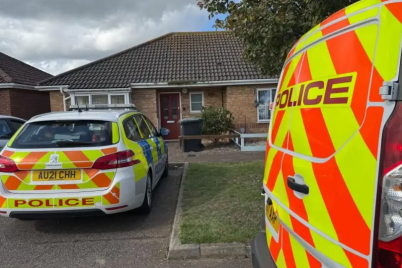
To fully comprehend the intense pressure Dieperink was operating under during the final months of his life, one must trace the timeline back to April 2026. During a trip to the United Kingdom, Dieperink was arrested by the Metropolitan Police at a hotel in London. The allegations levied against him were incredibly severe: he was arrested on suspicion of the sexual assault of a 17-year-old boy, along with two other related offences.
In the modern media landscape, an arrest of this nature involving a high-profile international sporting official instantly generates global headlines. Dieperink found his name and face plastered across international tabloids and sports networks. The Dutch referee, however, vehemently maintained his absolute innocence from the very moment he was taken into custody, cooperating fully with the British authorities while a comprehensive investigation was carried out.
The legal system eventually vindicated his stance. Following a thorough review of the evidence and the circumstances surrounding the alleged incident, the Metropolitan Police formally dismissed all three charges against him. The case was officially closed, meaning Dieperink faced no criminal charges, no prosecution, and walked away from the British legal system with his freedom and legal innocence entirely intact.
Yet, as is so often the tragic reality in the digital age, the legal exoneration did not equate to a restoration of his public standing. The stigma of the initial arrest lingered, creating a toxic cloud of speculation that proved impossible to dispel, eventually forcing the hand of global football’s governing body.
The FIFA Axe: A Shattered World Cup Dream
For any match official, participating in a FIFA World Cup represents the absolute pinnacle of their career. It is the reward for decades of scrutinised performances, intense physical training, and the navigation of high-stakes, high-pressure environments. Dieperink had earned his place on the plane to North America, selected by FIFA’s refereeing committee to serve as a VAR official for the 2026 tournament.
However, the timing of his London arrest proved fatal to his World Cup ambitions. FIFA operates under a notoriously strict code of conduct for its officials, heavily prioritising the absolute protection of the tournament’s image and commercial viability. Despite the fact that Dieperink had formally informed the governing body that the Metropolitan Police had closed the case and dropped all charges against him, FIFA executives opted for a zero-tolerance approach regarding reputational risk.
Just weeks before the tournament kicked off across Canada, Mexico, and the United States, FIFA quietly but firmly dropped Dieperink from the official roster. The decision was a crushing blow. The governing body’s rationale heavily implied that the mere association with such severe allegations, regardless of his legal exoneration, was deemed too much of a distraction for the global spectacle.
For Dieperink, the axing meant the evaporation of a lifelong dream. Having fought through the rigorous ranks of European football to establish himself as one of the continent’s most trusted video review specialists, being discarded at the eleventh hour for a crime he was cleared of undoubtedly exacted a colossal psychological toll.
A Respected Career Forged in the Eredivisie
Beyond the controversy that ultimately defined his final months, it is essential to remember Rob Dieperink for his substantial contributions to the sport. Born on 18 April 1988, he dedicated his life to the incredibly demanding and often thankless profession of football refereeing.
He rose swiftly through the ranks of the Dutch footballing pyramid. On 9 March 2012, at the age of just 23, Dieperink took charge of his first professional match in the Eerste Divisie (the second tier of Dutch football), overseeing a 2-0 victory for Go Ahead Eagles over SC Telstar. His commanding presence and calm demeanour quickly caught the attention of the KNVB, and he soon became a highly respected fixture in the top-flight Eredivisie.
As football embraced the technological revolution, Dieperink found a highly specialised niche. While he continued to referee domestic matches, including high-profile KNVB Cup ties, his analytical mind made him an exceptional Video Assistant Referee. He became one of UEFA’s most trusted men in the VAR booth, a role that demands split-second decision-making under excruciating pressure.
His expertise was heavily utilised during the UEFA Euro 2024 tournament in Germany. He served as the Assistant Video Assistant Referee (AVAR) during the tense 1-1 group stage draw between Slovenia and Serbia. Furthermore, UEFA entrusted him with a supporting VAR role for the 2024 UEFA Europa League Final in Dublin, working alongside lead VAR Pol van Boekel and Romanian on-field referee István Kovács.
These appointments underscore the immense professional pedigree Dieperink possessed. He was not a peripheral figure, but rather a central component of UEFA’s elite officiating teams. To have built such a formidable resume, only to have it overshadowed by a dismissed allegation, highlights the cruel fragility of a career in the public eye.
The Lingering Questions and the Psychological Toll
As the footballing world digests the news of Dieperink’s passing, difficult conversations are inevitably beginning to surface regarding the duty of care owed to match officials. Referees are routinely subjected to intense public abuse, death threats from disgruntled fans, and forensic media scrutiny of their every on-field decision. When a referee becomes the subject of a severe off-field allegation, the isolation can be absolute.
Dieperink’s situation raises profound questions about the presumption of innocence in the modern sporting landscape. Was it fair for FIFA to strip him of his World Cup status after the British legal system had cleared his name? Did the governing bodies, both internationally and domestically, provide adequate psychological support for a man whose reputation was publicly dragged through the mud and whose career pinnacle was snatched away?
While the precise circumstances of his death in Borculo on Monday remain a matter for the local authorities, the tragic timeline is impossible to ignore. A 38-year-old man, at the peak of his professional powers, cleared of any legal wrongdoing but professionally ostracised, has lost his life.
Rob Dieperink leaves behind a legacy as a highly capable and respected football official, whose final weeks were marred by an intense, unforgiving spotlight. As his colleagues prepare to officiate the remaining matches of the 2026 World Cup, they will undoubtedly do so with a heavy heart, mourning a colleague who should have been sharing the greatest stage of all alongside them.