A Historic Night in Vancouver
The 2026 FIFA World Cup Group G landscape was completely transformed in the early hours of Monday morning, as Egypt secured a sensational 3-1 comeback victory over New Zealand. Staged beneath the magnificent roof of BC Place Vancouver in Canada, the highly anticipated fixture commenced at exactly 02:00 BST on 22 June 2026. For decades, the African heavyweights had desperately sought a maiden victory at football’s grandest global tournament, having failed to register a win in their previous appearances in 1934, 1990, and 2018. Thanks to a remarkable second-half resurgence spearheaded by their talismanic captain Mohamed Salah, the Pharaohs finally shattered their longstanding curse, vaulting to the absolute summit of their group and placing themselves firmly on the cusp of knockout qualification.
For the All Whites, the final whistle brought a profound sense of squandered opportunity. Darren Bazeley’s men delivered a tactically astute, highly impressive first-half performance, taking a thoroughly deserved lead into the interval. However, they were ultimately overpowered by an irresistible wave of Egyptian attacking momentum following the break, leaving their own aspirations of reaching the newly expanded Round of 32 hanging precariously in the balance.
First-Half Discipline and Surman’s Breakthrough
Entering the fixture, both nations were acutely aware of the mounting pressure following their respective opening-day stalemates. New Zealand had battled to a thrilling 2-2 draw against Iran, while Egypt had demonstrated immense defensive resilience to hold Belgium to a 1-1 tie. Recognising the technical pedigree of their North African opponents, Bazeley deployed his New Zealand side in a robust 4-4-2 formation. The strategic blueprint was remarkably simple yet highly effective: absorb prolonged periods of Egyptian possession, maintain a disciplined low block, and ruthlessly exploit set-piece opportunities when they arose.
The Oceanic representatives successfully dictated the early rhythm of the match. Striker Chris Wood provided a brilliant physical focal point, while the midfield pairing of Joe Bell and Marko Stamenić expertly disrupted the passing lanes. The immense early pressure yielded a spectacular reward just 15 minutes into the contest. Earning a hard-fought corner kick, the All Whites executed a meticulously rehearsed routine. Finn Surman intelligently lost his marker, Ahmed Fatouh, inside the congested penalty area. Surging toward the delivery, the towering defender steered a powerful, unstoppable header past goalkeeper Mostafa Shobeir, instantly sparking joyous celebrations among the travelling supporters.
Stunned by the early setback, Egypt struggled to formulate a cohesive response before the half-time break. Their primary attacking threats, Omar Marmoush and Emam Ashour, found themselves frequently isolated and expertly marshalled by the commanding central defensive partnership of Michael Boxall and the goalscorer Surman. A frustrating first half for the Pharaohs was compounded by a cynical yellow card for midfielder Mohanad Lasheen in the 17th minute, and a premature, enforced substitution in the 40th minute when Ramy Rabia replaced the struggling Hamdy Fathy.
The Egyptian Renaissance
Whatever tactical adjustments Hossam Hassan implemented inside the dressing room during the interval, the psychological impact was genuinely transformative. The African heavyweights emerged for the second period with a vastly renewed intensity, completely altering the dynamic of the encounter. Operating with a heightened tempo and aggressive, high-pressing triggers, they immediately forced New Zealand into a deep, uncomfortable defensive posture.
The mounting pressure finally shattered the Oceanic resistance in the 58th minute. Sustained Egyptian possession on the periphery of the penalty area allowed full-back Mohamed Hany to venture forward down the right flank. Delivering a pinpoint, teasing cross into the danger zone, he found Mostafa Ziko completely unmarked. The midfielder calmly headed the ball home from point-blank range, restoring parity and completely shifting the psychological momentum of the match in favour of the Pharaohs.
Salah’s Masterclass and the Decisive Blows
Having established a vital foothold, Egypt rapidly moved through the attacking gears, orchestrated brilliantly by the peerless Mohamed Salah. The 34-year-old veteran, widely considered one of the greatest African players of his generation, decisively stamped his immense authority on the fixture.
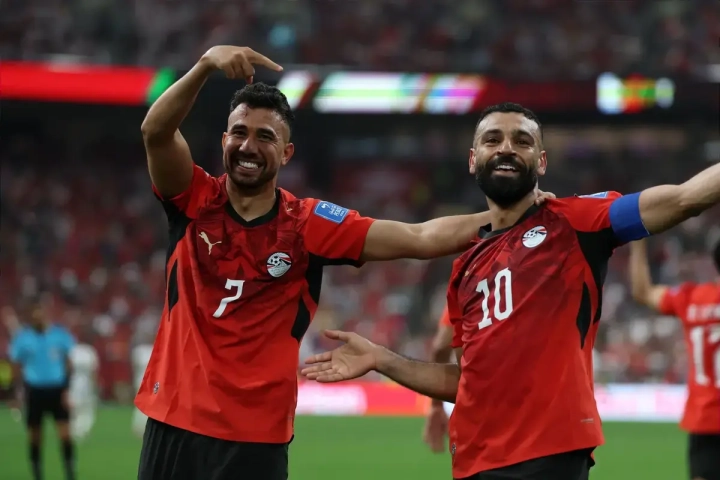
In the 67th minute, the stadium witnessed a moment of pure, unadulterated individual brilliance. Breaking rapidly down the right channel, Salah initiated a devastating passing sequence. He seamlessly exchanged a rapid one-two combination with the recently emboldened Ziko, completely bypassing the scrambling New Zealand defensive line. Receiving the return pass with pristine control, Salah swept a trademark, curling finish into the far corner of the net, placing Egypt in front for the very first time in the contest. The exquisite strike marked a monumental personal milestone, firmly establishing him as the oldest goalscorer for Egypt in World Cup history.
Despite falling behind, New Zealand valiantly attempted to salvage a crucial point. Bazeley introduced fresh attacking legs, bringing on Ben Old, Jesse Randall, and Ryan Thomas to inject much-needed energy into a rapidly tiring midfield. Goalkeeper Max Crocombe produced a string of commendable saves to keep his nation within striking distance, but the sheer quality of the Egyptian offensive unit eventually proved overwhelming.
The decisive knockout blow arrived in the 82nd minute, courtesy of another moment of inspiration from the Egyptian captain. Standing over a corner kick on the right side of the pitch, Salah delivered a vicious, inswinging cross toward the near post. Substitute Trézéguet, who had replaced Marmoush just seven minutes prior, anticipated the flight of the ball perfectly. Diving bravely amongst a crowd of defenders, the experienced forward planted a spectacular header past Crocombe, extending the advantage to 3-1 and effectively ending the contest as a competitive spectacle.
Group G Implications and the Road Ahead
As the physically draining encounter moved deep into extensive stoppage time, the Egyptian technical area erupted into scenes of unbridled joy. The final stages were heavily punctuated by a flurry of late substitutions as Hassan pragmatically managed the remaining minutes. The referee’s final whistle mercifully concluded the match, officially cementing a historic 3-1 triumph that will undoubtedly be celebrated across the streets of Cairo for generations to come.
Mohamed Salah was universally lauded and rightfully awarded the Player of the Match accolade, his sensational second-half performance having completely resurrected his nation’s tournament ambitions. Securing their first-ever victory at a World Cup finals propels Egypt to the very summit of Group G with four points. They now approach their highly anticipated final group-stage clash against Iran in Seattle knowing that their qualification destiny is entirely within their own hands. A professional, disciplined performance will be sufficient to secure their historic passage into the knockout phases.
Conversely, the heartbreaking nature of the defeat leaves New Zealand languishing at the bottom of the group standings with a solitary point. Bazeley’s men must urgently digest this bitter disappointment and rapidly regroup. They face an absolutely monumental, do-or-die fixture against European heavyweights Belgium in their concluding match. Anything less than a flawless, commanding victory will result in a premature and deeply frustrating exit from the global stage, painfully extending their long-standing search for knockout round qualification.
Official Match Facts
Goalscorers:
- New Zealand: Finn Surman (15′)
- Egypt: Mostafa Ziko (58′), Mohamed Salah (67′), Trézéguet (82′)
Discipline:
- New Zealand: Sarpreet Singh (Yellow Card, 20′), Callum McCowatt (Yellow Card, 34′)
- Egypt: Mohanad Lasheen (Yellow Card, 17′)
Substitutions – New Zealand:
Minute | Player On | Player Off |
65′ | Ben Old | Callum McCowatt |
75′ | Jesse Randall | Liberato Cacace |
75′ | Ryan Thomas | Sarpreet Singh |
84′ | Tyler Bindon | Tim Payne |
84′ | Francis de Vries | Elijah Just |
Substitutions – Egypt:
Minute | Player On | Player Off |
40′ | Ramy Rabia | Hamdy Fathy |
75′ | Trézéguet | Omar Marmoush |
75′ | Hamza Abdelkarim | Mostafa Ziko |
84′ | Hossam Abdelmaguid | Mohamed Salah |
84′ | Zizo | Emam Ashour |
90′ | Mohamed Abdelmonem | Hossam Abdelmaguid |