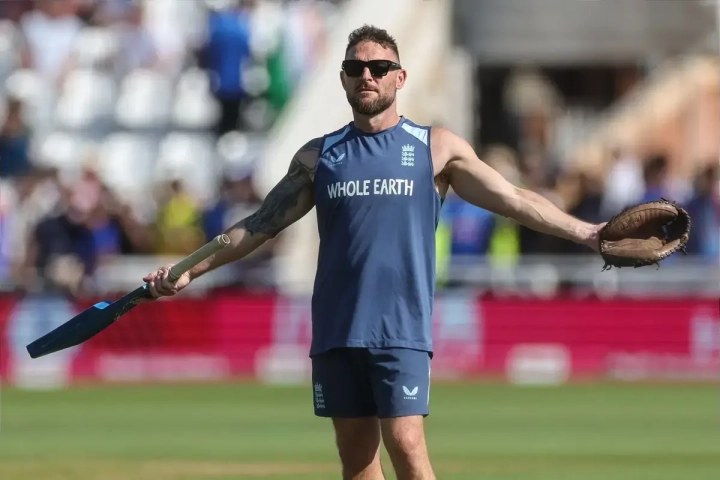
The curtain has officially fallen on one of the most exhilarating, divisive, and ultimately flawed eras in the history of English Test cricket. On Sunday, 12 July 2026, the England and Wales Cricket Board (ECB) dropped a bombshell by announcing that Brendon McCullum had been sacked as the head coach of the men’s Test team. After four years at the helm, the architect of the infamous ‘Bazball’ philosophy has been removed from his red-ball duties with immediate effect, just weeks after the shock international retirement of his trusted captain and collaborator, Ben Stokes.
While McCullum will remarkably remain in charge of the white-ball squads, having just guided the T20I side to a 4-0 series thrashing of India and the summit of the world rankings, his departure from the Test setup signals a massive, urgent reset. With the Ashes looming next summer, England finds itself in desperate need of a new leader, a new captain, and a new tactical identity.
To understand why the ECB pulled the plug on a project that once revitalised the longest format of the game, one must examine the catalogue of recent failures, the breakdown in off-field discipline, and the mounting pressure that eventually made McCullum’s position completely untenable.
The Rise and Spectacular Fall of Bazball
When Brendon McCullum and Ben Stokes took the reins in early 2022, the England Test team was completely broken. They inherited a side devoid of confidence, fresh off a miserable run of results. Together, they ripped up the traditional Test cricket manual. They introduced a fearless, hyper-aggressive brand of cricket that took the world by storm, breathing new life into the sport. England chased down impossible totals, scored at unprecedented run rates (including 500 runs in a single day in Pakistan), and entertained crowds globally.
However, over the last eighteen months, the entertainment factor began to mask deep tactical deficiencies. The stubbornness of the Bazball mantra, often bordering on naivety, was ruthlessly exposed by top-tier opposition. The turning point was a bruising 4-1 series defeat away in India in early 2024, where England’s refusal to adapt to the conditions and play situational cricket cost them dearly.
The situation worsened during the 2025–26 winter. England travelled to Australia for the Ashes and were absolutely dismantled in 11 days of cumulative cricket, suffering a humiliating 4-1 series loss. The cracks in the Stokes-McCullum partnership began to show, and patience among the English cricketing public wore incredibly thin. The team that had promised to save Test cricket suddenly found itself languishing in eighth place in the world rankings, a shocking indictment of their recent ineptitude.
The Final Straw: Defeat, Discipline, and the Departure of Stokes
Despite the catastrophic Ashes defeat, ECB managing director Rob Key initially spared McCullum during a post-tour review. The genuine belief was that the team could reset for the home summer. However, the recent series against New Zealand proved to be the final, fatal blow to McCullum’s red-ball tenure.
England suffered a limp 2-1 home series defeat to the Kiwis, their first home loss in a series of three Tests or more since 2012. Yet, it was the chaos off the pitch that ultimately sealed the head coach’s fate. The Bazball era had always prided itself on a relaxed, player-led environment, but that leniency severely backfired.
During the New Zealand series, off-field disciplinary issues erupted. Captain Ben Stokes and fast bowler Gus Atkinson were both disciplined after breaking the team’s curfew. The controversy forced the ECB to intervene and introduce strict new guidelines regarding alcohol consumption for male players. The fallout from the incident was seismic; rather than weathering the storm, Ben Stokes abruptly announced his retirement from international cricket on the penultimate day of the final Test at Trent Bridge.
With Stokes gone, the soul of Bazball had departed. The results were atrocious, the dressing room culture was being publicly questioned, and the ECB realised that pairing a new captain with a coach whose authority had been severely compromised was a recipe for disaster. The board acted decisively, ending a period that former England captain Mike Atherton described as a “turbulent, controversial, bizarre and often ludicrous stint.”
“Gutted but Grateful”: The Aftermath
The announcement was handled with the usual PR diplomacy, but the underlying disappointment was palpable. Richard Gould, the ECB’s chief executive officer, stated that while the board was grateful for the amazing victories McCullum brought, “the time is right to make a change for the Test team as we target victory in the Ashes next summer.”
McCullum himself issued a statement confirming his departure, making no secret of his disappointment at losing the red-ball reigns.
“I’ve absolutely loved coaching the Test side and I’m incredibly proud of what we’ve achieved together,” the 44-year-old New Zealander said. “There’ve been some unbelievable highs and a few tough days along the way, but that’s all part of taking on a challenge like this. Of course I’m gutted not to be continuing, but I respect the decision. My focus now is on giving everything I’ve got to the white-ball teams and helping England keep moving forward.”
The fact that McCullum retains his white-ball job is a testament to his undeniable skills as a motivator in the shorter formats. As England sets its sights on the 50-over World Cup in southern Africa next year, his aggressive blueprint is perfectly suited to the modern limited-overs game. But Test cricket demands nuance, discipline, and attention to detail—qualities the ECB is now desperately searching for in his successor.
Who Fits the Bill? The Race to Replace McCullum
With just over 10 Test matches remaining before the 2027 Ashes, time is of the essence. England next face Pakistan in a Test series starting in August, meaning the ECB must act swiftly. The ideal candidate must be a meticulous, details-driven coach capable of instilling a renewed sense of professionalism and tactical flexibility.
The Frontrunner: Andy Flower
According to the bookmakers and well-connected insiders, former England coach Andy Flower is the overwhelming favourite to return to the role he vacated in 2014. Flower represents the absolute antithesis of the Bazball approach. He is notoriously disciplined, fiercely competitive, and obsesses over the minutiae of the game. Under his previous stewardship, England won three Ashes series, including a historic victory Down Under in 2010–11, and reached the number one spot in the ICC Test rankings. Since leaving the England setup, Flower has built an incredible resume in franchise cricket, recently winning back-to-back IPL titles with Royal Challengers Bengaluru. Former captain Nasser Hussain has heavily championed Flower, noting that the ECB desperately needs someone with elite “attention to detail.”
The Shock Contender: Rahul Dravid
In a surprising twist, Indian batting legend Rahul Dravid has emerged on the ECB’s shortlist. The 53-year-old recently stepped down as India’s head coach after guiding them to the 2024 T20 World Cup title and the 2023 World Test Championship final. Dravid is revered for his meticulous coaching style, his deep intellectual understanding of red-ball cricket, and his unparalleled ability to develop young talent. While reports indicate Dravid has no desire to return to a grueling full-time coaching role across all formats, the prospect of managing only the England Test team, which offers extended periods of downtime, might be enough to tempt him.
The Domestic Mastermind: Richard Dawson
Currently the head coach of Glamorgan, Richard Dawson is viewed as a highly serious candidate. The former England spinner has earned a stellar reputation as a tactically astute coach within the county circuit. He understands the modern English domestic structure intimately and has previously worked within the ECB pathway. For a board looking for a safe, knowledgeable set of hands, Dawson fits the profile perfectly.
The Heavyweights: Justin Langer and Andrew Flintoff
You cannot discuss a major coaching vacancy without Justin Langer’s name surfacing. The former Australian coach brings the kind of hard-nosed, uncompromising grit that this England team currently lacks. However, whether the ECB would appoint an Australian mere months before an Ashes cycle remains to be seen. Meanwhile, Andrew Flintoff, currently the England Lions coach, is highly respected within the setup. Though he lacks extensive head coaching experience at the highest level, his immense aura and connection to the current generation of players make him a fascinating outsider.
The Road Ahead
England Test cricket stands at a monumental crossroads. The Brendon McCullum era provided moments of breathtaking sporting theatre that will live long in the memory, but the sport ultimately revolves around winning series and lifting trophies.
The next appointment will define the trajectory of the national team for the next half-decade. Whether the ECB opts for the nostalgic discipline of Andy Flower, the tactical mastery of Rahul Dravid, or a fresh domestic voice, one thing is abundantly clear: the days of relying purely on vibes, reckless aggression, and a relaxed curfew are officially over. The hard work of rebuilding England’s Test credentials must begin immediately.