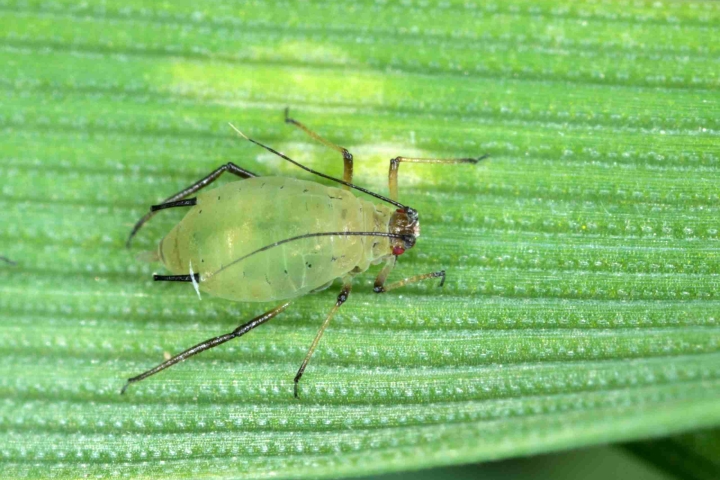
An unseasonably early harvest and record-breaking temperatures have increased the risk of yield loss from barley yellow dwarf virus (BYDV). BYDV can cause yield losses of 30-40 percent in warm autumns, and the dry conditions in 2026 are causing aphid numbers to rise.
“Rothamsted Research and AHDB operate The UK Aphid Monitoring Network which tracks aphid migration and virus incidence throughout the autumn. The research has provided new data that suggests a greater proportion of autumn aphids are carrying BYDV than has typically been seen in recent years,” says Orion Future Technologies Agronomist, Mike Stoker.
Drilling later has been used as a means of minimising risk, but, with such an early harvest caused by the dry summer, many growers have drilled earlier than has been possible in previous years. The subsequent warm autumn conditions across the UK are allowing aphid populations to increase rapidly. The first nine months ranked 2026 as the second warmest after 2024, according to the Met Office, and October was the warmest since records began in 1884.
Mr Stoker has been collaborating with cereal growers for five years to establish how silicon biostimulants can help strengthen plants against aphid threat. Early trials with NIAB in 2021 investigated the effect of a range of treatments to strengthen winter cereals against BYDV and subsequent applications have continued to demonstrate the positive role biostimulants can have. Trials using the biostimulant Sirius as a foliar spray, either with a pyrethroid or as a standalone alternative, have shown encouraging results.

Mike Stoker – Orion FT Agronomist
“We have shown with KWS Extase winter wheat that a combination of Sirius, a silicon biostimulant, mixed with a well-established pyrethroid product, made a significant improvement in yield by helping to strengthen the plant against aphids. For those looking to grow without chemicals, we found the results from the silicon-only treatment were very encouraging,” says Mr Stoker.
Combining the biostimulant with the pyrethroid saw a yield increase of 17.2% over the untreated area. Using Sirius alone improved yield over the untreated by 5.5%, compared to a 9.7% yield increase achieved with a pyrethroid.
Each application was made 170 day degrees (DD) from emergence, with applications approximately ten days apart. The trial found the use of Sirius helped to strengthen the plant’s natural defences against biting pests such as aphids. It strengthened cell walls and increased cuticle thickness, which reduced aphid feeding. This also reduced the risk of virus transmission.
“Silicon must be in a plant available form and that is where Sirius has a unique advantage. Orion’s iNHiB™Technology makes silicon plant available in a monosilicic acid form. It is very compatible and can be added to a tank with other products or used as a standalone alternative.
“Responding to these changes in climate is essential to stabilise yields. In a warm autumn it is advised to protect crops early, and having a biostimulant as an alternative or addition to a pyrethroid will be welcomed by growers should autumn temperatures continue in this way,” concludes Mr Stoker.