
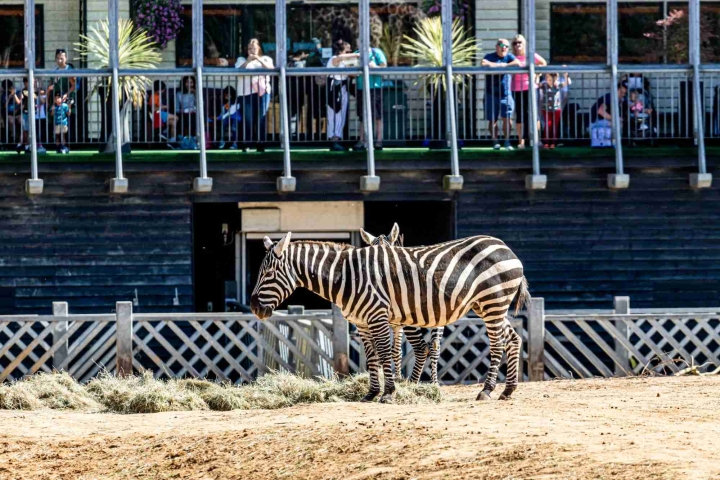
Most animals kept in UK zoos and aquariums are not endangered, new research from the University of Brighton has found.
UK zoos and aquariums are home to more than 100,000 vertebrate animals – but fewer than one in three of those animals belong to species considered at risk of extinction, new research new research suggests.
The study analysed 106,240 animals across 113 members of the British and Irish Association of Zoos and Aquariums (BIAZA), covering 2,629 species. It found that while modern zoos play an important role in conservation, research and education, their collections contain considerably more animals from species that are not globally threatened than those facing the greatest risk of extinction.
Just 28.5% of the animals recorded belonged to species classified as vulnerable, endangered or critically endangered on the International Union for Conservation of Nature (IUCN) Red List, which assesses the risk of species becoming extinct. By comparison, 58% belonged to species not considered globally threatened.
The researchers also found that populations of globally non-threatened species were, on average, more than twice the size of those considered threatened.
The findings raise questions about how zoos balance their conservation responsibilities with the need to attract visitors and generate income.
Justin Lennon, lead researcher and PhD student at the University of Brighton, said: “In recent decades, zoos and aquariums have evolved from places focused primarily on displaying animals to organisations that contribute to conservation breeding, research, education and international efforts to protect wildlife.
“Our findings suggest there is still a gap between the species that are kept in collections and those that are most in need of conservation support.”
Justin stresses that this does not mean zoos should only keep endangered animals. Larger, familiar species can attract visitors and generate income that supports conservation, research and education. Instead, he suggests that zoos could use that visitor appeal to introduce audiences to less familiar species that face a greater need for conservation support.
“But that doesn’t mean zoos aren’t doing valuable conservation work. Zoos need visitors, and visitors naturally want to see animals they recognise and connect with. Larger, more familiar species can also help generate income that supports conservation, research and education.
“The opportunity is to use that visitor appeal to introduce audiences to species they may never have heard of – and show them why they matter. The most effective collections could potentially do both: attract people through the wonder of wildlife while using that attention to support species and conservation programmes that genuinely need it.”
The research also found that only 9% of animals recorded were species native to the UK, while 2% belonged to species identified as national or regional conservation priorities.
The researchers identified 182 native UK vertebrate species in zoo and aquarium collections, including 84 conservation priority species such as water voles, pine martens and great crested newts.
The European wildcat, for example, is classified as Least Concern globally, but its population in Britain has declined dramatically, with only a few hundred thought to remain in the wild. The study found 69 European wildcats in BIAZA collections, representing a potentially important captive population for a species that is increasingly rare in Britain.
The findings suggest that the conservation role of zoos is not simply about keeping the world’s most endangered animals. Their collections can also help protect species that are disappearing from the wild in Britain – and provide a lifeline for species that have already disappeared from their natural habitats elsewhere.
Justin said “There is a strong case for zoos to continue looking at how they can support species that are threatened here in the UK, as well as those facing extinction globally.”
The study also found six species classified as Extinct in the Wild in zoo and aquarium collections. These species no longer survive in their natural habitats, meaning captive populations provide a vital safety net against global extinction and, in some cases, could support future reintroduction into the wild.
“Among the collections were species that no longer survive in the wild anywhere in the world. For those animals, maintaining a healthy captive population is not about putting on a good display for visitors – it is about keeping the species alive.”
The researchers say zoos and aquariums could build on this work by increasing the range and population sizes of threatened and locally prioritised species in their care.
Justin said: “Zoos are only one part of the wider response to biodiversity loss, and they cannot solve the conservation crisis alone. The evidence shows that important work is already happening. The challenge now is how collections can build on that and put even greater emphasis on the species that need us most.”