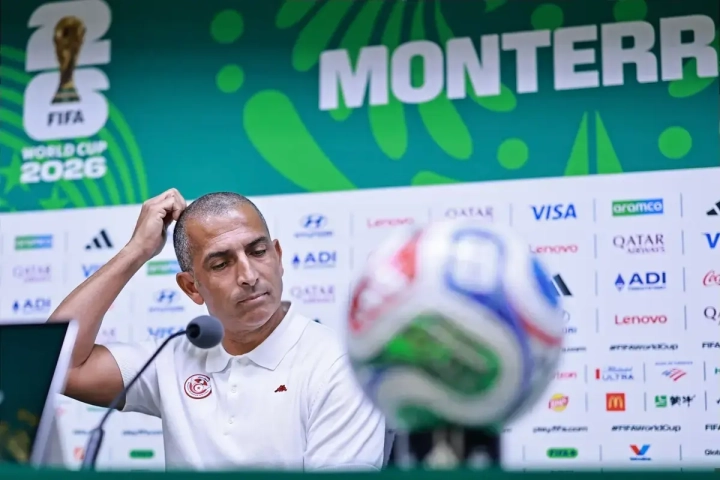
The 2026 FIFA World Cup has barely kicked into gear, yet it has already delivered its first managerial casualty. In a move that shocked onlookers but perhaps not those closely following the Eagles of Carthage, the Tunisian Football Federation (FTF) brutally sacked head coach Sabri Lamouchi just hours after a humiliating 5-1 defeat to Sweden in their Group F opener.
The 54-year-old Frenchman departs having managed a mere five games since his appointment in January. The FTF has moved swiftly to replace him, installing two-time Africa Cup of Nations winner Hervé Renard for the remainder of the tournament, with former international Wahbi Khazri heavily involved in the backroom transition.
While sacking a manager mid-tournament is incredibly rare, it is not unprecedented, and ironically, it’s a page taken straight out of Tunisia’s own history book. But why did the FTF pull the trigger so swiftly? An analytical look at Lamouchi’s brief tenure reveals a doomed cocktail of poor preparation, bizarre tactical gambles, and a complete breakdown of on-pitch cohesion.
A Tenure Built on Quicksand
Sabri Lamouchi was appointed in January, tasked with steadying a ship that had been severely rocked by a disappointing Africa Cup of Nations campaign under Sami Trabelsi. Lamouchi’s mandate was to guide Tunisia to the World Cup and ensure they were competitive in a tricky Group F featuring Sweden, Japan, and the Netherlands.
However, momentum was entirely absent. In his five matches in charge, Lamouchi managed only one victory, a narrow 1-0 win over Haiti. The red flags began to wave furiously during the immediate pre-tournament warm-ups. A loss to Austria was followed by a crushing 5-0 thrashing at the hands of Belgium.
Heading into Sunday’s opener against Sweden in Monterrey, Mexico, the Tunisian squad was already desperately low on confidence. Fans and the media were openly questioning whether the former Nottingham Forest boss had the tactical acumen to navigate a World Cup group stage.
The Tactical Implosion in Monterrey
The 5-1 defeat to Sweden was not merely a case of being outplayed by a superior opponent; it was a self-inflicted tactical disaster. Analysts and insiders point to several baffling decisions made by Lamouchi that ultimately sealed his fate.
- The Untested Formation Switch Throughout his brief tenure and the pre-tournament friendlies, Lamouchi had primarily utilised a four-man defence. Yet, on the biggest stage of all, he panicked. Fearing the attacking prowess of Sweden’s Alexander Isak and Viktor Gyökeres, Lamouchi abruptly switched to an untested 5-3-2 formation. The players looked entirely unfamiliar with the system, leading to massive gaps in the defensive transitions.
- Benching the Attacking Arsenal Despite selecting four natural wingers and three recognised strikers in his World Cup squad, Lamouchi opted for a deeply conservative, defensive starting XI. By inviting relentless Swedish pressure without offering an out-ball or a counter-attacking threat, Tunisia was suffocated. Yasin Ayari opened the scoring inside ten minutes, and from there, the floodgates opened.
- Paralysis in the Dugout Perhaps the most damning indictment of Lamouchi’s performance was his in-game management. Despite trailing 2-0 at half-time and his team clearly drowning, Lamouchi froze. He did not make a single substitution until the 72nd minute. When the changes finally arrived, they were chaotic, stripping the team of a recognised defensive midfielder and completely destroying whatever fragile balance remained.
As one football analyst noted online: “Sometimes, managers don’t lose their jobs because they lose a match. They lose them because of the decisions they make before and during it.”
Joining an Unwanted, Exclusive Club
Lamouchi now joins a highly exclusive, albeit unwanted, club of managers sacked during a World Cup.
Incredibly, this is not the first time Tunisia has hit the panic button on the global stage. During the 1998 World Cup in France, the FTF sacked Henryk Kasperczak after the team lost their opening two group games to England and Colombia. (During that same 1998 tournament, South Korea also sacked legend Cha Bum-Kun, while Saudi Arabia dismissed Carlos Alberto Parreira).
More recently, Spain famously sacked Julen Lopetegui less than 48 hours before the 2018 World Cup began, after it emerged he had secretly agreed to join Real Madrid.
The Arrival of Hervé Renard: Can the Ship Be Salvaged?
By moving swiftly to appoint Hervé Renard, the FTF has signalled that they are not yet ready to write off the 2026 World Cup.
Renard is a titan of African and international football. Known for his tactical discipline, high-intensity pressing, and exceptional man-management, he famously guided Saudi Arabia to a historic victory over eventual champions Argentina at the 2022 World Cup.
Renard faces a monumental task. He must parachute into the Monterrey camp, lift a shattered dressing room, and implement a coherent tactical system before Tunisia faces Japan on Saturday. Should he manage to orchestrate a turnaround and secure a result against the Japanese, the FTF has strongly hinted that his interim role could evolve into a long-term contract.
For Sabri Lamouchi, the 2026 World Cup will be remembered as a brutal 90-minute nightmare. For Tunisia, the gamble is simple: cut the cord immediately, or face the prospect of two more humiliations on the world stage.