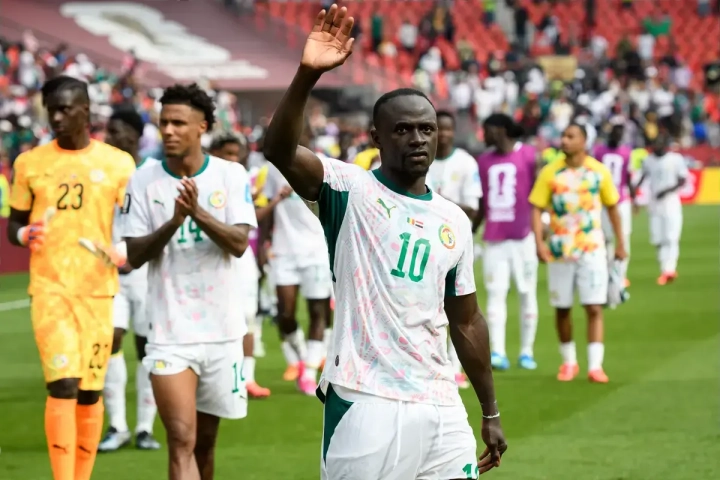
Senegal booked their place in the knockout rounds of the FIFA World Cup with a resounding 5-0 victory over Iraq in Toronto, delivering the emphatic performance they needed on a night when pressure, precision and ruthlessness all came together. After defeats earlier in Group I had left their campaign hanging in the balance, the Lions of Teranga responded with authority, overpowering an Iraqi side reduced to 10 men early in the contest and turning a tense qualification scenario into a statement of intent. Habib Diarra’s early opener set the tone, Ismaïla Sarr added a second after half-time, substitute Pape Gueye struck twice in a devastating second-half burst, and Iliman Ndiaye completed the scoring as Senegal secured the result that carried them into the next round.
The scale of the win mattered almost as much as the victory itself. Senegal knew before kick-off that three points alone might not be enough if their goal difference remained weak, but a five-goal margin transformed the picture completely. By the end of the evening, their place among the successful third-placed sides had been secured, giving them a route into the round of 32 after a group campaign that had threatened to end in frustration. For Iraq, the defeat brought a painful conclusion to their first World Cup appearance in four decades, with three losses from three matches and the early dismissal of Rebin Sulaka leaving them with too much to overcome.
The match began at a frantic pace, with Senegal clearly determined to remove any uncertainty as quickly as possible. Inside the opening minutes, their urgency produced the breakthrough. A dangerous delivery into the Iraqi penalty area caused hesitation in the defence, and Diarra reacted sharply to put Senegal in front. It was precisely the start Pape Bouna Thiaw’s team required. Having struggled to convert promise into points earlier in the competition, they suddenly had the early goal that allowed them to dictate the rhythm of the match.
Iraq’s task became far harder soon afterwards. Sadio Mané, still Senegal’s emotional and attacking leader, threatened to break through the defensive line when Sulaka brought him down. Initially, the incident appeared to be a foul worthy of punishment, but after review the decision became more severe. The referee judged that Mané had been denied a clear goalscoring opportunity and showed Sulaka a red card. Iraq were left to play most of the match with 10 men, and from that moment the balance of the contest shifted heavily in Senegal’s favour.
To Iraq’s credit, they did not immediately collapse. For the rest of the first half, they defended with determination, dropped into compact lines and tried to deny Senegal space in central areas. Their goalkeeper was called into action, the back line was stretched repeatedly, and the midfield had to cover huge distances, but they reached the interval still only one goal behind. That gave Iraq a faint sense of survival, while Senegal knew they had work to do. A narrow win would have felt insufficient given the qualification equation; they needed to turn dominance into goals.
The second half brought the transformation Senegal had been searching for. Their passing became sharper, their wide players found more space, and the physical toll on Iraq’s depleted side became increasingly obvious. Sarr doubled the lead with a composed finish, giving Senegal the cushion they needed and allowing them to play with greater freedom. It was also a significant personal moment for Sarr, whose World Cup record for his country continues to underline his importance in Senegal’s attacking history.
Once the second goal arrived, Iraq’s resistance began to fade. Senegal pushed higher, moved the ball quicker and attacked with a confidence that had not always been present earlier in the tournament. The introduction of Pape Gueye proved decisive. Within minutes of coming on, the midfielder produced one of the game’s standout moments, striking powerfully from distance to make it 3-0. The goal changed the feel of the night from a necessary win into a possible rout.
Gueye’s influence did not stop there. With Iraq struggling to close down space outside the box, he again found room and delivered another emphatic finish. His second goal was a reward for boldness and timing, and it gave Senegal the kind of margin that made qualification realistic. The bench erupted, supporters inside the stadium grew louder, and the players sensed that their World Cup was not ending here.
Ndiaye then added the fifth, applying the final touch to a sweeping Senegal move and completing a scoreline that will be remembered as one of the country’s most dominant performances on the global stage. By then, Iraq were exhausted and beaten, unable to cope with Senegal’s pace, movement and confidence. The final whistle confirmed not only a heavy victory but also a dramatic shift in Senegal’s tournament outlook. They had moved from the edge of elimination to the knockout rounds in the space of one commanding evening.
After the match, Thiaw praised his players for responding to pressure with maturity and hunger. He was pleased with the attacking display, the clean sheet and the way substitutes affected the game, but he also struck a measured tone. His view was that Senegal had shown their true level while still having room to improve. He highlighted the importance of Mané’s leadership, not only for drawing the early red card but also for his work without the ball and the example he set for the rest of the squad. Thiaw also praised Gueye’s impact, describing his contribution as exactly the kind of response a coach wants from the bench.
For Senegal, the victory carried emotional weight. Their group campaign had been difficult, with defeats to France and Norway leaving them under pressure. Yet rather than allow disappointment to define them, they produced their best football when the stakes were highest. The performance reflected character as much as quality. They pressed with aggression, defended with concentration, and attacked with a clarity that had been missing in earlier matches. Qualification now gives them a fresh opportunity, and few knockout opponents will look at this result lightly.
Iraq manager Graham Arnold was left to reflect on a deeply frustrating evening. His side had entered the match still hoping to finish their campaign with pride, but the red card changed everything. Arnold accepted that playing for so long with 10 men against a team of Senegal’s athleticism and technical quality was extremely difficult. He also acknowledged that Iraq had made too many mistakes across the tournament and had not learned quickly enough from previous setbacks. There was disappointment in his words, but also recognition that the experience of returning to the World Cup after such a long absence could help the country build for the future.
Iraq’s players looked devastated at full-time. Their supporters had travelled with hope and passion, and although the tournament ended painfully, simply returning to this stage was a milestone for Iraqi football. The challenge now will be turning that appearance into a foundation rather than a one-off moment. The team showed spirit in spells, but the gap in execution, discipline and defensive resilience was exposed against stronger opponents.
Senegal, meanwhile, can now look ahead with renewed belief. The knockout rounds bring a different kind of pressure, but also a clean slate. Their group-stage record may not have been perfect, yet tournament football often rewards teams that find momentum at the right time. With Mané still influential, Sarr dangerous from wide areas, Ndiaye capable of changing games and Gueye offering power and threat from midfield, Senegal have enough quality to trouble stronger sides.
This was also a landmark night for African football. A five-goal World Cup victory carries significance beyond the immediate standings, and Senegal’s display will be celebrated across the continent. It was not just the result, but the manner of it: aggressive, confident and clinical. They turned a must-win match into a showcase of depth and attacking variety.
The key moments told the story clearly. Diarra’s early goal settled Senegal. Sulaka’s red card damaged Iraq’s structure. Sarr’s second-half finish broke the contest open. Gueye’s double turned the win into a rout. Ndiaye’s late goal completed the statement. Each moment built towards the same conclusion: Senegal were too strong, too fast and too determined for Iraq on the night.
By the time the players left the pitch, Senegal’s supporters were celebrating more than a victory. They were celebrating survival, progress and renewed possibility. The Lions of Teranga had entered the match with their World Cup future uncertain and left it with a place in the next round secured. After a campaign that threatened to slip away, Senegal found their roar when it mattered most.