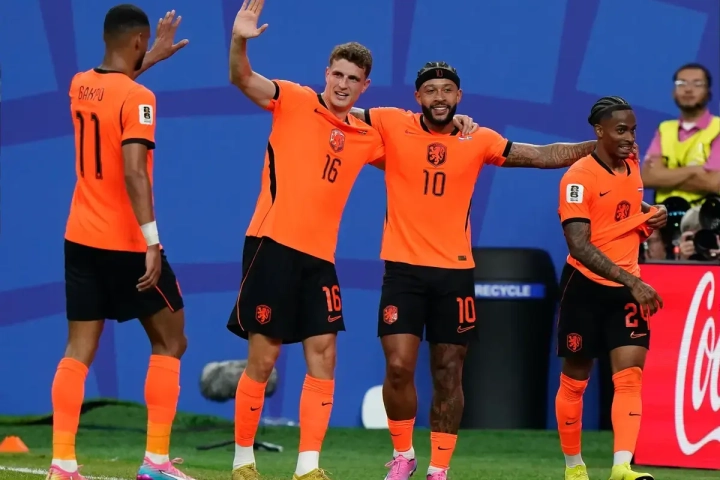
The bustling, vibrant atmosphere of the American Midwest prepares to host a highly consequential fixture as the group stages of the 2026 FIFA World Cup begin to draw to a definitive close. Scheduled for midnight, kicking off at exactly 00:00 BST on Friday, 26 June 2026, the Netherlands will clash with a beleaguered Tunisia side in their final Group F encounter. Staged beneath the towering, historic architecture of the Kansas City Stadium in Missouri, this match represents two entirely divergent tournament trajectories. For the high-flying European heavyweights, the ninety minutes present a golden opportunity to officially secure first place in the standings and march confidently into the knockout rounds. Conversely, for the devastated North African representatives, the evening is solely about salvaging fractured national pride before embarking on a premature journey home.
Group F Permutations and The High Stakes
Navigating the complexities of Group F reveals a fiercely competitive battle for supremacy at the summit, contrasted starkly by absolute capitulation at the bottom. The Netherlands currently occupy first place, boasting four points and a highly impressive positive goal difference. They are locked in a tense, neck-and-neck race with Japan, who sit on identical points and face Sweden in a simultaneous, high-stakes fixture. To guarantee progression as group winners—a status that theoretically affords a much more forgiving pathway through the newly expanded Round of 32—Ronald Koeman’s Oranje must simply match or better Japan’s result while maintaining their superior goal difference advantage.
For Tunisia, the mathematical reality of their 2026 World Cup campaign is already painfully clear. The Eagles of Carthage sit entirely rooted to the bottom of the table with zero points and a punishing goal difference of minus eight, having officially confirmed their elimination from the tournament. The primary motivation for the squad now revolves entirely around damage limitation and attempting to end a disastrously chaotic campaign with a respectable performance against one of international football’s most formidable attacking forces.
The Dutch Juggernaut Finds Its Rhythm
Arriving in North America heavily tipped as genuine dark horses for the prestigious trophy, the Dutch national team has progressively found a terrifying, irresistible attacking rhythm. Their campaign commenced with a fiercely contested, highly entertaining 2-2 stalemate against a vibrant Japanese outfit. While the opening draw raised minor defensive questions, the subsequent Matchday 2 performance emphatically silenced any lingering critics.
Facing a physical, capable Swedish side, the Netherlands orchestrated a breathtaking 5-1 demolition that immediately sent shockwaves throughout the global tournament. Operating within Koeman’s fluid, expansive tactical framework, the Oranje completely overwhelmed the Scandinavian defence. Striker Brian Brobbey netted a phenomenal early brace within the opening 17 minutes, before Liverpool forward Cody Gakpo replicated the feat with two clinical strikes early in the second half. A late goal from Crysencio Summerville applied the final, emphatic flourish to a genuinely masterful attacking display.
This commanding victory extended the Netherlands’ remarkable, record-breaking unbeaten run in World Cup fixtures to 14 consecutive matches (excluding penalty shootout defeats), establishing the longest unbroken sequence any nation has ever managed in the competition’s storied history. Furthermore, the Dutch attacking machinery has been ruthlessly, exceptionally efficient; converting 35 percent of their total shots across the opening two games—their most clinical conversion rate at any global finals since 1966. Midfield metronome Frenkie de Jong, who recently issued a passionate, defiant response to media critics back home regarding the team’s tactical setup, has been absolutely central to this success, dictating the tempo and launching devastating vertical transitions with effortless precision.
Turmoil and Heartbreak for the Eagles of Carthage
Standing across the tactical divide is a Tunisian squad currently enduring one of the darkest, most traumatic chapters in their recent footballing history. Making their seventh appearance at the World Cup finals, expectations were quietly optimistic. However, their tournament dramatically imploded during their opening fixture, suffering a humiliating 5-1 thrashing at the hands of Sweden. The magnitude of the defeat immediately prompted drastic, unprecedented action from the Tunisian Football Federation, resulting in the incredibly rare decision to sack manager Sabri Lamouchi in the absolute middle of a major tournament.
Legendary French tactician Hervé Renard was urgently parachuted into the managerial hot seat to miraculously steady the rapidly sinking ship. However, the deeply ingrained structural issues could not be instantly rectified. In Renard’s first match in charge, the North Africans were systematically dismantled in a comprehensive 4-0 defeat to Japan. The performance was entirely devoid of attacking intent, with Tunisia remarkably failing to register a single shot on target throughout the entire ninety minutes. The crushing loss confirmed their elimination and unfortunately cemented their status as only the fourth team in World Cup history to lose two games in a single tournament by margins of four or more goals.
The dressing room atmosphere has been described as deeply fractured and highly emotional. Influential defender Ali Abdi was reduced to visible tears during post-match interviews, heavily criticising the domestic footballing administration, while captain Ellyes Skhiri publicly apologised to the passionate travelling supporters. Renard now faces a monumental, almost impossible psychological task to motivate his deeply demoralised squad against elite European opposition.
Tactical Battlegrounds and Key Matchups
When analysing the granular, underlying tactical details of this impending mismatch, a clear, overwhelming narrative emerges. The Netherlands will seek to entirely monopolise territorial possession and systematically dissect the fragile Tunisian defensive block. The Dutch right flank has proven to be an incredibly potent weapon, with Inter Milan full-back Denzel Dumfries providing relentless, overlapping attacking runs that perfectly complement the creative ingenuity and direct running of Gakpo.
Renard will undoubtedly instruct his deeply vulnerable side to embrace a highly pragmatic, entrenched posture. Damage limitation will be the absolute priority. The North Africans are expected to deploy a rigid, suffocating low block, heavily congesting the central channels in a desperate attempt to frustrate the Dutch playmakers. Defensive solidity will heavily rely upon the leadership of Skhiri in the engine room, while highly rated midfielder Hannibal Mejbri will be tasked with providing the sole creative spark during rare, fleeting counter-attacking opportunities.
Despite the obvious disparity in quality, Koeman will be demanding absolute focus and professionalism from his squad. The Dutch defence has occasionally displayed minor vulnerabilities, conceding goals in six of their last seven international fixtures leading up to this point. If the Oranje become dangerously complacent in possession, Ali Abdi—who impressively boasts seven international goals to his name from a defensive position—could potentially punish them from dead-ball and set-piece situations.
Team News and Squad Availability
Preparation for the Group F finale has been largely unhindered by severe medical crises, offering both managers considerable flexibility when selecting their starting elevens. For the Netherlands, the only notable injury concern surrounds dynamic midfielder Quinten Timber. The 25-year-old was completely absent from the commanding victory over Sweden due to a lingering concussion and remains a significant doubt for the clash in Missouri. With qualification into the knockout rounds already thoroughly guaranteed, Koeman may wisely opt against risking the player, potentially offering valuable minutes to emerging talents on the substitutes’ bench to maintain squad freshness.
Tunisia reported no fresh, immediate injury worries following their punishing defeat to Japan. Fortunately for Renard, he also possesses a squad entirely free from disciplinary suspensions, allowing him to select his most trusted, resilient personnel for this daunting final assignment in North America.
Historical Context and the Final Word
Encounters between these two distinct footballing cultures offer a fascinating, entirely one-sided historical perspective. The Netherlands are completely unbeaten in their three previous meetings with the North African nation, recording one victory and two hard-fought draws. Furthermore, the Oranje boast a phenomenal, intimidating record against African opposition at the FIFA World Cup, having never lost a match against a team from the CAF confederation (winning four and drawing one). Conversely, Tunisia’s historical struggles against European opposition on the grandest stage are well-documented, having secured just a single victory in their thirteen World Cup meetings with UEFA nations.
As the passionate, vibrant supporters converge on the magnificent modern architecture of the Kansas City Stadium, the extensive theoretical planning and exhaustive video analysis will immediately give way to raw, competitive reality. For the seasoned European heavyweights, the late-night fixture provides a golden, unmissable opportunity to definitively assert their absolute dominance, secure top spot in Group F, and send a resounding, highly intimidating message to their future knockout opponents.
For the devastated North African representatives, it represents one final, desperate chance to salvage their pride and avoid suffering another humiliating defeat before departing the United States. Millions of fans tuning in around the world can readily anticipate an intriguing, fiercely contested encounter that perfectly encapsulates the unforgiving, dramatic essence of the FIFA World Cup. A tentative, conservative approach from the Oranje will benefit absolutely no one as they prepare to officially march into the knockout stages with their sights set on international football’s ultimate prize.