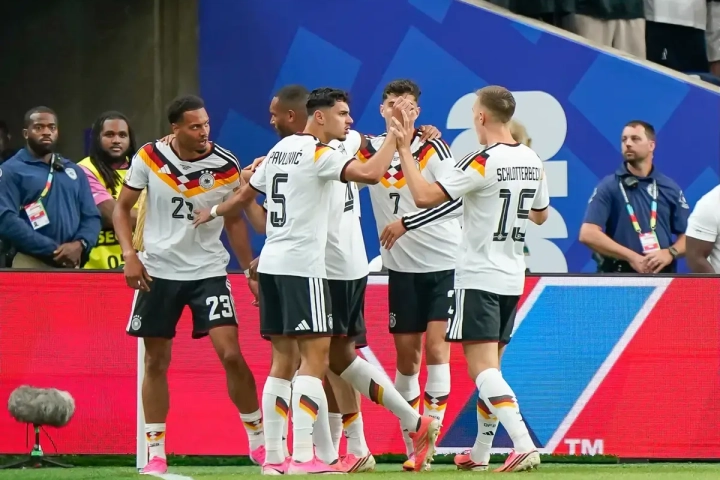
The sprawling, multicultural metropolis of Toronto provides the spectacular backdrop for a captivating top-of-the-table clash this weekend, as four-time world champions Germany prepare to face reigning African champions Ivory Coast. Scheduled for Saturday, 20 June 2026, this highly anticipated Group E fixture will kick off at exactly 21:00 BST beneath the imposing architecture of the Toronto Stadium in Canada. With both nations arriving on the back of crucial opening-day victories, the stakes could scarcely be higher in the unforgiving environment of the newly expanded 48-team FIFA World Cup format.
Securing maximum points in this second-round encounter carries immense, potentially tournament-defining significance. Earning a second consecutive victory would propel either side to the prestigious six-point mark, effectively guaranteeing safe passage into the Round of 32 with an entire group game to spare. Such a luxury affords the victorious manager the invaluable opportunity to heavily rotate their squad, resting fatigued legs and protecting key personnel ahead of the gruelling knockout phases.
For the European giants, the fixture presents a golden chance to firmly re-establish their aura of invincibility on the global stage following deeply frustrating consecutive group-stage exits in 2018 and 2022. Conversely, the Elephants stand on the absolute precipice of footballing history. Progressing beyond the initial group phase has historically eluded the West African nation, meaning a positive result in North America could cement this current generation’s legacy and mark their best-ever World Cup finish.
Die Mannschaft’s Devastating Intent
Julian Nagelsmann’s tenure as head coach has comprehensively revitalised a squad that had previously appeared bereft of identity and confidence. Their opening assignment in Houston served as a terrifying statement of intent to the rest of the competition, as Germany ruthlessly dismantled tournament debutants Curaçao in a resounding 7-1 victory. Despite suffering a brief, highly unexpected scare when Livano Comenencia netted a historic 21st-minute equaliser for the Caribbean side, the German attacking machinery swiftly moved through the gears and completely overpowered their opposition.
A breathtaking display of fluid, interchangeable attacking football saw five different players register their names on the scoresheet. Arsenal forward Kai Havertz demonstrated his clinical edge with a well-taken brace, including a penalty, while Felix Nmecha, Nico Schlotterbeck, Jamal Musiala, Nathaniel Brown, and Deniz Undav all contributed to the comprehensive rout. The sheer volume of goals highlights a terrifying depth in attacking quality. The youthful exuberance of Florian Wirtz and Musiala provided a relentless creative spark, floating between the lines to completely unpick a deep defensive block.
However, beneath the blistering offensive statistics lies a lingering, unresolved defensive vulnerability. Die Mannschaft have incredibly failed to keep a clean sheet in any of their last seven World Cup appearances, a troubling sequence dating all the way back to their iconic 1-0 final victory over Argentina in 2014. Nagelsmann will be acutely aware that his defensive unit, anchored by Antonio Rüdiger and Jonathan Tah, must drastically improve their concentration against significantly higher-calibre opposition this weekend.
The Elephants’ Resilient March
Across the tactical divide, Ivory Coast bring a vastly different, yet equally formidable, pedigree to the Canadian turf. Guided by head coach Emerse Faé, the meticulous architect of their miraculous 2024 Africa Cup of Nations triumph, the squad possesses a profound collective resilience. Their World Cup campaign commenced with a gritty, hard-fought 1-0 victory over a heavily favoured Ecuador side.
While the South Americans dominated large spells of possession and struck the woodwork on three separate occasions, the Ivorian defensive block stubbornly refused to buckle under the intense pressure. Their unwavering tactical discipline was ultimately rewarded in the dying embers of the match. Deep into the 90th minute, Manchester United winger Amad Diallo capitalised on a rare transitional moment to score a dramatic, late winner, sparking wild celebrations and securing three priceless tournament points.
Faé’s men may have ridden their luck at times during their opening fixture, but their innate ability to absorb immense pressure and strike decisively underscores the distinct danger they pose. The midfield engine room, marshalled by the immense physical presence of Franck Kessié and Seko Fofana, provides a robust, uncompromising shield for the backline while facilitating rapid counter-attacks. Both Kessié and Fofana, alongside dynamic defender Guéla Doué, picked up yellow cards in their opening fixture and will need to carefully manage their aggression against the swift German attackers to avoid costly suspensions.
Anticipated Tactical Battlegrounds
When analysing the granular details of this matchup, a fascinating clash of overarching footballing philosophies immediately emerges. Germany are fully expected to monopolise the overall possession statistics, utilising intricate passing networks to systematically manipulate the Ivorian defensive structure. By pushing full-backs like Joshua Kimmich high up the pitch, Nagelsmann actively seeks to create numerical overloads in the wide channels, deliberately forcing the opposition defence to stretch and allowing space for his creative midfielders to operate centrally.
In stark contrast, the African champions will likely embrace a far more pragmatic, reactive posture. Acknowledging their opponents’ technical superiority in sustained possession, Faé will instruct his team to remain highly compact, deliberately denying the German playmakers any inviting spaces between the lines. Once possession is inevitably recovered, the explosive pace of Diallo and the physical hold-up play of their central forwards will be immediately weaponised to exploit the vast, unprotected areas left behind by the aggressively advancing German full-backs.
Area of the Pitch | Germany Personnel | Ivory Coast Personnel | Tactical Significance |
Central Midfield | Aleksandar Pavlović | Franck Kessié | A monumental battle for tempo control. Kessié must aggressively disrupt the German passing rhythm to prevent sustained territorial dominance. |
The Flanks | Joshua Kimmich | Amad Diallo | Diallo’s blistering pace against the seasoned defensive positioning of Kimmich. Exploiting transitional spaces behind the advancing full-back is crucial for Ivorian counter-attacks. |
The Penalty Box | Kai Havertz | Emmanuel Agbadou | Fluid, intelligent movement versus imposing physical strength. The Ivorian central defenders must maintain flawless communication to track Havertz’s late, penetrating runs. |
Historical Context and Squad Outlook
Encounters between these two distinct footballing cultures are exceptionally rare, adding a wonderful element of unpredictability to the proceedings. In fact, they have only crossed paths on one previous occasion in senior international football. That solitary meeting occurred in November 2009 during an international friendly staged in Gelsenkirchen, which ultimately finished as a highly entertaining 2-2 draw. On that chilly evening, a 90th-minute equaliser from Lukas Podolski spared German blushes. While that historical footnote provides little tangible insight into the modern tactical landscape, it serves as a potent reminder of the Elephants’ historical capacity to trouble elite European heavyweights.
Preparation for this crucial Group E encounter has been largely positive for both camps, completely free from the severe disruption of significant medical concerns. Neither side has reported any fresh injury worries following their opening matches, ensuring both managers possess the luxurious option of selecting their absolute strongest starting elevens. The outcome will therefore be decided purely on tactical execution, clinical finishing, and individual brilliance, rather than enforced, unwanted compromises.
As the vibrant, passionate supporters converge on the Toronto Stadium, the extensive theoretical planning and exhaustive video analysis will immediately give way to raw, competitive tournament survival. For the European powerhouse, it is a golden opportunity to emphatically validate their resurgence and completely banish the lingering ghosts of recent tournament failures. For the ambitious African challengers, it represents a monumental test of character against elite opposition, offering the rare chance to register a historic victory that would send major shockwaves throughout the global footballing landscape.
Millions tuning in across the world can readily anticipate a fiercely contested, high-stakes encounter where fleeting moments of individual genius, unwavering tactical discipline, and sheer mental resilience will ultimately determine who seizes absolute control of Group E. The global stage is perfectly set for an unforgettable clash in North America.