
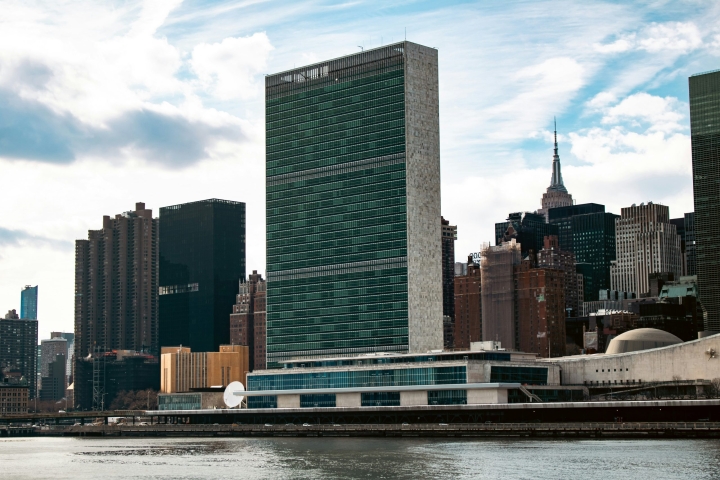
The UN Security Council was built as a kind of post-apocalyptic fuse box.
In 1945, the architects of the United Nations were staring at the smoking ruin of the League of Nations, a second world war, and a simple fear: if the great powers weren’t locked into a single system, they’d drift back into blocs, rival treaties, and “accidents” that weren’t accidents at all. So the UN Charter created a Security Council with “primary responsibility” for peace and security, and then made the big three of the day (the US, the Soviet Union, and the UK) plus France and China permanent members with special voting power. The bargain was blunt: you get a seat that can’t be taken away, and a veto that can stop decisions you consider intolerable, and in return you stay inside the tent.
That’s the origin of the veto problem. The veto wasn’t a bug that crept in later. It was the price of admission.
Why the Council struggles to act
Today the Council has 15 members, but on substantive decisions you need at least nine votes and no veto by any of the five permanent members. In practice, when the issue touches core interests of a permanent member state, the Council turns into a diplomatic roundabout where everyone drives in circles, politely honking.
You can see the pattern in modern conflicts where drafts repeatedly die on the table. The structure almost guarantees stalemate on the hardest questions: China and Russia counterbalance Western initiatives, and Western states block China and Russia when it suits them. The Security Council still does plenty when interests align, but on the headline wars, it can look like a steering wheel welded in place.
There is a workaround, but it’s a lighter tool: the General Assembly’s “Uniting for Peace” mechanism, created in 1950, lets the Assembly make recommendations when the Council is deadlocked. Recommendations, though, aren’t binding in the same way as Security Council measures, and they don’t magically conjure enforcement.
When states bypass the Council
Deadlock doesn’t stop geopolitics. It just changes the route.
Over the past few decades, major military actions have repeatedly proceeded without fresh Security Council authorisation, sometimes justified through contested legal theories, sometimes through moral arguments, sometimes through sheer power. A few clear examples:
Kosovo (1999): NATO intervened militarily in Yugoslavia without a Security Council mandate; the legality and legitimacy were openly disputed, and the Council met amid sharply divergent views.
Iraq (2003): The US and UK advanced a “revival” argument (that earlier resolutions provided authority), but many states rejected that reading; the legal basis remains one of the most contested in modern international law.
Panama (1989): A draft resolution condemning the US invasion was vetoed, underscoring how the veto can shield a permanent member from Council consequences.
Syria strikes (2017–2018): Absent Council authorisation, states reach for alternative justifications (self-defence, humanitarian intervention), and those justifications are heavily argued over.
This pattern matters because it normalises a world where the Security Council is treated less like the gate and more like a comment box: useful for signalling, occasionally decisive, but often bypassed when the stakes are judged existential.
The legal escape hatch: self-defence (and why it’s so contested)
Under the UN Charter, the baseline rule is simple: states must refrain from the threat or use of force against other states. The most cited exception is self-defence, which preserves an “inherent” right of self-defence if an armed attack occurs, at least until the Security Council has taken measures.
The fight is over the edges:
What counts as an “armed attack” (especially with proxies, militias, cyber operations)?
Can self-defence be anticipatory (acting before the blow lands)?
What about force against non-state actors operating from another state’s territory?
Customary law debates often return to the old “Caroline” formulation: necessity and proportionality, with necessity framed as overwhelming and leaving no meaningful choice. Some governments stretch these concepts; many lawyers insist the Charter was designed precisely to prevent elastic self-defence from becoming a blank cheque.
So what happens if a country breaches the Charter?
Here’s the cold reality: the Charter does not come with an automatic, mechanical punishment system.
In theory, the Security Council can determine a threat to peace and impose binding measures under Chapter VII, including non-military sanctions and, if it chooses, authorisation of force. In extremis, a state that persistently violates Charter principles can be expelled, but that requires a Security Council recommendation, meaning a permanent member veto can block even that.
So enforcement is political. If the alleged violator is powerful, the practical sanction is usually reputational damage, reciprocal measures by other states, economic counter-sanctions, and long-term strategic costs. When the alleged violator is a permanent member, the Council is often structurally unable to act against it.
That is why so many countries conclude that the system is unfit for purpose on great-power conflicts: not because international law vanishes, but because enforcement becomes selective and strategic.
The US and Venezuela: a fresh shock to the system
This week, the argument stopped being theoretical.
US forces carried out a major operation in Venezuela that resulted in the ousting and capture of President Nicolás Maduro, who is now in US custody facing narco-terrorism charges in New York. The UN Secretary-General warned the operation sets a dangerous precedent, and legal experts argue it lacks the usual legal foundations: UN authorisation, host-state consent, or a clearly valid self-defence claim.
Economically, the move is being paired with coercive pressure on oil. Venezuela’s oil company has begun cutting output as a US oil embargo and blockade halts exports and storage fills, affecting joint ventures and flows that previously moved under licences.
Europe’s response has been notably careful: supportive of Venezuelan democracy in principle, but emphasising adherence to international law and the UN Charter, with internal EU division visible.
China, meanwhile, publicly pushed back on the precedent rather than promising concrete retaliation. Russia’s senior figures denounced the operation as unlawful and destabilising, while also presenting it as consistent with America treating Latin America as its backyard.
The subtext is loud: if the US is willing to do this in the Western Hemisphere, it is signalling that the combination of geography, oil, and strategic rivalry overrides multilateral constraint.
What precedent does this set?
This is where the playground analogy bites.
When a leading power demonstrates it can use force, achieve a headline objective, and absorb only diplomatic scolding, it changes the incentives for everyone else. Not because other states suddenly become ten feet tall, but because they learn what the costs really are.
Russia will read this through the lens of Ukraine and sanctions endurance: the lesson is not the West will forgive, but power can outlast condemnation.
China will study the legal arguments and the choreography, because Taiwan is the ultimate rules versus power test case.
Middle powers, including India, don’t need to copy the act to benefit from the climate it creates: a looser enforcement world expands room for hedging, transactional diplomacy, and selective alignment.
In other words: the precedent is not everyone can invade everyone. The precedent is the ceiling on consequences is lower than the Charter implies, especially for the strongest states.
The United Kingdom, Europe, and the new isolation problem
Europe’s dilemma is that it is still rhetorically married to a rules-based order, but increasingly forced to live in a power-based one.
The Venezuela episode shows Europe caught between two instincts: relief at Maduro’s removal and anxiety that the method undermines the very legal scaffolding Europe relies on. The result is language that is careful, lawyerly, and, to Washington, easily ignored.
That connects to a broader transatlantic drift. In Trump’s second term, pressure on allies to carry more of their own defence burden has intensified in tone and frequency, reinforcing the idea that the US security guarantee is more conditional than Europeans became accustomed to.
A note on “World War II repayments”
If part of the political mood is shaped by old debts finally being cleared, it’s worth being precise about what ended.
The UK’s final repayments connected to WWII-era and immediate post-war arrangements with the US and Canada were made on 29 December 2006, including the famous post-war Anglo-American loan. These were not reparations in the Versailles sense, but loans and settlements tied to wartime supply and post-war reconstruction finance. Still, symbolism matters in politics, and the last cheque cleared can quietly change how electorates narrate obligation.
Russia versus Britain, in raw scale
If a leader is trading threats with Moscow, it helps to remember the physical asymmetry. By land area, Russia is roughly 70 times the size of the United Kingdom. That doesn’t determine outcomes on its own, but it does shape strategic depth, resources, and the psychology of escalation.
Starmer, Trump, and the optics of strength
On the UK-US relationship, the dynamic you’re pointing at is largely about political signalling.
Trump’s political brand rewards leaders who project blunt capacity, tight borders, and a willingness to ignore polite disapproval. Europe’s current governing style, with its committee-voice and internal splits, is almost designed to lose that particular audition.
And this is where the “slap down” lands. In a widely discussed exchange, Trump rebuked Starmer with the blunt question: can you beat Russia on your own? The point wasn’t to invite analysis or a thoughtful answer. It was to assert hierarchy, to put Britain back in its box, and to remind Europe that in Trump’s world the protection contract is conditional and the price is obedience, spending, and posture.
At the same time, Trump has publicly pushed Starmer hard on immigration and border issues, using Britain as an example of what he sees as a European failure to control borders and manage national cohesion. That combination, rebuke plus conditional praise, is classic leverage: it keeps the UK inside Washington’s orbit while reminding London who holds the megaphone.
Whether Starmer is weak is an argument. What’s less arguable is that Trump’s political ecosystem punishes leaders who look managerial, cautious, or consensus-driven, especially when the moment demands hard power language.
So how does Britain (and Europe) get back to the table?
If the world is sliding toward harder power, the UK can’t compete by pretending it’s 2003 America, and it can’t compete by speaking only in press releases. It competes the way it historically has: by combining credible capability with exceptional statecraft.
Here’s the spine of a serious recovery strategy, without fantasy budgets or cosplay empire:
Britain and Europe need a credible European security pillar that can act when Washington is distracted or disinterested. That means defence industrial capacity, ammunition stockpiles, air and missile defence, and the ability to sustain operations. Trump’s pressure campaigns on NATO spending are a warning flare, not a phase.
They also need diplomacy that the Global South actually believes. Selective outrage is the tax that keeps compounding. If Europe wants international law to matter, it has to sound consistent across theatres, not like a different person depending on the map. Venezuela is a stress test because it tempts Europe into quiet approval, nervous disclaimer.
Britain specifically should lean into being an intelligence, finance, and convening power: sanctions design, anti-kleptocracy enforcement, maritime security partnerships, and coalition-building with countries that share interests even if they don’t share ideology. In a more transactional world, you don’t wait to be invited. You turn up with capabilities other people need.
On energy, Europe must treat supply resilience as national security, not just economics. Venezuela has reminded everyone that oil still sits at the centre of coercion, and disruptions can be engineered quickly.
Finally, Europe should push realistic UN reform agendas that improve legitimacy even if they don’t abolish the veto overnight: veto-restraint initiatives, stronger transparency, and more routinised General Assembly emergency mechanisms. None of this makes the UN perfect, but it stops the slow bleed where the UN becomes theatre and nothing else.
The uncomfortable conclusion
The Security Council was designed to prevent another world war by forcing the great powers to share a room. The veto was the lock on the door. But a lock can also trap you inside during a fire.
The Venezuela operation has become a live demonstration of what happens when a superpower decides the room is too slow and walks out through the wall instead. Europe’s cautious response shows how hard it is to defend rules without the means to enforce them.
If Britain wants to be more than a spectator, it has to do two things at once: rebuild enough hard capability to be taken seriously, and rebuild a diplomatic voice that sounds like a grown-up in a world of megaphones. No empty threats, no moral foghorns, no sleepwalking into other people’s wars, and no assumption that America’s priorities will always align with ours.
The playground is real. The trick is to stop acting like the referee still has a whistle everyone respects, and start acting like a country that can still shape the game.