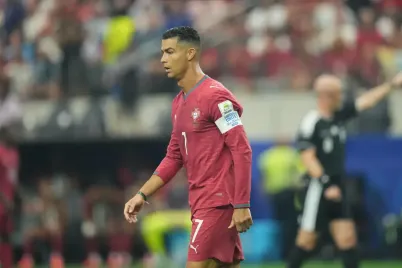
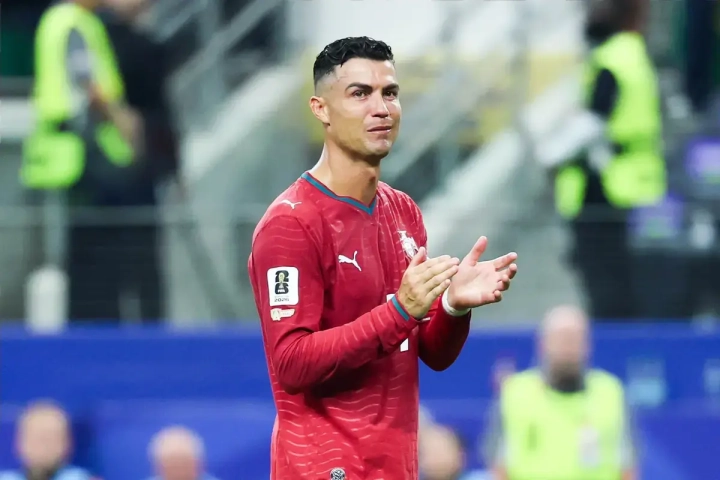
The heavy, humid air of Arlington, Texas, bore witness to the end of an era on Monday, 6 July 2026. Inside the cavernous AT&T Stadium (also known as Dallas Stadium), as the final whistle blew and the Spanish players rushed to celebrate their dramatic 1-0 victory in the Round of 16, the eyes of the footballing world were fixed firmly on a solitary figure in a red shirt. Cristiano Ronaldo stood with his hands on his hips, initially holding back the tears before eventually covering his eyes with his right hand. At 41 years of age, the legendary forward acknowledged the travelling supporters with a poignant wave, wiping away tears as he walked off the World Cup stage for the very last time.
The 2026 FIFA World Cup was always destined to be his swan song on the global stage, but the cruel, unforgiving nature of knockout football ensured there would be no fairytale ending in North America. Mikel Merino’s stoppage-time goal in the 91st minute ended Portugal’s campaign in deeply painful fashion, simultaneously cementing Ronaldo’s status as arguably the greatest player in the history of the sport to never lift its most coveted prize.
The Texas Heartbreak: A Tactical Stalemate
The clash between the Iberian rivals was, for the most part, a tense and highly tactical affair. Under head coach Roberto Martínez, Portugal had opted for a counter-attacking approach for large chunks of the tournament, a strategy that drew heavy frustration as they repeatedly struggled to create clear-cut opportunities against disciplined defences. Observers noted that while on paper this squad looked capable of sending Ronaldo off with his missing major trophy, in practice, they looked very far from it.
Spain dominated possession, showcasing their defensive solidity, having yet to concede a single goal in their four matches at the tournament. Despite the lack of service, Ronaldo’s sheer will to win was palpable. He registered three shots throughout the match, desperately trying to drag his nation into the quarter-finals. His closest moment of magic arrived in the first half when he unleashed a spectacular acrobatic overhead kick, capitalising quickly after João Félix’s header had rebounded off the shoulder of Spanish goalkeeper Unai Simón. Simón, however, produced an incredible save, leaping high before reaching back to claim the ball with both hands, denying what would have been an iconic World Cup moment.
Later in the game, Ronaldo nearly pounced on a slightly weak header back to the keeper by Aymeric Laporte, but Simón confidently claimed the ball on the edge of his area before the offside flag was raised. Meanwhile, Spain created opportunities of their own; Pedri sent a speculative ball down the inside-right channel for Ferran Torres to chase, but Torres could only divert it harmlessly into the side netting. When Rafael Leão crossed from the left, Pau Cubarsí cushioned a calm header into the path of Fabián Ruiz, who belted the ball clear to keep Spain firmly in control. Martínez made several changes to force the issue, bringing on Diogo Dalot and Leão for João Cancelo and Félix in the 70th minute, followed by Francisco Conceição and Bernardo Silva for Pedro Neto and Vitinha in the 82nd.
As the match seemed destined for extra time, a momentary lapse in concentration proved fatal for the Portuguese. In the first minute of stoppage time, Torres slipped a cute ball down the channel to substitute Merino, who calmly slotted the ball home to seal a 1-0 win for Spain with some quick thinking. Portugal almost forced extra time right at the death; in the 96th minute, Conceição delivered a delicious cross from the right. Silva rose above Rodri and, from six yards out, looked certain to score, but he agonisingly guided his attempted header towards the top left, over the crossbar.
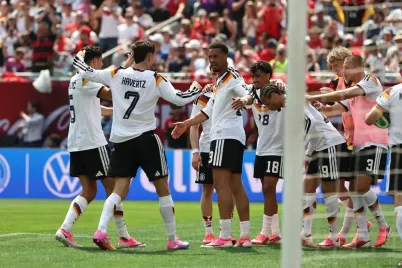
As the Spanish players hugged each other in a mixture of joy and relief, the Portugal players stared at various points in the middle distance, slowly coming to terms with the fact that there would be no extra time.
The End of a 20-Year Odyssey
In his post-match interviews, an emotional Ronaldo officially confirmed what millions of fans had feared. “It’s true, this was my last World Cup,” he stated. “Sad, it’s normal after being eliminated like this. But, as I said yesterday in the press conference, I gave my best and I leave with a clear conscience”.
His World Cup journey spans a remarkable two decades, beginning as a dynamic 21-year-old at Germany 2006. There, he scored his maiden tournament goal against IR Iran and helped the Seleção das Quinas reach their first semi-final in 40 years. From there, he became a permanent, towering fixture on the grandest stage, scoring at least one goal at South Africa 2010, Brazil 2014, Russia 2018, and Qatar 2022.
His participation in North America in 2026 allowed him to etch his name into the record books one final time. In Portugal’s second group match, Ronaldo made history when he found a yard of space in the Uzbekistan box before rifling home a cross with a trademark first-time finish. With that strike, he became the first and only player in the history of the sport to score in six different editions of the global finals, a record that perfectly underlines his extraordinary longevity.
He departs the World Cup arena having made 27 appearances, placing him second on the all-time list, and having scored 11 goals, tying him for ninth on the tournament’s all-time scoring charts. “This is soccer, this is life for a soccer player,” he reflected. “Sometimes you win and sometimes you lose. Tomorrow will be a new day, and life goes on”.
The Greatest to Never Win It
The absence of a World Cup winner’s medal will inevitably be weaponised by his critics in the endless, exhausting debates over the title of the greatest of all time. Yet, a closer examination of footballing history places Ronaldo in illustrious company. Icons such as Johan Cruyff, Paolo Maldini, Michel Platini, and Ferenc Puskás all retired without winning the World Cup, yet their legacies remain completely unassailable.
What sets Ronaldo apart is the sheer transformative impact he had on his national team. Prior to his emergence, Portugal was a nation that occasionally produced brilliant individual talents but consistently fell short on the international stage. As Ronaldo noted, they had never won a major international trophy in their entire history before his era.
Under his obsessive, relentless leadership, that narrative was entirely rewritten. He captained the team to their miraculous triumph at the 2016 European Championship, and subsequently led them to two UEFA Nations League titles, first in 2019 and most recently in 2025.
“I have won three titles for Portugal,” Ronaldo reminded the press in the catacombs of the stadium. “Before Cristiano, Portugal did not win a single title in history. I won Euro 2016, which for me is like winning a World Cup. I leave with a clear conscience and having given my best for Portugal”.
Martínez paid a glowing, emotional tribute to his captain, underlining his immense influence behind the scenes. “He is an example, a role model to follow. This is somebody that we need to celebrate. We’re talking about a football icon,” Martínez said. “There aren’t too many Cristiano Ronaldos out there. I think we need to thank him. His dream was to win the World Cup and he did this as an amazing example in the locker room”.
What Comes Next?
While he has definitively closed the door on the World Cup, the five-time Ballon d’Or winner stopped short of announcing his immediate retirement from all international football. “There will be time to think about everything else, to be with my family, and I want to not make decisions when I’m heated,” he explained.
Whether he attempts to play on towards Euro 2028 or finally hangs up his international boots remains to be seen. What is undeniable, however, is that the World Cup will be vastly poorer without him. For twenty years, he has provided the tournament with unparalleled drama, spectacular goals, and a level of supreme, unyielding competitiveness that may never be replicated.
He leaves North America without the golden trophy, but Cristiano Ronaldo departs as the undisputed king of Portuguese football, continuing to hold the record for the most international goals with 146. Despite the heartbreak in Texas, his legacy extends far beyond goals and records, cementing his status as one of the game’s true immortal figures.