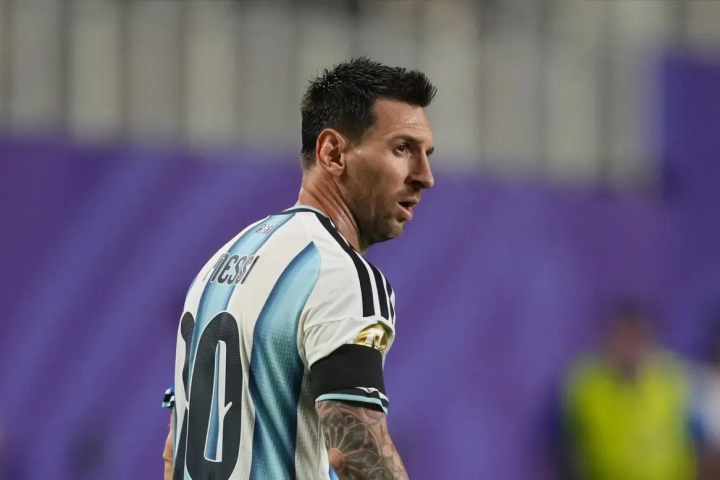
The sand is rapidly slipping through the hourglass. As the sun rises on this humid Monday morning in the United States, a profound and inescapable reality is beginning to dawn upon the global footballing consciousness. Today marks the beginning of the final week of the 2026 FIFA World Cup. By this time next Monday, the most expansive, chaotic, and gruelling tournament in the sport’s history will have concluded. But far more significantly, this week almost certainly represents the final seven days of Lionel Messi’s international career.
For the better part of two decades, the Argentine maestro has defied the conventional limits of sporting longevity. He has evolved from the explosive, floppy-haired prodigy of his youth into the bearded, calculating orchestrator of his veteran years. Having finally lifted the ultimate prize in Qatar four years ago, many assumed his international journey had reached its natural, cinematic conclusion. Yet, the allure of defending the crown on North American soil proved too strong.
Now, at 39 years of age, Messi is just two matches away from achieving what was once considered impossible: securing back-to-back World Cup titles and cementing a legacy so unassailable it may never be touched. As Argentina prepare to face Thomas Tuchel’s resilient England side in a blockbuster semi-final in Atlanta this Wednesday, the narrative surrounding the reigning world champions has shifted from pure tactical analysis to a collective, emotional appreciation of a genius at the end of his road.
The Burden of Mortality: The Egyptian Scare
If the 2022 campaign was defined by destiny, the 2026 run has been characterised by sheer, bloody-minded perseverance. The aura of invincibility surrounding Lionel Scaloni’s squad was completely shattered during their Round of 16 clash against a fearless Egypt side.
For 78 minutes at the Atlanta Stadium, the world held its breath as Messi’s final dance threatened to end in an unceremonious, catastrophic disaster. Egypt had established a stunning 2-0 lead, while Messi himself had proven uncharacteristically fallible, having a 20th-minute penalty brilliantly saved by Mostafa Shobeir. The body language of the Argentine captain suggested a man burdened by the immense weight of the occasion, his shoulders slumping with every misplaced pass.
Yet, it is precisely in these moments of suffocating pressure that Messi’s greatness is most keenly felt. Refusing to allow his international career to fizzle out with a whimper, he orchestrated an incredible 13-minute comeback that will be etched into World Cup folklore. In the 79th minute, he delivered a pinpoint free-kick assist for Cristian Romero to ignite the revival. Just four minutes later, following an intelligent reverse pass from Julián Álvarez, Messi found the bottom corner to equalise, redeeming his earlier penalty miss and sparking wild celebrations among the tens of thousands of travelling South American supporters.
When Enzo Fernández netted the 93rd-minute winner, Messi did not celebrate with his usual joyous abandon; he simply collapsed onto the turf in sheer exhaustion and relief. It was a stark reminder that while the mind remains as razor-sharp as ever, the physical toll of tournament football is finally beginning to catch up with the game’s greatest ever player.
The Kansas City Grind and the Passing of the Torch
The physical toll was even more evident during Argentina’s gruelling quarter-final victory over Switzerland in Kansas City over the weekend. Against a fiercely disciplined Swiss side, Messi was heavily targeted, surrounded by a swarm of red shirts every time he received possession.
Despite the intense scrutiny, his left foot remained Argentina’s most lethal weapon. In the 10th minute, Messi delivered a menacing corner that found the head of Alexis Mac Allister, putting the reigning champions in front. However, Switzerland fought back tenaciously, equalising through Dan Ndoye and dragging the exhausted Argentines into the punishing depths of extra time.
The match provided a fascinating glimpse into the immediate future of the Argentine national team. For the first time in an astonishing nine World Cup matches, a scoring streak that dates all the way back to the group stages of the 2022 tournament, Lionel Messi did not find the back of the net. As his legs grew heavy in the stifling Missouri heat, the burden of salvation had to be passed to the next generation.
It was Julián Álvarez who stepped out of the shadows, scoring a breathtaking, curling strike from 25 yards in the 112th minute to restore the lead. Lautaro Martínez then added the decisive third goal in stoppage time of the extra period. Messi’s nine-game World Cup scoring streak may have officially ended, but the Swiss encounter proved that his teammates are now fully prepared to carry him, just as he has carried them for the past two decades. He is no longer the sole engine of this team, but rather its compass, directing the play and inspiring those around him to elevate their standards.
The Ultimate Test: England in Atlanta
The semi-final stage is now set, and the scriptwriters could not have delivered a more compelling narrative. This Wednesday, in the familiar surroundings of the Atlanta Stadium, Messi’s Argentina will collide with England.
It is a fixture drenched in historical significance, evoking memories of Diego Maradona’s ‘Hand of God’ and the ‘Goal of the Century’ in 1986, as well as the bitter clashes of 1998 and 2002. However, the 2026 iteration presents a fascinating tactical sub-plot. England arrives in Georgia riding an emotional high of their own, having survived a dramatic extra-time victory over Norway courtesy of a monumental performance from Jude Bellingham.
The semi-final represents a clash of two distinct eras. On one side stands Jude Bellingham, the 23-year-old physical phenom currently carrying the hopes of a nation on his broad shoulders, representing the dynamic, high-intensity future of the sport. On the other side stands Messi, the 39-year-old veteran relying on supreme spatial awareness and unparalleled technique to dictate the tempo of the game at a walking pace.
Thomas Tuchel faces the ultimate managerial dilemma: how do you completely neutralise a player who requires only a fraction of a second to alter the course of history? England’s defensive structure, battered by suspensions and injuries, will need to play a flawless game. If they afford Messi the space to drift between the lines and feed the willing runs of Álvarez and Mac Allister, the Three Lions’ dreams of reaching the final in New Jersey will be ruthlessly extinguished.
Appreciating the Final Grains of Sand
As the countdown clock ticks closer to Wednesday evening, the global footballing community must collectively pause to appreciate what they are witnessing. We have spent the last twenty years dissecting his statistics, debating his status among the pantheon of greats, and marvelling at his impossible highlights.
Now, there is no more time for debate. There are a maximum of 180 minutes of World Cup football left in the career of Lionel Messi. Whether the journey ends in heartbreak against England on Wednesday, or in ultimate, back-to-back glory in New York next Sunday, this week marks the definitive end of an epoch.
The era of Lionel Messi is in its final seven days. Savour every single second of it.