Every FIFA World Cup is ultimately defined by its shockwaves. While the eventual champions etch their names into the history books, the teams that capture the global imagination are almost always the unheralded underdogs, the minnows who punch impossibly above their weight.
In the 2026 FIFA World Cup, that mantle has been emphatically seized by Cape Verde.
A tiny archipelago nation with a population of just over 525,000, Cape Verde arrived in North America as the second-smallest country by land area to ever qualify for the tournament. Yet, after two group-stage fixtures, the ‘Blue Sharks’ have completely upended Group H. By holding European heavyweights Spain to a goalless draw and securing a thrilling 2-2 stalemate against a heavily fancied Uruguay, they have reminded the footballing world of the tournament’s greatest underlying truth: on the pitch, geography and population size mean absolutely nothing.
As Cape Verde prepares for a pivotal final group match against Saudi Arabia, their heroic run begs a comparison. Where do they rank in the rich, romantic lineage of the World Cup’s greatest giant-killers?
The 2026 Fairytale: Defiance and Dynamism
Cape Verde’s success in this tournament has been built on a fascinating blend of tactical discipline and sheer, unadulterated belief.
Their opening act was a masterclass in defensive resilience. Facing a Spanish side that utterly dominated possession in Atlanta, Cape Verde’s 40-year-old goalkeeper, Vozinha, produced a performance for the ages. Making seven crucial saves to secure a historic 0-0 draw, the veteran’s tears of joy at the final whistle instantly became one of the defining images of the 2026 tournament.
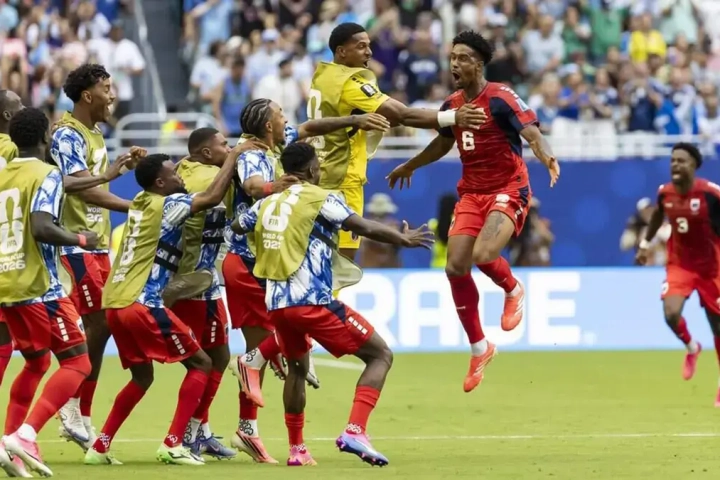
However, on Sunday in Miami, facing a Uruguayan side boasting elite pedigree, Cape Verde proved they were not merely a defensive blockade. Midfielder Kevin Pina unleashed a sensational free-kick in the 21st minute to register his nation’s first-ever World Cup goal. Although Maximiliano Araújo and Agustín Canobbio struck back before half-time to give the South Americans a 2-1 lead, the Blue Sharks refused to capitulate. Hélio Varela capitalised on an error from veteran goalkeeper Fernando Muslera in the 61st minute, securing a 2-2 draw that keeps their qualification hopes thrillingly alive.
Echoes of History: The Ultimate World Cup Underdogs
To truly understand the magnitude of Cape Verde’s achievements, we must look back at the trailblazers who paved the way for small nations on the global stage.
- Cameroon (1990): The Roar of the Indomitable Lions
Arguably the original modern World Cup fairytale. Cameroon shocked the globe by defeating Diego Maradona’s defending champions, Argentina, 1-0 in their opening match. Led by the infectious joy and goalscoring prowess of 38-year-old Roger Milla, they became the first African nation to reach the quarter-finals, transforming global perceptions of African football overnight.
- Senegal (2002): The Debutant’s Dream
Making their tournament debut, Senegal were drawn against reigning World and European champions France in the tournament opener. Papa Bouba Diop’s iconic goal secured a 1-0 victory that sent shockwaves through the sport. Playing with fearless attacking verve, the Lions of Teranga marched all the way to the quarter-finals.
- Costa Rica (2014): Surviving the Group of Champions
When Costa Rica was drawn into the ultimate ‘Group of Death’ alongside three former world champions, Uruguay, Italy, and England, they were widely dismissed as guaranteed group-stage fodder. Instead, backed by the unbelievable reflexes of goalkeeper Keylor Navas, they topped the group undefeated and pushed the Netherlands to a penalty shootout in the quarter-finals.
- Iceland (2018): The Viking Clap
Until Cape Verde’s and Curaçao’s arrivals in 2026, Iceland held the distinction of being the ultimate demographic overachievers. With a population of around 350,000, they became the smallest nation by population to ever qualify. In their debut match, they famously held Lionel Messi’s Argentina to a 1-1 draw, driven by their suffocating defensive organisation and the thunderous support of their travelling fans.
- Morocco (2022): Breaking the Glass Ceiling
Morocco shattered the ultimate barrier in Qatar, becoming the first African and Arab nation to ever reach a World Cup semi-final. Conceding just a single own-goal prior to the semi-final, their incredibly disciplined defensive shape allowed them to eliminate European giants Spain and Portugal in consecutive knockout rounds.
Comparing the Great Giant-Killers
Nation | Tournament | Defining Moment | Ultimate Finish |
Cameroon | 1990 | Defeating holders Argentina 1-0 in the opening match | Quarter-Finals |
Senegal | 2002 | Beating reigning champions France 1-0 on their debut | Quarter-Finals |
Costa Rica | 2014 | Topping a ‘Group of Death’ containing Italy, England, and Uruguay | Quarter-Finals |
Iceland | 2018 | Drawing 1-1 with Argentina on their tournament debut | Group Stage |
Morocco | 2022 | Eliminating Spain and Portugal in the knockouts | Semi-Finals |
Cape Verde | 2026 | Holding Spain (0-0) and Uruguay (2-2) in their debut | TBD |
The Anatomy of an Upset
What unites Cape Verde with these historic squads? The blueprint for a World Cup upset rarely relies on raw individual talent. Instead, it is a perfect storm of meticulous tactical discipline, unbreakable squad unity, and the immense psychological freedom of playing without the burden of expectation.
Against Spain, Cape Verde relied on an impenetrable low block and a goalkeeper experiencing the game of his life, a direct mirror of Costa Rica’s reliance on Keylor Navas in 2014 or Morocco’s suffocating defensive shape in 2022. Against Uruguay, they demonstrated tactical bravery, proving they could punish defensive errors and rely on swift, clinical transitions.
As Cape Verde heads into their final Group H fixture against Saudi Arabia in Houston, their destiny is in their own hands. A victory could unbelievably see them progress to the knockout stages in their debut tournament.
Regardless of the final outcome, the Blue Sharks’ legacy is already secure. They have successfully revived the romance of the World Cup, proving once again that in football, a collective heart can easily match a decorated history.