A Night of High Stakes in Texas
The expansive, state-of-the-art confines of Dallas Stadium in Arlington, Texas, served as an appropriately grand theatre for a deeply engrossing FIFA World Cup 2026 Round of 32 encounter. Kicking off at exactly 18:00 BST on Tuesday, 30 June 2026, Norway and Ivory Coast engaged in a fiercely competitive, pulsating knockout tie that perfectly encapsulated the unforgiving nature of tournament football. For the European challengers, it was an immediate opportunity to banish the lingering memories of a heavy 4-1 group-stage defeat to France after fielding a heavily rotated squad. For the proud African representatives, it represented a historic milestone, marking their very first appearance in the knockout phases of the global showpiece.
Ultimately, the sheer individual brilliance of Ståle Solbakken’s talismanic forwards proved to be the decisive differentiating factor on the evening. A stunning first-half curling effort from Norwegian wonderkid Antonio Nusa was initially cancelled out by a clinical strike from Ivorian substitute Amad Diallo. However, as extra time loomed large, Erling Haaland delivered a devastating late winner in the 86th minute to secure a 2-1 victory for the Scandinavian side. The hard-fought triumph ensures the Vikings progress to the Round of 16 to face five-time champions Brazil, whilst Emerse Faé’s courageous Elephants depart the United States having thoroughly earned the respect of the international footballing community.
Restored Stars and Tactical Blueprints
Entering the highly consequential fixture, both managers were acutely aware of the perilous stakes, which directly influenced their respective tactical blueprints. Having rested ten regular starters in their final group match, Solbakken immediately restored his established first eleven. Operating in a fluid 4-2-1-3 formation, the Norwegian manager brought back his premier stars, reinstating Martin Ødegaard as the primary creative fulcrum behind a potent attacking trident of Alexander Sørloth, Nusa, and Haaland. The tactical intention was remarkably clear: dominate central possession, carefully orchestrate the overall tempo through their captain, and relentlessly supply their world-class centre-forward.
Across the tactical divide, Faé recognised the immense offensive threat posed by the Europeans and pragmatically set up his side to neutralise it. Deploying a structured, resilient 4-1-2-3 system, the Ivorian coaching staff tasked the formidable midfield trio of Ibrahim Sangaré, Christ Inao Oulaï, and Franck Kessié with disrupting the Norwegian passing rhythms. Their primary objective was to aggressively shut down Ødegaard’s pockets of space and rapidly launch vertical counter-attacks, heavily relying on the blistering pace of Nicolas Pépé and Yan Diomandé in the wide channels.
First-Half Frustrations and a Moment of Magic
From the opening whistle, the encounter developed into a fascinating, highly tactical chess match. Norway initially monopolised territorial possession, methodically probing the heavily congested Ivorian defensive block. However, it was the African outfit that genuinely threatened to shatter the persistent deadlock during the cagey opening exchanges.
Demonstrating significant attacking ambition, the Elephants crafted their first meaningful opportunity in the 20th minute. Left-back Ghislain Konan surged aggressively down the flank, latching onto a precise through ball before lashing a fierce drive into the side-netting, briefly igniting premature celebrations from a section of the stadium. Moments later, they threatened again. Diomandé isolated his marker and delivered a teasing, lofted cross towards the far post, but the usually clinical Pépé was uncharacteristically wasteful, failing to properly connect with the inviting delivery when left completely unmarked.
Gradually, the Vikings began to bypass the imposing Ivorian midfield, forcing goalkeeper Yahia Fofana into action. In the 37th minute, Sørloth expertly navigated his way down the right wing, swinging a deeply dangerous cross into the heart of the penalty area. Haaland towered majestically above his markers to connect with a powerful downward header, but the effort lacked the necessary placement and was gathered securely by Fofana.
Nevertheless, the mounting Norwegian pressure eventually yielded a spectacular reward just two minutes later. In the 39th minute, Antonio Nusa provided a moment of absolute individual magic that immediately illuminated the Texan afternoon. Collecting the ball wide on the left flank, the dynamic winger displayed phenomenal close control to seamlessly cut inside, effortlessly gliding past a helpless Guéla Doué. Having expertly manufactured an optimal shooting angle, Nusa curled a breathtaking, right-footed strike perfectly into the top right-hand corner of the net. The sensational goal not only provided his nation with a crucial 1-0 advantage but also etched his name into the history books as the youngest Norwegian ever to score at a World Cup, achieving the feat at just 21 years and 74 days old.
The celebrations were slightly tempered just before the half-time interval, as Nusa was shown a yellow card in the 45th minute for a poorly timed, robust challenge, but Solbakken’s side confidently entered the dressing room holding a precious, slender lead.
Second-Half Changes and the Ivorian Response
Recognising that their historic World Cup journey was slowly slipping away, Faé delivered an impassioned half-time address. The Elephants emerged for the second period demonstrating significantly greater offensive urgency, aggressively pressing the Norwegian central defenders, Kristoffer Ajer and Torbjørn Heggem, and attempting to force turnovers high up the pitch.
In a decisive attempt to completely alter the momentum of the tie, the Ivorian manager initiated a crucial double substitution on the hour mark. Elye Wahi and Amad Diallo were seamlessly introduced into the fray, replacing Ange-Yoan Bonny and Christ Inao Oulaï respectively. The tactical adjustment paid almost instantaneous dividends, injecting a tremendous amount of directness and unpredictability into the West African attacking machinery.
The relentless pressure finally culminated in a thoroughly deserved equaliser in the 74th minute. Capitalising on a momentary lapse in Norwegian defensive concentration, Pépé intelligently drifted into a pocket of premium space. The experienced winger spotted the intelligent, surging run of Diallo and threaded a beautifully weighted pass into the right side of the six-yard box. The newly introduced attacker displayed elite composure under immense pressure, striking a clinical, left-footed finish straight into the bottom left corner to level the scoreline and send the passionate Ivorian supporters into absolute delirium.
Haaland’s Late Heroics Seal Progression
Stung by the sudden concession and desperately seeking to prevent the exhausting prospect of extra time, Solbakken immediately turned to his luxurious substitutes’ bench. Having already introduced Andreas Schjelderup and Oscar Bobb for Nusa and Sørloth in the 70th minute, he instructed his side to elevate their intensity and forcefully re-establish their territorial dominance.
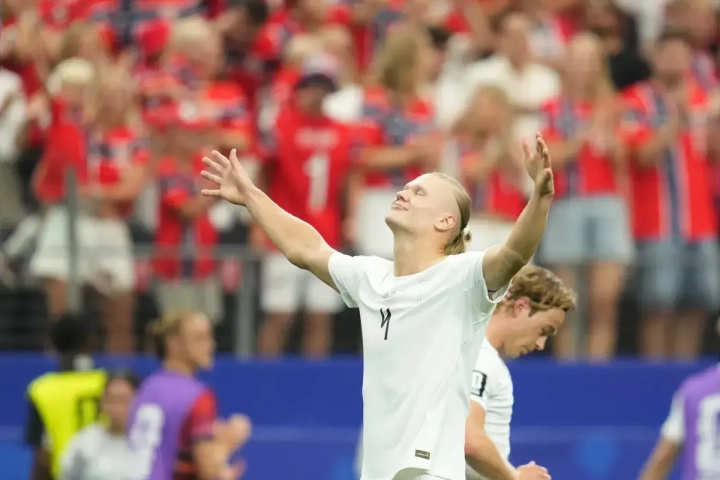
The closing stages devolved into a frantic, incredibly open affair, with both sides actively pursuing a definitive killer blow. Ultimately, it was Norway’s generational superstar who provided the decisive final act. In the 86th minute, as the Ivorian defensive structure momentarily fractured following a sustained period of pressure, midfielder Patrick Berg delivered a precise, incisive pass into the centre of the penalty area. Haaland, demonstrating the lethal predatory instincts that have defined his illustrious career, found a crucial yard of space amidst a sea of orange shirts. The towering forward instantly fired a powerful, left-footed shot perfectly into the centre of the goal, leaving Fofana entirely helpless and restoring the Scandinavian advantage.
Despite throwing caution to the wind and making a flurry of desperate, late substitutions—including the introductions of Oumar Diakité, Evann Guessand, and Bazoumana Touré—Ivory Coast could not breach the resilient Norwegian rearguard for a second time. The final whistle mercifully echoed across the cavernous arena, confirming a hard-fought 2-1 triumph for the European heavyweights.
When examining the underlying statistical narrative, the match was incredibly closely contested, validating the sheer quality on display. Norway successfully completed 413 passes with an impressive 88 percent accuracy, while the Ivory Coast meticulously completed 332 passes at an 85 percent completion rate.
The dramatic victory ensures the Vikings safely navigate their way into the Round of 16. They will now embark on a highly anticipated, monumental clash against tournament favourites Brazil. Solbakken will undoubtedly be concerned by isolated moments of defensive fragility, but the sheer attacking firepower at his disposal perfectly justifies their status as a formidable threat in the competition. For Ivory Coast, the deeply heartbreaking reality of the defeat leaves them reflecting on a massive missed opportunity, but they depart the global stage with their heads held extremely high, having provided a solid, inspiring foundation for the future of their national team.
Official Match Facts
| Area | Match Detail |
| Competition | FIFA World Cup 2026 – Round of 32 |
| Venue | Dallas Stadium, Arlington, Texas |
| Date | 30 June 2026 |
| Final Score | Ivory Coast 1 – 2 Norway |
Goalscorers:
Norway: Antonio Nusa (39′), Erling Haaland (86′)
Ivory Coast: Amad Diallo (74′)
Discipline:
Norway: Antonio Nusa (Yellow Card, 45′)
Ivory Coast: None