The grand collision course remains intact. In a weekend that promised to either solidify or completely shatter the most anticipated domestic heavyweight bout in British boxing history, both Tyson Fury and Anthony Joshua successfully navigated their respective hurdles. Yet, the wildly divergent manner in which the two former world champions secured their victories on Friday and Saturday has provided a fascinating preview of the vulnerabilities and strengths they will carry into their long-awaited November mega-fight.
Fighting in vastly different corners of the globe, the two titans delivered performances that perfectly encapsulated their current career trajectories. In Thailand, Tyson Fury orchestrated a relaxed, dominant, and typically eccentric seventh-round technical knockout over Polish veteran Mariusz Wach. A day later, under the searing lights of the Jeddah Superdome in Saudi Arabia, Anthony Joshua narrowly skirted a career-ending disaster, surviving two shocking first-round knockdowns before unleashing a devastating second-round knockout against Kristian Prenga.
With both men emerging victorious, the path is definitively cleared for a late-2026 super-fight, reportedly slated for Wembley Stadium. However, as the dust settles on a dramatic 48 hours of heavyweight action, the boxing world is left dissecting two highly revealing performances.
Fury in Thailand: Supreme Control and Eccentric Showmanship
On Friday evening, Tyson Fury stepped into the ring in Pattaya, Thailand, to face the 46-year-old Mariusz Wach. For the ‘Gypsy King’, the objective was simple: shed any lingering ring rust following his April victory over Arslanbek Makhmudov, secure a stoppage, and escape unscathed. He accomplished all three with an air of casual inevitability.
The bout was entirely one-sided. Fury, now sporting a record of 39-2-1, established his towering jab from the opening bell, seamlessly switching between orthodox and southpaw stances to thoroughly confuse the aging Polish challenger. By the third round, Fury had settled into a comfortable rhythm, walking Wach down and punishing him with heavy body shots and crisp combinations. Wach, showing immense durability, absorbed a significant amount of punishment but offered precious little in return, occasionally landing a solitary right hand that Fury easily shrugged off.
The most discussed moment of the fight arrived not via a crushing blow, but through a bizarre act of showboating. Midway through the sixth round, whilst locked in a clinch, Fury leaned in and planted a kiss on Wach’s cheek. It was a classic piece of psychological warfare from the 37-year-old, echoing similar antics from his 2019 bout against Tom Schwarz, and it perfectly underlined the sheer lack of danger he felt inside the ropes. Following a sustained barrage of punches in the seventh round, Wach was mercifully pulled out by his corner, retiring on his stool before the start of the eighth.
Where Fury Stands Out: Fury’s performance highlighted his enduring ring IQ and defensive mastery. Even in his late thirties, his ability to dictate the pace of a fight, control the distance with his jab, and completely disarm an opponent both physically and mentally remains unparalleled in the heavyweight division. His conditioning appeared sharp, and his fluid stance-switching proved that his technical fundamentals are completely intact.
Where Fury Fails: Despite the stoppage, critics will inevitably point to the calibre of his opposition. Wach was slow, ponderous, and offered no offensive threat, making it incredibly difficult to gauge how Fury will react when pressed by an explosive, elite-level puncher. Furthermore, Fury’s tendency to drop his hands and rely on head movement—while entertaining—leaves momentary openings. A sharper, faster opponent like Joshua could theoretically exploit those fractions of a second where Fury prioritises showmanship over defensive responsibility.
Joshua in Jeddah: A Nightmare Salvaged by Brutal Resilience
If Fury’s victory was a leisurely stroll, Anthony Joshua’s Saturday night assignment in Saudi Arabia was a heart-stopping rollercoaster ride. Facing Albanian heavyweight Kristian Prenga, Joshua was making a highly emotional return to the ring following a traumatic year marred by a fatal car crash that claimed the lives of two close friends. The psychological toll of that tragedy, coupled with the pressure of preserving the Fury fight, nearly resulted in an astonishing upset.
The opening three minutes at the Jeddah Superdome will undoubtedly go down as some of the most chaotic in recent heavyweight memory. Joshua appeared incredibly slow off the mark, seemingly frozen as Prenga immediately closed the distance. Disaster struck midway through the first round when Prenga landed a thunderous right hand followed by a short uppercut on the inside, sending the former unified champion crashing to the canvas. The crowd fell into a stunned silence.
Joshua rose on unsteady legs, his eyes glassy, only to be sent down for a second time moments later under a ferocious barrage from the aggressive Albanian. At that exact moment, the multi-million-pound November extravaganza appeared to be in absolute ruins. Joshua survived the remainder of the round purely on instinct and the sheer grace of the bell.
However, the second round produced a comeback of spectacular proportions. Having gathered his senses in the corner, a wounded Joshua marched out and completely reversed the tide. Tapping into his vast reserves of power, he caught an overeager Prenga with a pulverising right cross, instantly buckling the Albanian’s legs. Joshua mercilessly followed up with a clinical, devastating combination, leaving Prenga crumpled in a heap on the ropes. The referee waved the contest off immediately, awarding Joshua a second-round knockout that salvaged his career and his immediate future.
Where Joshua Stands Out: The paramount takeaway from Jeddah is Joshua’s immense, undeniable heart and his elite finishing instincts. Faced with total professional humiliation, he dug into a dark pit of adversity and engineered a spectacular recovery. His power remains truly terrifying; the moment he landed flush, Prenga was instantly incapacitated. Furthermore, his post-fight interview demonstrated a renewed, almost ferocious mental edge.
Where Joshua Fails: The vulnerabilities exposed in that first round cannot be ignored. Joshua’s chin and punch resistance continue to be a source of immense anxiety for his supporters. His start was alarmingly sluggish, and his defensive posture was easily breached by a heavy-handed but fundamentally unproven opponent. If Prenga can find the target and drop Joshua twice in three minutes, the prospect of facing a tactician of Fury’s calibre becomes incredibly daunting. The defensive frailties and sudden moments of tactical paralysis remain glaring flaws in his armour.
The War of Words Begins
With their respective assignments completed, the focus immediately shifted to the inevitable collision. Neither man wasted an opportunity to ignite the promotional touchpaper.
Following his victory in Thailand, Fury was quick to dismiss Joshua’s capabilities. When asked how he would have fared had the Londoner been in the ring on Friday night, Fury was characteristically blunt. “I would have jabbed his head off and chinned him,” the undefeated lineal champion declared. He further questioned Joshua’s courage, insisting he remains unconvinced that his long-time rival will actually sign the final dotted line, despite the widespread reports that the bout is a done deal.
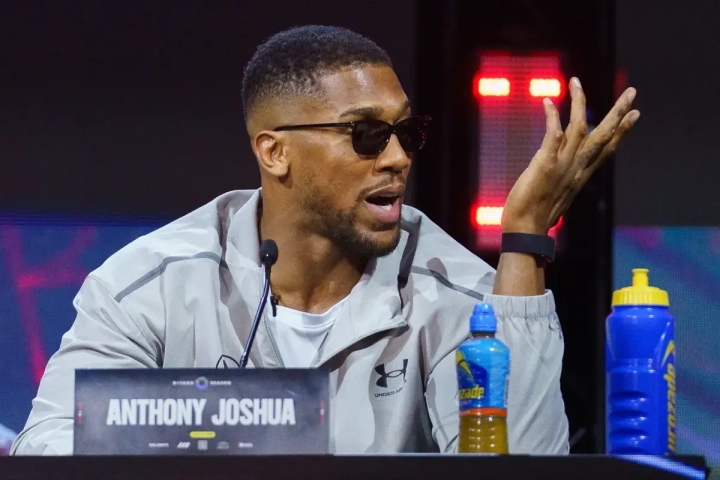
Joshua, speaking in the immediate aftermath of his near-disaster in Saudi Arabia, offered a deeply emotional but defiant response. After dedicating the victory to a higher power and acknowledging the brutal journey of his recent months, he channelled Mike Tyson’s infamous rant aimed at Lennox Lewis. With a knowing wink to the camera, Joshua promised to “eat his heart,” sending a very clear, theatrical warning to the Fury camp.
The Road to November
As the global boxing fraternity digests the weekend’s events, the narrative for the late-2026 super-fight is perfectly, perhaps even poetically, poised.
In one corner stands Tyson Fury: the slick, undefeated ring general who looks entirely comfortable in his surroundings, yet whose capacity to absorb a truly massive shot remains untested in recent outings against lower-tier opposition. In the opposite corner stands Anthony Joshua: the devastating, heavy-handed knockout artist who possesses the undeniable power to end the fight in an instant, yet carries a fragile chin and a susceptibility to early defensive lapses.
Wembley Stadium reportedly awaits. The financial packages are aligned, the broadcast partners are in place, and the domestic audience is finally guaranteed the spectacle they have craved for years. Tyson Fury and Anthony Joshua have survived their final tune-ups. Now, there is nowhere left to hide. The greatest British heavyweight clash of the modern era is finally upon us.