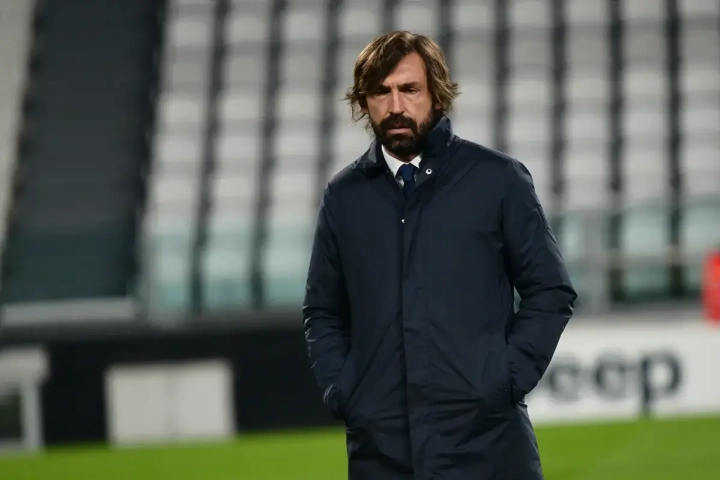
The Italian Football Federation (FIGC) finds itself engulfed in an unprecedented crisis just weeks before the start of the 2026/27 UEFA Nations League campaign. In a dramatic turn of events that has captivated and divided the Italian public, Andrea Pirlo’s imminent appointment as the new head coach of the national team has completely collapsed. The 2006 World Cup winner was heavily expected to sign a four-year contract this week to succeed Gennaro Gattuso, but a fierce political storm surrounding his commercial ties to a Russian betting company has forced the federation to dramatically pull the plug on the deal.
The situation leaves the four-time world champions without a permanent manager, exposing deep administrative fractures within the FIGC and highlighting how modern football appointments are increasingly dictated by geopolitical optics and commercial scrutiny.
The Collapse of a “Done Deal”
For much of the past month, the FIGC had been desperately searching for a talismanic figure to lead a comprehensive rebuild. Italian football is currently enduring its darkest international chapter, having suffered the unthinkable humiliation of failing to qualify for the 2026 FIFA World Cup in North America. The failure marked Italy’s third consecutive absence from the sport’s premier global tournament, prompting Gennaro Gattuso to step down and leaving Under-21 coach Silvio Baldini in temporary caretaker charge.
The federation set its sights high. Approaches were made to Pep Guardiola and Carlo Ancelotti, both of whom politely declined the immense pressure of the Azzurri rebuilding project. Following these rejections, newly appointed FIGC technical director Paolo Maldini and senior football adviser Leonardo pivoted towards Pirlo.
Currently managing United FC in the United Arab Emirates, the 47-year-old Pirlo emerged as the absolute frontrunner. Despite a mixed managerial CV, featuring a single Coppa Italia triumph with Juventus, alongside challenging spells at Sampdoria and Turkish outfit Fatih Karagümrük, his iconic status as an Italian footballing legend carried immense weight. Negotiations progressed swiftly and smoothly, with a verbal agreement reportedly reached. Pirlo was prepared to terminate his contract in the Middle East and return to his homeland.
However, before the ink could dry, the political landscape shifted violently. Newly elected FIGC president Giovanni Malagò personally intervened to halt the appointment over mounting public pressure, deciding that hiring Pirlo would create an untenable controversy at the very genesis of his presidential tenure.
The Fonbet Controversy and Political Backlash
The catalyst for the deal’s collapse centres entirely on Pirlo’s off-field commercial portfolio. In late 2025, the former midfielder signed a lucrative agreement to become a global brand ambassador for Fonbet, one of Russia’s largest sports betting and bookmaking companies.
The partnership rapidly became a lightning rod for criticism. Amidst Russia’s ongoing war in Ukraine, any high-profile European association with Russian corporate entities is subject to intense geopolitical scrutiny. The situation was heavily exacerbated when Pirlo recently attended a promotional event organised by the bookmaker at Moscow’s Luzhniki Stadium, appearing alongside former Italy and Inter Milan teammate Marco Materazzi.
In Italy, the backlash was swift and multifaceted. Several senior Italian politicians and lawmakers openly questioned the morality of appointing a national figurehead who actively promotes a Russian enterprise while the European Union maintains strict sanctions against the state.
Furthermore, the optics clashed violently with domestic legislation. Italy enforces some of the strictest gambling advertising laws in Europe, most notably through the “Dignity Decree” (Decreto Dignità), which strictly prohibits the advertising and sponsorship of betting platforms. While Pirlo’s contract with Fonbet was international, lawmakers argued that having the national team manager serve as the face of a betting company made a mockery of Italy’s own domestic regulations.
Faced with a rapidly escalating public relations disaster, Malagò and the FIGC executive board concluded that the political baggage accompanying Pirlo was simply too heavy for a national team already buckling under the weight of historic sporting failures.
“Great Bitterness”: Pirlo Speaks Out
For his part, Pirlo has fiercely defended his integrity, releasing a comprehensive statement on his social media platforms on Monday morning. The former Juventus and AC Milan maestro expressed his profound disappointment at the situation, insisting that his commercial endeavours had been weaponised by political opportunists.
“Out of respect for the institutions, the Federation and all the people involved, I have chosen to remain silent so far, but after learning last night that I am no longer a candidate for the bench of the Italian National Team, I deem it necessary to clarify some aspects,” Pirlo stated via Instagram.
“In the last few days, I have witnessed with great bitterness the debate that has developed around my name and the possibility of taking over the role of Technical Commissioner of the Italian National Team. Throughout my career, first as a player and now as a coach, I have always carried out my work in full compliance with the laws of the countries where I have worked and with the contracts I have signed”.
Pirlo emphatically rejected the notion that his ambassadorial role carried any ideological endorsement of the Russian state. “To assign a political meaning to that collaboration is to attribute to me beliefs that I have never expressed and that do not belong to me. I regret that a decision based on sporting criteria rapidly became a public controversy, in which intentions and ideas which do not reflect my personality were attributed to me”.
Sources close to the manager suggest he was fully prepared to terminate his relationship with Fonbet, as well as other conflicting commercial partnerships, to assume the national team role. However, these concessions were deemed insufficient by a federation fearful of a prolonged media circus.
Closing his statement, Pirlo reaffirmed his devotion to his country: “Love for Italy does not depend on a position. It is part of my story, my identity, and it will always be with me”.
A Federation Fractured
The sudden collapse of the Pirlo appointment has triggered a secondary crisis within the corridors of the FIGC. The decision to veto the move has reportedly caused a severe rift between the federation’s sporting department and its executive leadership.
Paolo Maldini and Leonardo had staked significant early political capital on Pirlo. They viewed him as a modern, progressive tactical mind capable of relating to a new generation of Italian players. Malagò’s executive override has fundamentally undermined their sporting authority. Italian media reports over the last 24 hours indicate that both Maldini and Leonardo are now heavily reassessing their futures within the organisation, with speculation mounting that they could step down from their recently acquired roles in protest.
If the technical director and senior adviser were to resign, it would plunge Italian football governance into absolute chaos just weeks before critical international fixtures.
Table: Andrea Pirlo’s Managerial Career to Date
| Club / Team | Tenure | Matches | Win Percentage | Notable Achievements |
| Juventus | Aug 2020 – Jun 2021 | 52 | 65.4% | Coppa Italia, Supercoppa Italiana |
| Fatih Karagümrük | Jun 2022 – May 2023 | 34 | 32.4% | — |
| Sampdoria | Jul 2023 – Aug 2024 | 45 | 40.0% | — |
| United FC (UAE) | Jul 2025 – Present | Ongoing | Ongoing | — |
Where Do the Azzurri Go From Here?
With the Pirlo avenue firmly closed and the Guardiola dream extinguished, Italy must urgently reset their managerial search. The calendar is highly unforgiving. The Azzurri are scheduled to face Belgium in the UEFA Nations League on 25 September, competing in a daunting group that also features France and Turkiye.
Silvio Baldini, who managed the team through their summer friendlies against Greece and Luxembourg, remains in temporary charge. However, the FIGC is desperate to install a permanent figurehead to begin preparations for the UEFA Euro 2028 qualification cycle.
The candidate pool is rapidly shrinking, pushing the federation back towards familiar, proven entities. Initial reports suggest that former managers Antonio Conte and Roberto Mancini have re-emerged as the primary alternatives. Mancini, who famously guided Italy to European glory at Euro 2020 before resigning in 2023, understands the internal dynamics of the federation better than anyone. Conte, meanwhile, offers the ruthless discipline and tactical rigidity that many believe is required to drag the current squad out of its malaise.
Whoever ultimately inherits the position will take on one of the most pressurised jobs in global sport. They will inherit a fractured institution, a deeply pessimistic fanbase, and a squad carrying the historical trauma of a lost decade on the World Cup stage. For Andrea Pirlo, the opportunity to be the architect of an Italian renaissance has been cruelly snatched away by forces outside the tactical sphere. The saga serves as a stark, unforgiving reminder that at the absolute pinnacle of international football, the game is never just about what happens on the pitch.